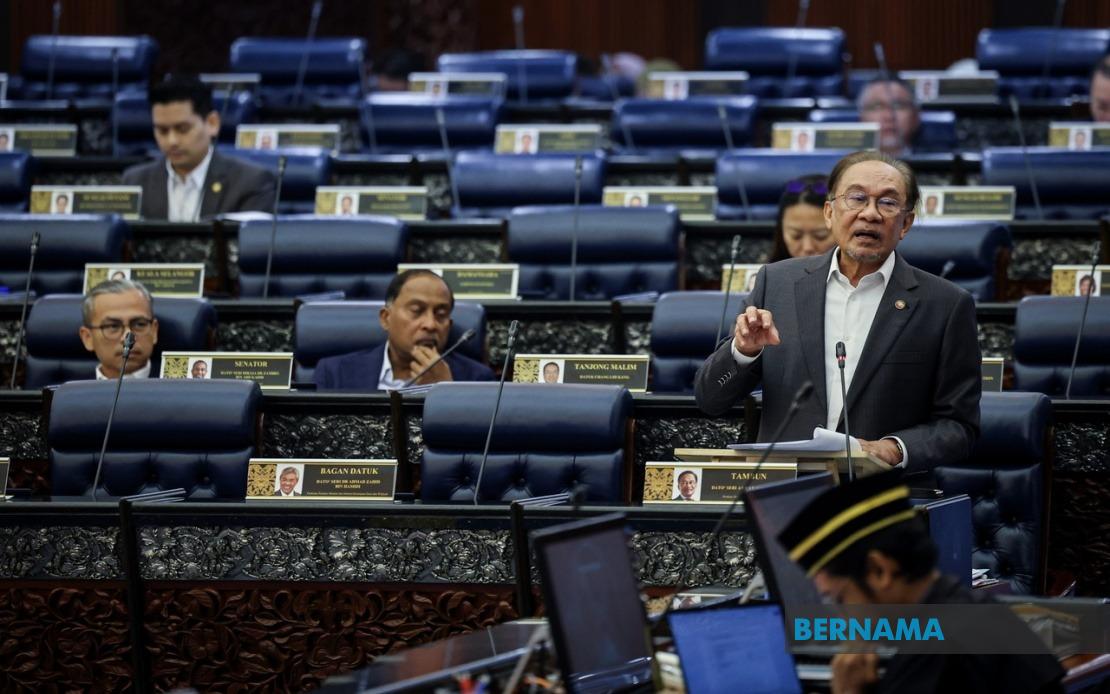
Prime Minister Datuk Seri Anwar Ibrahim moved swiftly to defuse political tension on July 7 by reframing his earlier remarks about the Johor state election's polling date, insisting they constituted personal commentary rather than any form of institutional interference. Speaking during Minister's Question Time in Parliament, Anwar distinguished between his individual observations and the statutory independence that the Election Commission must maintain when scheduling electoral contests across Malaysia.
The distinction Anwar drew carries significance in Malaysia's constitutional framework, where the Election Commission operates as an autonomous body with constitutional protections specifically designed to insulate electoral processes from political pressure. By characterising his intervention as motivated by practical considerations affecting voter accessibility rather than partisan advantage, Anwar attempted to reposition the narrative away from concerns about executive overreach. His clarification reflected sensitivity to accusations of governmental influence over an institution that operates independently under Article 114 of the Federal Constitution.
The Prime Minister's argument centred on the logistical realities confronting the substantial population of Malaysian workers employed across the causeway in Singapore. Anwar noted that many of these individuals work half-day schedules on Saturdays, creating a temporal constraint that Sunday polling would alleviate. By anchoring his position in practical accommodation of workers' circumstances rather than political calculation, Anwar sought to present his view as informed commentary on voter convenience rather than institutional direction. This framing allowed him to express a preference while theoretically respecting the Election Commission's ultimate authority to determine the polling schedule.
However, Anwar's response revealed the underlying complexity of separating prime ministerial influence from personal opinion when the office holder commands significant political authority. His repeated emphasis that the Election Commission remains independent, coupled with his acceptance that Saturday polling would constitute an acceptable outcome, served as a rhetorical hedge against suggestions that his remarks constituted coercive pressure. The careful language employed—acknowledging the Commission's decision-making power while simultaneously advocating for a particular approach—demonstrates the delicate balance executive actors must navigate when commenting on ostensibly independent institutions.
The supplementary question from Ahmad Fadhli Shaari of Pasir Mas, representing the Perikatan Nasional, highlighted ongoing parliamentary scrutiny of the government's relationship with electoral authorities. Opposition lawmakers evidently detected potential impropriety in the Prime Minister's public advocacy regarding polling dates, prompting them to seek formal clarification during Question Time. This parliamentary pressure suggests that Anwar's initial comments had generated sufficient concern among rival political camps to warrant legislative interrogation of the Prime Minister's conduct.
Anwar additionally addressed speculation that Malaysia might coordinate with Singapore regarding voting arrangements for Malaysian citizens employed there. He categorically denied any intention to contact Singapore's Prime Minister Lawrence Wong about facilitating voters' return for the Johor elections. This denial proved important in reaffirming Malaysia's commitment to electoral sovereignty and the principle of non-interference in domestic political processes, even when practical bilateral coordination might theoretically assist citizens. Anwar's position emphasised that while Malaysia and Singapore maintain robust diplomatic relations, including his personal rapport with Wong, electoral matters remain fundamentally within each nation's exclusive domain.
The Prime Minister clarified that Malaysian companies operating in Singapore had received only informal notification to facilitate employee leave for voting purposes, not coordinated governmental arrangements with Singapore authorities. This distinction preserved the appearance of institutional separation while acknowledging that private employers might reasonably accommodate workers' need to participate in home-country elections. By emphasising the private-sector nature of these arrangements rather than governmental coordination, Anwar distanced his government from any appearance of diplomatic negotiation over electoral logistics.
Mohd Sany Hamzan of Hulu Langat had specifically suggested that Malaysia actively engage Singapore to assist voter return, proposing a more formalised arrangement between governments. Anwar's rejection of this proposal reflected the Government's determination to maintain clear boundaries around electoral processes, ensuring they remain protected from external political influence and bilateral diplomatic considerations. This stance reinforces the principle that while practical accommodation of worker circumstances might occur through private channels, official governmental coordination would represent an inappropriate entanglement of foreign relations with domestic electoral administration.
For Malaysian voters employed in Singapore—a demographic numbering in the tens of thousands—the distinction between formal and informal arrangements carries practical implications. While they might receive employer accommodation to vote when elections occur, they cannot expect coordinated diplomatic arrangements between Malaysian and Singaporean authorities to facilitate their participation. This approach reflects the regional sensitivity around electoral independence and the importance both countries attach to demonstrating that domestic political processes remain insulated from foreign influence, even when bilateral relations remain cordial.
Anwar's parliamentary performance demonstrated the continued importance of maintaining clear rhetorical separation between the Prime Minister's personal political views and the constitutional independence of institutions operating within the Malaysian governance framework. While his preference for Sunday polling remained evident, his insistence on the Election Commission's autonomy preserved at least formal respect for institutional boundaries. The episode underscores how Malaysian leaders must carefully calibrate public commentary on sensitive institutional matters, particularly when those institutions possess formal independence that the constitution specifically protects from executive interference.
The clarification also reflects broader governance challenges in parliamentary democracies where prime ministers inevitably influence policy discussions while ostensibly respecting institutional independence. Anwar's careful repositioning demonstrates awareness that excessive prime ministerial commentary on Election Commission decisions risks undermining public confidence in electoral administration's neutrality, regardless of whether such commentary constitutes formal interference. The incident serves as a reminder that in Malaysia's constitutional system, as in comparable democracies, the appearance of respect for institutional independence carries significance equal to its substance.

