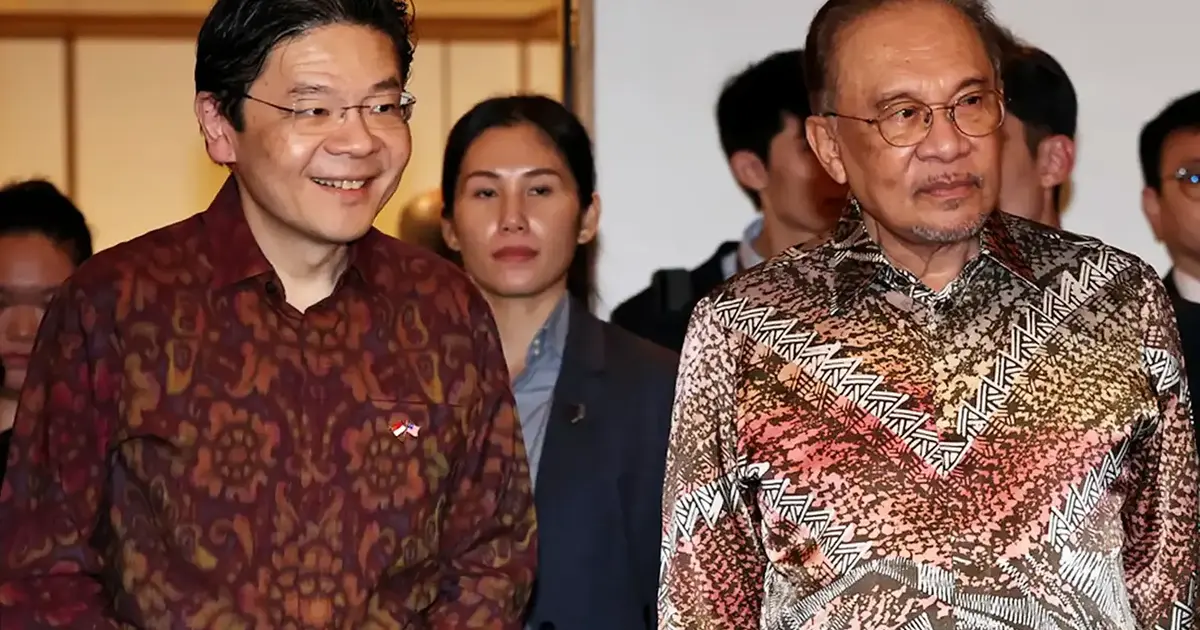
Prime Minister Anwar Ibrahim has moved to dispel speculation about diplomatic overtures to Singapore concerning voting arrangements for the upcoming Johor state elections, stating directly that no formal request has been lodged with his Singaporean counterpart on the matter. The clarification emerged when Anwar fielded queries regarding whether he intended to contact Singapore's leadership to facilitate the return of Malaysian voters based across the causeway.
The question itself reflects an underlying concern within Malaysian political circles about voter participation in Johor, a state that has historically served as a political bellwether for national sentiment. With a substantial Malaysian workforce residing in Singapore and its surrounding areas, election organisers and political observers have periodically grappled with the logistical and diplomatic complexities of enabling overseas voting. The Johor elections represent a significant test for the ruling coalition, and maximising turnout among all eligible voters carries strategic implications.
Singapore's status as a sovereign nation with strict immigration and security protocols means that any arrangement permitting cross-border movement for voting would require formal governmental coordination. The city-state has traditionally maintained clear boundaries regarding the movement of its residents and those holding work permits, viewing such matters through the lens of national security and public order. Cross-border voter returns would necessarily involve consultation between Malaysian and Singaporean authorities, making any such initiative a matter requiring high-level diplomatic engagement.
Anwar's public statement on this issue carries significance beyond the immediate electoral context. It underscores the practical and diplomatic constraints surrounding Malaysian elections involving overseas populations. Unlike some nations that have developed robust overseas voting mechanisms through mail ballots or designated polling centres in foreign territories, Malaysia's electoral framework has historically emphasised in-person voting at designated polling stations within the country. This approach, while maintaining electoral integrity and administrative clarity, creates genuine hardship for citizens temporarily or permanently residing abroad.
The Johor context is particularly noteworthy given the state's geographic proximity to Singapore and the deep economic integration between the two territories. Thousands of Malaysians cross the causeway daily for employment, study, and commerce, representing a constituency with direct stakes in state governance. Similarly, many Singaporeans maintain ties to Johor through property ownership and family connections, though they would not be eligible voters. The concentration of Malaysian voters in Singapore creates both opportunity and operational challenge for election management.
Anwar's position suggests that the government is approaching voter mobilisation through established channels rather than seeking exceptional diplomatic arrangements. This pragmatic stance reflects awareness that requesting special provisions could encounter resistance from Singapore's authorities and might establish precedents difficult to manage. Instead, Malaysian authorities may be focusing on traditional get-out-the-vote mechanisms, potentially including transportation assistance, voter education campaigns, and simplified registration procedures for those within Malaysian territory.
The episode also highlights broader questions about electoral modernisation in Malaysia. Regional peers including South Korea, Taiwan, and Thailand have implemented various overseas voting mechanisms, ranging from postal ballots to advance polling centres. Such systems require substantial administrative infrastructure and clear legislative frameworks. Malaysia's electoral commission would need significant resource allocation and regulatory changes to implement comparable systems, raising questions about political will and legislative priorities.
From a Southeast Asian perspective, this situation illuminates the tension between democratic participation and practical governance in an era of high cross-border mobility. The region's rapid economic integration has created populations with divided residency that traditional electoral frameworks struggle to accommodate. Anwar's acknowledgment that no formal request has been made implicitly concedes that solving this challenge requires structural electoral reform rather than ad-hoc diplomatic solutions.
The Johor state elections themselves carry significance extending beyond the immediate contest. As a major industrial and commercial hub, Johor's political direction influences investment patterns and development priorities across Southeast Asia's southern corridor. Election outcomes shape not only state policy but also the broader stability and confidence of the region's business environment. Voter participation levels, particularly among the economically engaged population, consequently carry implications for administrative legitimacy and policy implementation capacity.
Looking forward, Anwar's statement suggests the government will proceed with the Johor elections under existing electoral rules without seeking special accommodations for overseas voters. This approach maintains administrative simplicity and respects Singapore's sovereignty, though it inherently disadvantages those unable to return during polling periods. Whether this framework will suffice to maintain adequate electoral participation, particularly among younger professionals and mobile workforces, remains an open question affecting not only Johor's immediate political trajectory but broader patterns of Malaysian civic engagement in an increasingly mobile region.

