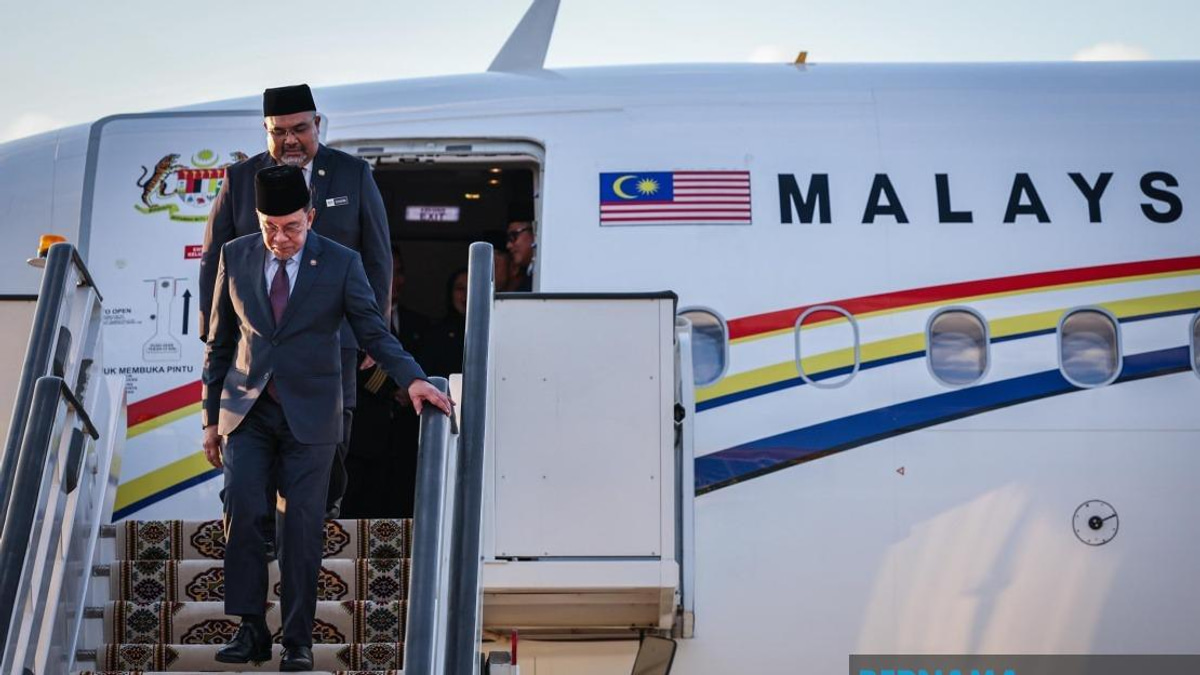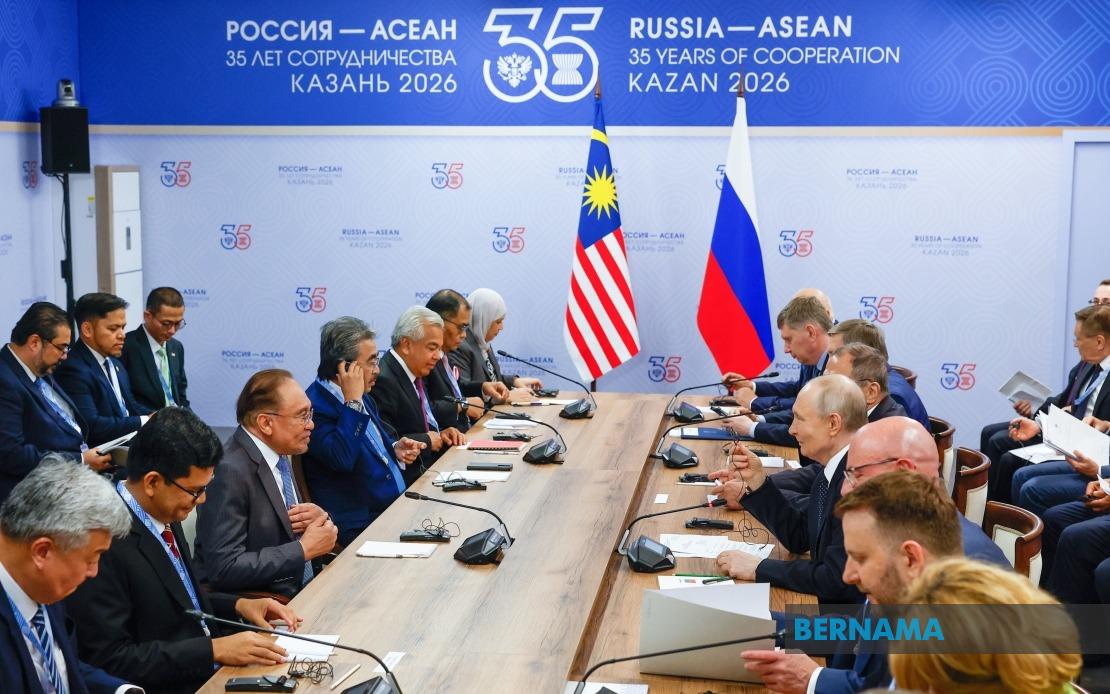
During an exclusive interview with Russian state television while attending a commemorative summit in Kazan marking 35 years of ASEAN-Russia relations, Malaysian Prime Minister Datuk Seri Anwar Ibrahim publicly acknowledged the diplomatic positions taken by Russia and China regarding the Middle Eastern crisis. He specifically commended President Vladimir Putin and President Xi Jinping for their advocacy of peaceful resolution and their condemnation of what he termed atrocities perpetrated against civilian populations in Gaza, Iran, and Lebanon.
Anwar's remarks underscore Malaysia's sustained engagement with the Middle East conflict at the highest levels of diplomacy. The Prime Minister revealed that Malaysia has maintained consistent outreach to leaders across the Muslim world and beyond, including engagement with the Gulf states, Pakistan, Turkey, and Iran, all aimed at facilitating dialogue toward an equitable settlement. This multi-faceted diplomatic approach reflects Malaysia's determination to position itself as a bridge between divergent interests rather than a passive observer of regional upheaval.
A cornerstone of Malaysia's foreign policy position, as articulated by Anwar, is the principle of ASEAN centrality rather than neutrality. This distinction carries substantial weight in the geopolitical context of Southeast Asia and Malaysia's international standing. The concept of centrality, Anwar explained, permits ASEAN nations to maintain independent positions on matters of principle, particularly regarding human rights violations and atrocities, without being accused of abandoning neutrality or bowing to superpower pressure. This framework enables Malaysian policymakers to condemn violations while avoiding entanglement in ideological blocs dominated by major powers.
The Prime Minister's comments reflect Malaysia's bipartisan parliamentary consensus on the Middle Eastern question. He noted that Malaysia's Parliament voted unanimously to take a firm stance against what he characterized as the initial attacks by Israel, supported by United States backing. This parliamentary unity demonstrates broad political agreement within Malaysia that the country should maintain principled positions independent of great power alignments, despite the diplomatic complexities and potential economic ramifications involved.
Anwar's critique of what he described as Western hypocrisy in handling the Israeli-Palestinian and broader Middle Eastern crises reveals a significant frustration with international double standards. He questioned how the international community could justify Israel's military actions, particularly when backed by United States support, while maintaining silence or muted responses regarding aggression against Iran and its consequences across the Gulf region. This contradiction, in Anwar's assessment, represents a fundamental hypocrisy that undermines the credibility of international norms and principles.
The Prime Minister's emphasis on the principle-centered nature of Malaysia's position rather than economic considerations is notable. While acknowledging that armed conflict generates economic hardships throughout the region, Anwar framed the Malaysian objection primarily around core questions of international law, sovereignty, and proportionate response. For Malaysian readers and policymakers, this articulation reinforces that Malaysia's stance emanates from conviction regarding global norms rather than mere economic self-interest, though economic impacts remain real concerns.
Anwar's acknowledgment that Iran's responses to aggression warrant scrutiny while simultaneously insisting on equal attention to aggression against Iran demonstrates the nuanced balancing act required of nations like Malaysia. Rather than unconditionally supporting any party, Malaysia seeks to apply consistent standards of accountability. This approach allows for constructive criticism across multiple actors while resisting the polarization that has increasingly characterized global responses to Middle Eastern conflicts.
The geopolitical significance of Anwar's remarks during his Russia visit cannot be understated. Malaysia's engagement with both Russia and China on these matters, combined with simultaneous dialogues across the Middle East itself, positions Malaysia within a genuinely non-aligned framework that continues to hold currency in contemporary international relations. This approach contrasts sharply with the pressure many nations face to choose between competing great power spheres of influence.
For Southeast Asia more broadly, Malaysia's articulated position carries implications for regional unity and ASEAN's collective posture toward global conflicts. As one of ASEAN's most vocally principled members on human rights and international law, Malaysia's diplomatic efforts help establish expectations that ASEAN nations need not surrender agency to superpower preferences. The principle of centrality, if successfully maintained across the region, could preserve space for smaller and medium powers to exercise independent judgment on matters of international significance.
Anwar's comments also reflect Malaysia's historical commitment to the cause of Palestinian rights and opposition to what it views as colonial or hegemonic actions. This long-standing position, now reinforced through engagement with Russia and China, demonstrates consistency in Malaysia's foreign policy orientation despite changing international circumstances. The invocation of these principles during high-level diplomatic engagements signals that Malaysia intends to maintain this stance as a permanent feature of its international identity rather than a temporary posture.
The emphasis on dialogue with diverse partners—from the Gulf to Turkey to Iran to major powers like Russia and China—reveals Malaysia's understanding that sustainable peace in the Middle East requires inclusive rather than exclusive diplomatic frameworks. By maintaining channels with multiple parties and refusing to collapse complex regional dynamics into simple binary positions, Malaysia preserves its ability to contribute meaningfully to conflict resolution efforts when opportunities arise.
Looking forward, Malaysia's articulated principles on Middle Eastern issues will continue shaping the country's diplomatic agenda and its relationships with major powers. The balance Anwar seeks between maintaining principled positions, engaging constructively with multiple actors, and preserving ASEAN centrality represents a sophisticated approach to navigating contemporary international relations in an era of renewed great power competition.