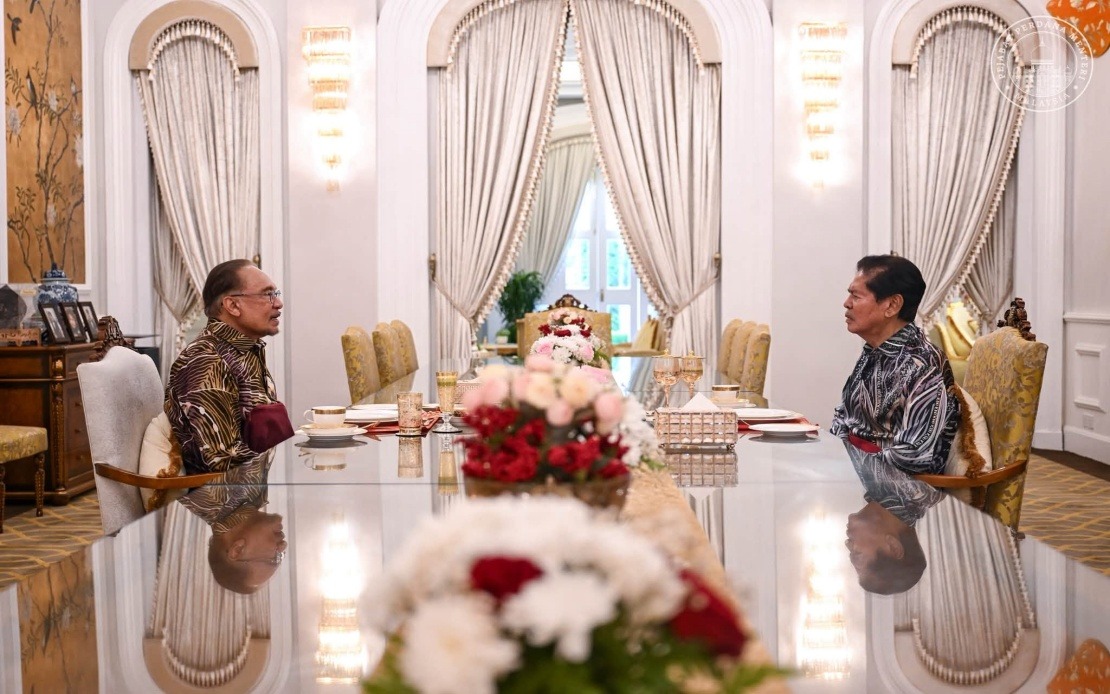
Prime Minister Datuk Seri Anwar Ibrahim brought his two-day working visit to Penang to a close on Thursday with a formal tea reception hosted by Governor Tun Ramli Ngah Talib at the Governor's official residence, Seri Mutiara. The gathering served as the final engagement of an intensive schedule that showcased the federal government's engagement with the northern state across multiple sectors and community initiatives.
Through a statement posted on social media, Anwar highlighted the significance of the meeting, noting that it had deepened the working relationship between Kuala Lumpur and Penang's state administration. The Prime Minister emphasised that the occasion had reinforced both governments' collective determination to advance Penang's economic development and enhance the quality of life for its residents. Such platforms are increasingly important in Malaysia's federal structure, where regular high-level exchanges between the Prime Minister's office and state governors help coordinate policies and address regional priorities.
Governor Ramli expressed his pleasure at hosting the nation's chief executive, framing the visit as a valuable opportunity to discuss matters of mutual concern affecting both Penang and the broader national agenda. The Governor's public acknowledgement of the meeting reflected the diplomatic significance attached to such courtesy calls, particularly when they occur at the conclusion of substantive working visits. In Malaysia's Westminster-influenced system, such ceremonial interactions between federal and state leadership carry symbolic weight in demonstrating unity and collaborative governance.
In his own remarks, Ramli extended gratitude to Anwar for dedicating time to visit Seri Mutiara before returning to Kuala Lumpur. The Governor added a personal touch to his statement by noting that his grandson, Aldrey Alfi, had been present during the reception and had engaged the Prime Minister with questions, which Anwar had answered warmly. This inclusion of a family member highlighted the informal, relationship-building dimension of the visit, illustrating how such occasions extend beyond formal diplomacy to foster personal connections between leaders.
Anwar's itinerary during the two-day visit demonstrated the breadth of the federal government's priorities in Penang. The schedule encompassed the Permatang Pauh Entrepreneur Revival Programme, reflecting the administration's focus on supporting small and medium-sized enterprises, a key engine for economic resilience in the state. The programme aligns with broader national initiatives to strengthen the entrepreneurial ecosystem and provide targeted assistance to business owners navigating the post-pandemic recovery period.
The Prime Minister also participated in activities related to the 15th Malaysia Scout Jamboree, underscoring the government's investment in youth development and civic engagement through established institutional frameworks. Scouting in Malaysia has long served as a platform for character building, leadership training, and community service among young people, and high-level participation in such events signals the government's commitment to nurturing the next generation of Malaysian leaders and citizens.
Additionally, Anwar's schedule included the MADANI Sahabat 2026 National Day Countdown Programme, connecting his state visit to broader national commemorations and the government's MADANI framework—an acronym that stands for manifestations of prosperity, consensus, and capability. This programme demonstrates how federal initiatives are being localised and integrated into state-level activities, ensuring that national messaging and policy objectives reach communities through culturally relevant and regionally tailored channels.
The convergence of these engagements—entrepreneurship support, youth development, and national unity messaging—reveals a coordinated approach to governance that prioritises economic empowerment, social cohesion, and institutional strengthening. For Malaysian observers, such working visits by the Prime Minister serve as indicators of where the federal government is concentrating its political energy and resource allocation. Penang, as one of Malaysia's most economically dynamic states and a significant political constituency, warrants regular high-level attention from federal leadership.
The tea reception format chosen to conclude the visit reflects Malaysia's inherited diplomatic traditions, where such informal gatherings facilitate candid discussion and relationship maintenance between senior officials. Unlike formal press conferences or public events, a governors' residence reception provides a more intimate setting for substantive conversation away from media scrutiny, allowing both the Prime Minister and the Governor to address sensitive matters and forge personal rapport that often proves valuable in navigating subsequent policy decisions and resource allocation disputes.
For Penang specifically, such visits carry particular resonance given the state's unique political trajectory and its role as a significant economic contributor to national GDP. Regular engagement between federal and state leadership helps to address the occasional tensions that emerge between Kuala Lumpur's priorities and those of Penang's state administration, ensuring that despite occasional political differences, institutional channels for cooperation remain open and productive.
The visit also reinforces the message that the federal government views Penang as a critical partner in achieving national developmental objectives, rather than merely a constituent territory. This positioning is important for state morale and for maintaining the cooperative federalism that underpins Malaysia's governance architecture. As the nation navigates economic transition and social complexity, such visible demonstrations of federal-state coordination through high-level visits provide reassurance to investors, businesses, and citizens that government is functioning coherently across administrative levels.

