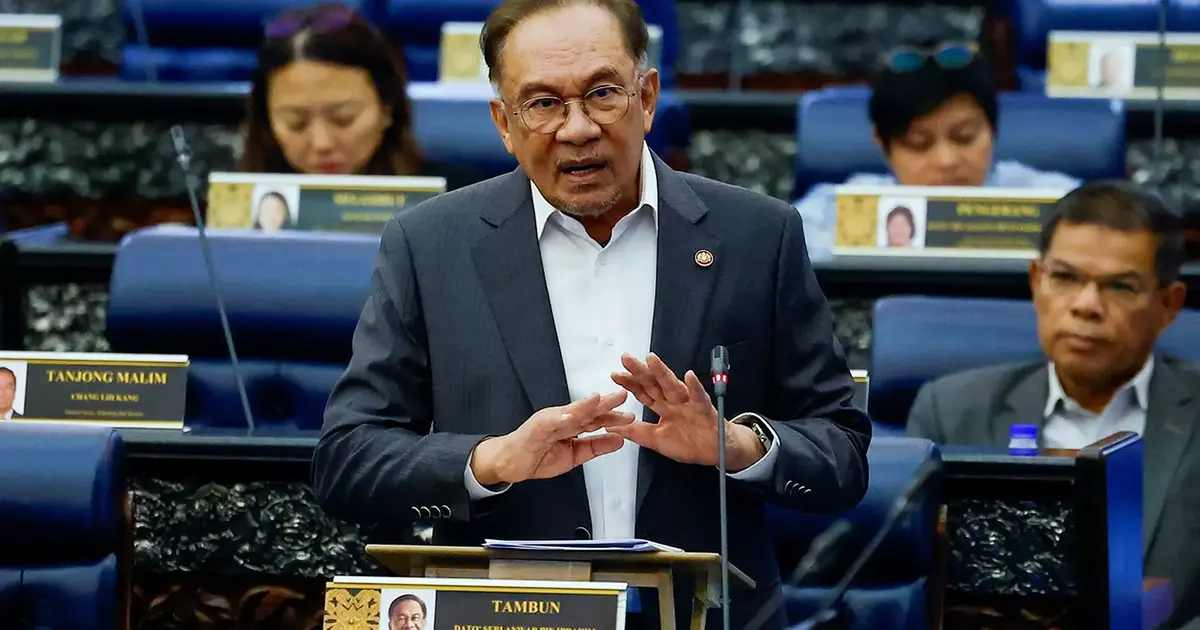
Prime Minister Anwar Ibrahim has reaffirmed that the state government under Warisan's stewardship had previously endorsed the framework governing special grant arrangements for Sabah, underscoring the continuity of fiscal arrangements across different administrations in the resource-rich East Malaysian state.
The financial commitments in question represent a significant escalation in federal support for Sabah. The initial allocation stood at RM53.4 million for both the 2020 and 2021 fiscal years, a baseline figure that reflected the federal government's recognition of Sabah's unique governance and development needs. However, the trajectory of these grants has been substantially upward, with the most recent allocation for 2024 reaching RM106.8 million—a doubling of the earlier amounts that signals intensified federal investment in the state's administration and services.
Anwar's statement carries particular weight in the context of Sabah's political landscape, where questions surrounding the legitimacy and sustainability of intergovernmental financial arrangements have periodically surfaced. By anchoring the current grant structure to decisions made by the previous administration led by Warisan, the Prime Minister has sought to establish that these allocations transcend partisan boundaries and reflect a broader consensus on Sabah's fiscal entitlements within the Malaysian federation.
Sabah occupies a distinctive position within Malaysia's constitutional and federal framework. As one of the two founding states of the federation in 1963, alongside Sarawak, Sabah retained significant autonomy over certain policy domains and has long advocated for special consideration in federal resource distribution. The state's geographic remoteness, sprawling territory, and relatively dispersed population present administrative and developmental challenges that distinguish it from peninsular states, justifying a differentiated approach to federal allocations.
The doubling of grant amounts from the 2020-2021 period to 2024 reflects evolving federal priorities and, potentially, enhanced recognition of Sabah's fiscal requirements. This progression may also indicate negotiations between the state government and federal authorities that have resulted in upward revisions to the baseline figures. Such adjustments are not unusual in Malaysian federalism, where states with specific needs or political leverage periodically secure enhanced allocations through bilateral discussions with the centre.
From a governance perspective, Anwar's clarification serves to legitimize the current grant framework by demonstrating administrative continuity. Rather than portraying these allocations as innovative or controversial measures, the Prime Minister has positioned them as the continuation of previously established understanding. This narrative approach is strategically significant, particularly if the state government or opposition parties have questioned the basis or appropriateness of the special grant rates under the current federal administration.
The figures also merit consideration within Malaysia's broader fiscal federalism architecture. Federal allocations to states, whether through standard revenue sharing formulas or special grants, represent one of the primary mechanisms through which the centre supports subnational governance and development. For Sabah, which has historically advocated for greater resources relative to its contribution to federal revenues, such grants constitute a crucial source of funding for critical services and infrastructure projects.
Anwar's emphasis that the Warisan administration endorsed these arrangements carries implications for current state governance as well. The present state government, which succeeded Warisan following the 2020 elections, inherited a fiscal framework already validated by its predecessor. This inheritance reduces the scope for disputes over the legitimacy of the grants while potentially creating expectations that the federal government will maintain or increase support as circumstances evolve.
The trajectory of these grants also invites analysis of federal spending priorities during successive administrations. The increase from RM53.4 million to RM106.8 million over a four-year period suggests that Sabah's fiscal claims on the federal government have gained traction, whether through more assertive state-level advocacy, changes in federal political calculations, or genuine shifts in recognizing the state's financial needs. Each possibility carries different implications for other states contemplating similar appeals for enhanced allocations.
Looking forward, the sustainability and potential further evolution of these grant rates will likely depend on several factors. Federal fiscal constraints, shifts in the relative political influence of Sabah within national coalitions, and evolving assessments of the state's developmental priorities will all shape whether the current trajectory continues. For Malaysian policymakers and observers of East Malaysian affairs, Anwar's statement establishes that the special grant framework enjoys a foundation extending beyond the current administration's tenure, lending it greater stability and reducing the likelihood of sudden discontinuation.
The Prime Minister's clarification thus serves multiple audiences simultaneously: reassuring Sabah's state government of continuity in federal support, signalling to other states that special arrangements require broad political consensus rather than shifting with administrations, and establishing his government's commitment to honouring fiscal commitments inherited from predecessors. In the competitive arena of Malaysian federalism, where states continuously negotiate their position within the broader union, such statements carry significance beyond their immediate fiscal implications.

