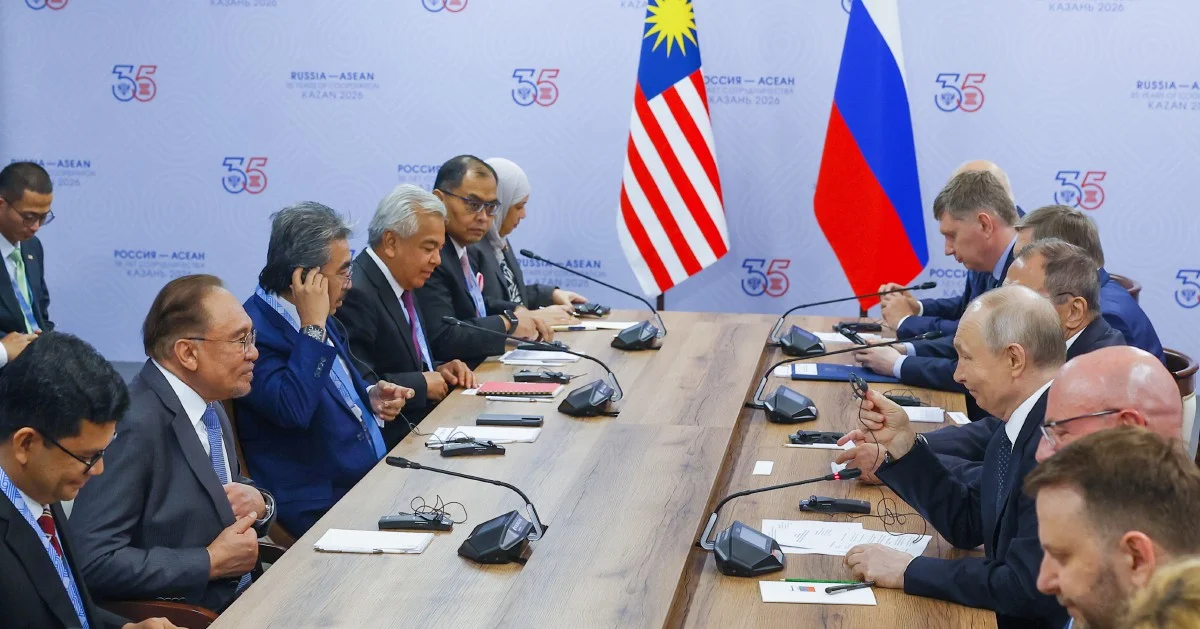
Prime Minister Datuk Seri Anwar Ibrahim has publicly commended Russian President Vladimir Putin for backing Malaysia's energy cooperation efforts, particularly through Petroliam Nasional Bhd (Petronas), during what appeared to be a bilateral engagement in Kazan. The remarks underscore Malaysia's strategic interest in strengthening ties with Moscow across the energy sector, a critical pillar of the nation's long-term development ambitions.
Malaysia's energy landscape has undergone significant evolution over recent decades, with Petronas emerging as a regional heavyweight in oil and gas exploration, production, and downstream operations. The state-owned enterprise has increasingly sought partnerships with major global energy players to secure reliable supply chains, access advanced technologies, and stabilise pricing mechanisms in an unpredictable international market. Russia, as one of the world's largest energy exporters with substantial expertise in oil and liquefied natural gas (LNG) production, represents a logical and complementary partner for such ventures.
The geopolitical context surrounding this engagement is noteworthy. Malaysia has historically maintained a non-aligned foreign policy, preferring to cultivate relationships across multiple powers rather than committing exclusively to any single bloc. This pragmatic approach extends to energy diplomacy, where Malaysian policymakers seek to diversify supply sources and partnership opportunities. Russia's continued prominence as a global energy producer—despite international sanctions imposed following the 2022 invasion of Ukraine—makes it a persistent strategic player that Malaysia cannot afford to overlook in long-term energy planning.
Petronas itself has faced mounting pressures to navigate complex international sanctions regimes while maintaining operational efficiency and profitability. The company operates across numerous jurisdictions and maintains contractual relationships with entities subject to varying levels of international scrutiny. For Malaysia's national interests to be served effectively, the government must advocate for and coordinate support from major trading partners willing to cooperate on energy matters. Putin's explicit backing for such cooperation, if reciprocated by Russian energy entities, could facilitate smoother negotiations and reduce bureaucratic friction in joint ventures.
Energy security represents an existential concern for Malaysia's economy and its rapidly expanding population. While the nation possesses substantial natural gas reserves, particularly in the South China Sea, production levels face constraints from ageing infrastructure, declining offshore yields, and the technical demands of deepwater exploration. LNG imports and strategic partnerships with established energy powers help bridge supply gaps and maintain affordable fuel costs for both industrial consumers and residential users. The ramifications of energy shortages would reverberate across Malaysia's manufacturing sectors, tourism industry, and quality of life metrics.
The timing of these diplomatic exchanges appears deliberate. Malaysia has been actively pursuing economic diversification and infrastructure development under Anwar Ibrahim's leadership, initiatives requiring substantial energy input. Securing reliable energy partnerships with established producers like Russia provides a hedge against supply volatility and potential price shocks originating from geopolitical tensions in other regions, such as the Middle East or between major powers competing for dominance in global energy markets.
From a Southeast Asian perspective, Malaysia's cultivation of energy partnerships with Russia carries broader implications. The region increasingly seeks to insulate itself from external pressures and supply-chain vulnerabilities by developing multiple international relationships. Indonesia, Vietnam, and Thailand maintain their own energy partnerships across diverse geographies, recognising that energy independence—or at minimum, energy resilience—underpins political autonomy and economic stability. Malaysia's engagement with Russian energy cooperation fits logically within this regional strategy of maximising negotiating power and minimising dependence on any single source.
Petronas' international operations extend across Africa, the Middle East, Southeast Asia, and beyond, making it a crucial instrument of Malaysian soft power and economic influence. The company's ability to forge partnerships with Russian energy companies and state entities could enhance Malaysia's diplomatic standing and create additional channels for bilateral cooperation beyond energy. Joint ventures typically spawn ancillary business opportunities, technology transfer arrangements, and people-to-people exchanges that deepen mutual understanding and strengthen overall bilateral relationships.
The acknowledgment of Russian support for Malaysia's energy initiatives also carries symbolic weight in terms of bilateral relations. Public expressions of gratitude from senior government figures serve to legitimise partnerships, signal commitment to counterparts, and communicate to domestic constituencies the government's proactive stance on securing national interests. For Anwar Ibrahim specifically, demonstrating capacity to cultivate relationships with major global powers enhances his domestic political positioning and reinforces the government's credentials in economic management.
Looking forward, the extent to which Putin's backing translates into concrete partnership arrangements will determine whether this diplomatic courtesy yields tangible benefits for Petronas and Malaysia. Russian energy companies possess technical expertise and operational experience particularly relevant to challenging Arctic and deepwater exploration environments, knowledge that could prove invaluable as Petronas seeks to extend production from increasingly difficult-to-access reserves. Conversely, Malaysia's geographic position in one of Asia's most dynamic economic regions offers Russian energy producers opportunities for market access and profit realisation.
The energy cooperation framework between Malaysia and Russia remains in early stages of formalisation, with the diplomatic overtures preceding substantial contractual commitments. Building functional partnerships requires overcoming regulatory obstacles, aligning commercial interests, and establishing trust mechanisms that can withstand shifting geopolitical circumstances. However, the publicly stated backing from Putin provides a foundation upon which such structures might be constructed, offering both Malaysian and Russian stakeholders policy-level support for their commercial pursuits.