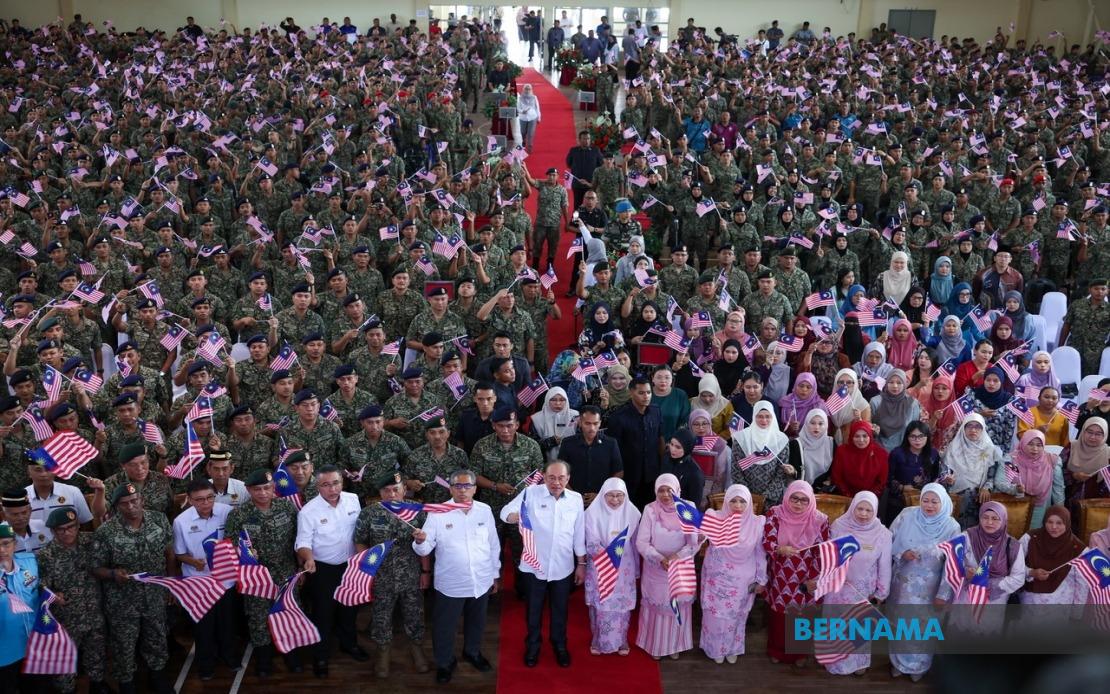
Prime Minister Datuk Seri Anwar Ibrahim has firmly rejected suggestions that his government is sidelining the interests of the Bumiputera community, particularly Malays, pointing to the establishment of new Malay reserve land in Kuala Lumpur as concrete evidence of the MADANI administration's dedication to protecting indigenous economic rights. Speaking in Tampin on July 27, Anwar emphasised that the government has moved decisively since taking office in 2022 to reverse a decades-long trend of declining Malay landholdings in the capital, a shift he described as historically significant and economically strategic.
For sixty-six years following Malaysia's independence, Kuala Lumpur had seen no new Malay reserve land created, with existing holdings steadily eroded through sales and disposals. Anwar framed this historical stagnation as a critical problem requiring urgent intervention, arguing that without active government involvement, the Malay presence in the capital's property market would continue to diminish. The Prime Minister highlighted his administration's intervention in the Bandar Malaysia site, a sprawling 480-acre parcel that had previously been held by Chinese interests and private developers in arrangements that violated regulatory requirements. By reclaiming this strategic asset in 2023, Anwar positioned himself as actively reversing patterns of land loss that had accumulated unchecked for generations.
Under the government's plan, 50 acres of the reclaimed Bandar Malaysia land—representing approximately one-tenth of the total site—has been designated as Malay reserve land. The Prime Minister emphasised that this allocation comprises some of Kuala Lumpur's most valuable real estate, suggesting that the quality and location of the designated reserve demonstrates genuine commitment rather than a token gesture. The selected acres sit within the capital's premium development zones, offering substantial economic potential for Bumiputera investors and development projects. By positioning this land as genuinely valuable rather than peripheral, Anwar sought to counter any narrative that the government was simply performing symbolic actions while allowing substantive Bumiputera interests to erode elsewhere.
Management of the broader Bandar Malaysia site has been entrusted to Petronas and Khazanah Nasional, two entities that Anwar explicitly identified as Malay-controlled organisations. This governance arrangement appears designed to ensure that strategic oversight of the reclaimed asset remains within hands trusted to prioritise Bumiputera considerations. By channelling control through these established national champions rather than foreign firms or private entities, the Prime Minister has sought to demonstrate that reclamation serves not merely to retrieve land from external ownership but to reposition it within structures sympathetic to indigenous economic empowerment. The choice of stewards signals that the government views this asset as integral to longer-term Bumiputera economic strategy rather than a one-off remedy.
Notably, Anwar stressed that the Cabinet proposal encountered no objections from the Democratic Action Party, typically positioned as the most likely coalition partner to raise concerns about policies perceived as ethnicity-focused. DAP Secretary-General Anthony Loke, attending the Cabinet session where the measure was presented, sought only clarification rather than expressing opposition. According to Anwar's account, once the Prime Minister explained the rationale—centring on the decades of decline in Malay Kuala Lumpur landholdings—Loke accepted the logic and registered no formal objection. This framing serves multiple political purposes: it demonstrates that the measure enjoys multiethnic coalition support, it validates the policy on pragmatic rather than purely communal grounds, and it suggests that even DAP recognises the legitimacy of remedying historical imbalances in Bumiputera land ownership within the capital.
The Malay reserve land designation carries substantial symbolic weight within Malaysia's constitutional framework. Reserved land provisions date to the federation's founding and represent a formal mechanism for protecting indigenous economic participation. That no new reserves have been created in Kuala Lumpur since 1957 marks a striking absence, suggesting either that post-independence governments lacked either the political will or the opportunity to expand such protections in the capital. Anwar's framing of his action as historically unprecedented since independence positions it as a watershed moment in Bumiputera economic policy, breaking a pattern that persisted across multiple administrations spanning six decades. This historical perspective elevates the policy beyond routine administrative decision-making into territory suggesting fundamental strategic reorientation.
For Malaysian observers and international investors monitoring the government's approach to constitutional safeguards, the move carries implications extending beyond land policy alone. The Bandar Malaysia reclamation itself involved retrieving a major asset from foreign and private control—a demonstration of state capacity to exercise regulatory authority and reverse transactions deemed to violate legal requirements. That this reclamation was subsequently leveraged to create Bumiputera reserve land suggests the government views regulatory intervention and indigenous protection as complementary objectives rather than competing priorities. The sequencing and framing indicate that enforcing compliance and advancing Bumiputera interests can be pursued simultaneously through strategic asset management.
The timing of Anwar's comments, delivered during a visit to Tampin in Negeri Sembilan, reflects the political sensitivity surrounding Bumiputera policy within the coalition government. Criticism that the administration neglects indigenous interests has circulated among certain constituencies, potentially affecting political support in traditionally Malay-majority areas. By visibly highlighting tangible achievements in Bumiputera land protection, Anwar has sought to counter such narratives with documented action. The involvement of senior government figures—including Chief Secretary Tan Sri Shamsul Azri Abu Bakar, Defence Ministry and Defence Force leadership—signals that this announcement carries weight across multiple governmental domains and reflects whole-of-government commitment rather than isolated departmental initiative.
For the broader Southeast Asian context, Malaysia's approach to reconciling multiethnic governance with constitutionally protected indigenous rights remains distinctive. The Bandar Malaysia decision demonstrates that even in coalition governments incorporating non-Bumiputera parties, mechanisms exist for advancing indigenous economic protection through strategic asset deployment. This suggests that Bumiputera policy need not be abandoned or radically restructured simply because government includes non-Malay political representation. Rather, careful framing around historical correction, economic principle, and legal compliance can build consensus across coalition partners for measures that deepen indigenous economic stakes. Whether such consensus-building reflects fundamental agreement or tactical accommodation between coalition partners remains a question for political observers, but the demonstrated feasibility of such measures indicates that Bumiputera protection continues as a viable policy objective within Malaysia's current political configuration.

