Prime Minister Datuk Seri Anwar Ibrahim has moved to counter perceptions that his administration has neglected vulnerable urban communities, asserting that the government continues to actively protect and advance the rights of lower-income city dwellers pursuing improved living standards.
The reassurance comes amid ongoing discussions surrounding urban renewal and property development policies that have occasionally drawn scrutiny from advocacy groups concerned about gentrification and displacement of low-income residents. Anwar's statement directly addresses these concerns by positioning the government as a champion of those living in economically disadvantaged areas of Malaysia's cities.
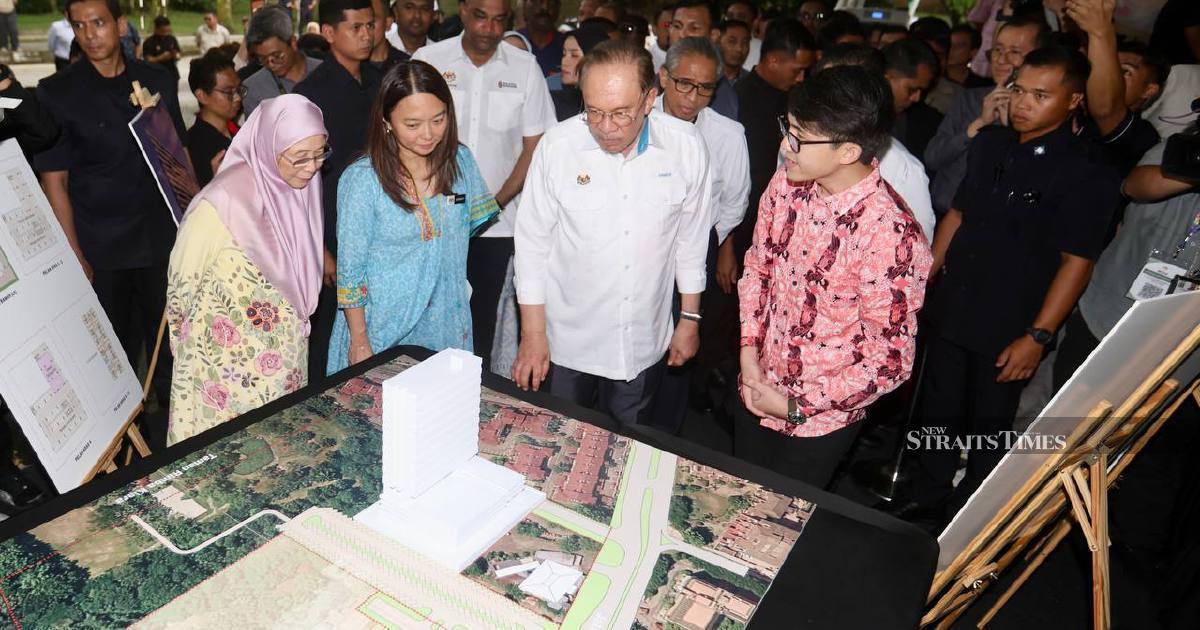
The Bukit Kiara redevelopment project has been presented as the primary evidence supporting the government's commitment to urban poor welfare. This initiative appears to serve as a flagship example of how development programmes can proceed while simultaneously protecting residents' interests. The project's design and implementation framework are being held up as demonstrating that economic progress and social responsibility toward vulnerable populations need not be mutually exclusive objectives.
The timing of Anwar's remarks reflects a broader governmental narrative emphasizing inclusive growth and equitable development. As Malaysia navigates increasing urbanisation and property market pressures, government officials have become more vocal about balancing commercial interests with community protection. The Bukit Kiara example allows the administration to illustrate this principle in practical terms, moving beyond policy declarations to tangible neighbourhood-level initiatives.
Urban poverty remains a significant challenge across Malaysia's major cities, with informal settlements and low-cost housing areas hosting hundreds of thousands of residents. These communities often face uncertainty regarding tenure security, infrastructure quality, and access to public services. Development projects in these areas typically generate mixed reactions—potential improvement alongside fears of displacement and loss of community cohesion. How governments manage this tension has become increasingly important politically.
The government's positioning on this issue carries particular weight given Malaysia's trajectory as an upper-middle-income nation pursuing developed-country status. Policymakers must reconcile modernisation aspirations with obligations toward populations whose economic participation remains limited. Anwar's emphasis on the Bukit Kiara project as evidence of rights protection suggests a strategy of highlighting specific interventions rather than relying solely on policy announcements or statistical claims.
Regionally, Malaysia's approach to urban redevelopment amid concerns about equitable outcomes parallels discussions occurring across Southeast Asia. Countries throughout the region grapple with similar tensions between rapid urban transformation and protecting lower-income residents. How Malaysian authorities handle these challenges may offer lessons—or cautionary tales—for neighbouring economies experiencing comparable urbanisation pressures.
The government's articulation of commitment to urban poor welfare also addresses criticism from opposition politicians and civil society organisations who have questioned whether development priorities adequately consider those with minimal financial buffers. By explicitly referencing the Bukit Kiara initiative, the administration appears to be answering accusations of indifference through concrete demonstration of programme implementation.
Successful urban redevelopment that protects existing residents requires balancing multiple interests—property developers seeking returns, municipal authorities managing city growth, existing communities preserving stability, and government officials fulfilling policy commitments. The Bukit Kiara project's positioning as a government success story in this regard will likely be closely monitored by observers assessing whether it genuinely protects vulnerable populations or represents merely cosmetic protections for deeper market-driven displacement.
The broader policy context involves various government initiatives targeting low-income urban residents, including affordable housing programmes, social infrastructure development, and rental assistance schemes. Anwar's invocation of Bukit Kiara should be understood alongside these wider efforts rather than as an isolated example. The administration appears to be building a portfolio of interventions to substantiate claims of equitable governance.
Financial inclusivity and livelihood stability remain central concerns for urban poor populations navigating Malaysia's competitive metropolitan economies. Government messaging about protective measures reflects recognition that electoral legitimacy increasingly depends on demonstrating tangible benefits reaching economically marginalised groups. This political reality shapes how development initiatives are framed and implemented.
Moving forward, the government's credibility on urban poor welfare will be measured not merely by rhetoric or individual projects but by sustained outcomes—whether residents of redeveloped areas actually experience improved conditions or face subtle displacement through rising living costs and changing neighbourhood character. The Bukit Kiara project's success or shortcomings may influence future urban policy approaches and opposition strategies in this politically sensitive arena.