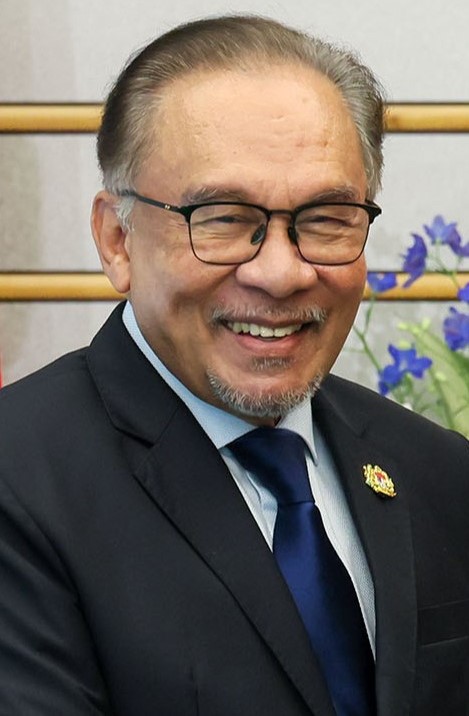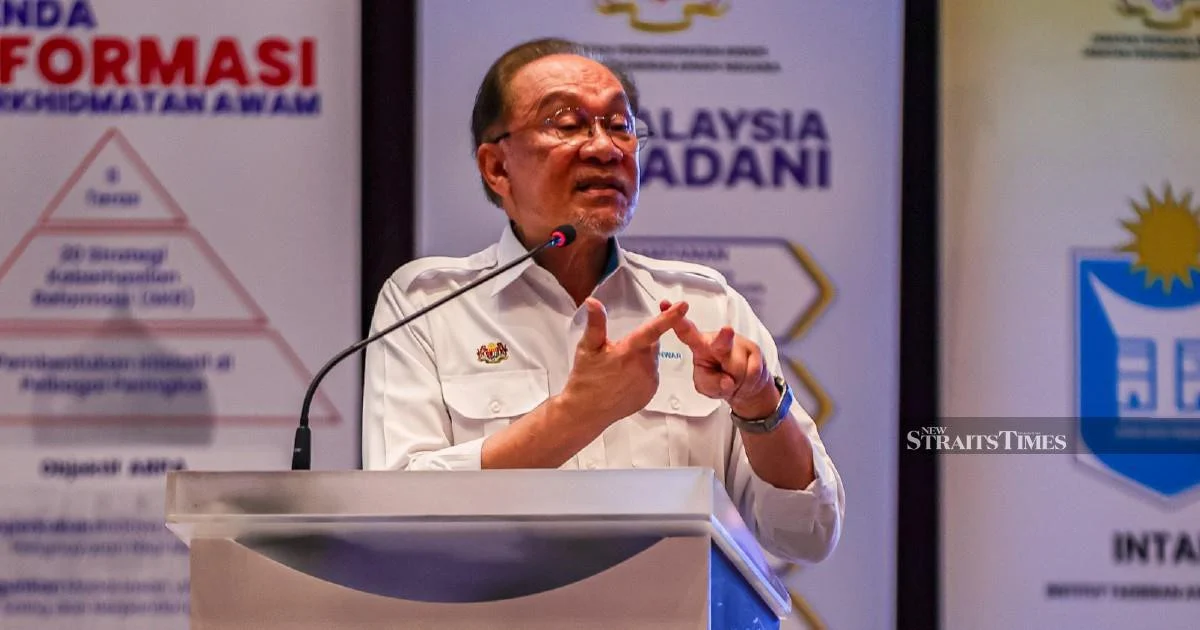
Prime Minister Datuk Seri Anwar Ibrahim moved to defuse mounting tensions within the governing coalition on Thursday, asserting that Amanah president Datuk Seri Mohamad Sabu had made no derisive comments about any political party during a campaign gathering in Tangkak. The intervention from Anwar himself signals the sensitivity surrounding unity within Pakatan Harapan, which remains the fulcrum of Malaysia's political stability as the coalition prepares for electoral contests.
The controversy emerged following Mat Sabu's address at the candidate announcement event held in Tangkak on Friday, where his remarks apparently sparked disquiet among allies. Rather than allowing the dispute to fester, Anwar seized the initiative to reframe the narrative, suggesting that observers had misread or misinterpreted the substance of what Mat Sabu had conveyed. By personally intervening, the premier underscored his commitment to maintaining operational harmony within the three-party coalition that comprises Amanah, PKR, and DAP, each with distinct constituencies and political philosophies.
The incident illustrates the fragility of coalition politics in Malaysia, where competing agendas and sensitivities can rapidly escalate into public disputes. Amanah, as a moderate Islamic-oriented party with roots in the Malay-Muslim community, occupies a distinctive niche that sometimes creates friction with DAP's secular, multi-racial platform and PKR's pragmatic centrism. These inherent tensions require careful management, particularly as the coalition faces both internal consolidation challenges and external opposition from entrenched rival blocs.
Anwar's characterization of Mat Sabu's comments as non-inflammatory reflects his broader strategy of emphasizing constructive engagement over public recriminations. This approach contrasts sharply with the adversarial tone often prevalent in Malaysian politics, where rivals frequently weaponize statements to score points or undermine credibility. By choosing to interpret Mat Sabu's remarks charitably rather than amplifying grievances, Anwar demonstrated leadership that prioritizes coalition preservation.
The timing of this episode carries significance for Malaysian politics beyond the immediate context. As the Pakatan Harapan coalition consolidates its position and contemplates future electoral strategies, cohesion becomes increasingly valuable. Any perception of internal fracturing could embolden opposition parties while simultaneously demoralizing coalition supporters who have invested political capital in maintaining this alliance. Anwar's swift clarification serves to contain potential damage before it metastasizes into something more corrosive.
Mat Sabu's position as Amanah president carries particular weight within the coalition framework. Amanah emerged from the earlier political realignment and has since established itself as an important bridge-builder between secular and Islamic-oriented political forces. Any controversy involving Mat Sabu thus carries implications beyond party politics, touching upon the broader question of whether Malaysian political coalitions can accommodate ideologically diverse partners. Anwar's defense of the Amanah leader sends a clear signal that such accommodation remains not merely possible but essential.
The episode also reflects evolving dynamics within Malaysian political communication. Campaign events, candidate announcements, and coalition gatherings increasingly occur under intense scrutiny, with every utterance subjected to interpretation and reinterpretation through multiple lenses. What speakers intend as general commentary or rhetorical flourish can become contested political statements when amplified through social media and partisan outlets. This environment demands that coalition leaders exercise vigilance in preventing minor misunderstandings from exploding into major fractures.
Anwar's intervention carries pedagogical weight for other coalition members. By explicitly stating that no mockery had occurred, he established expectations for how internal disputes should be handled within Pakatan Harapan. Rather than allowing members to air grievances publicly or invite external actors to mediate, coalition disputes should be managed through internal dialogue and clarification. This implicit message helps establish norms that protect the collective interest against the centrifugal forces that naturally operate within any multi-party alliance.
The broader context of Malaysian coalition politics suggests that maintaining unity requires constant attention and occasional course correction. The previous experience of Pakatan Harapan, which fractured between 2020 and 2022 before reconsolidating, demonstrates how rapidly trust can erode when communication breaks down. Anwar's proactive stance in this instance reflects lessons learned from that tumultuous period, when misunderstandings and perceived slights contributed to the alliance's disintegration.
For Malaysian voters and observers, Anwar's handling of this episode offers a window into his approach to coalition governance. Rather than adopting a heavy-handed managerial style, he chose to build consensus through reframing and reassurance. This approach aligns with his stated commitment to democratic values and collective decision-making within the coalition framework. Whether such leadership style proves sufficient to navigate the complex terrain ahead remains an open question, but his defense of Mat Sabu demonstrates his investment in maintaining the alliance.
Looking forward, the incident underscores the importance of clear communication protocols within Pakatan Harapan. As the coalition faces renewed pressures from opposition parties seeking to exploit any signs of weakness, internal discipline becomes paramount. Anwar's call for calm serves not merely as a temporary salve but as a foundational principle for how the coalition should conduct itself—with restraint, mutual respect, and a commitment to resolving differences through dialogue rather than public confrontation.