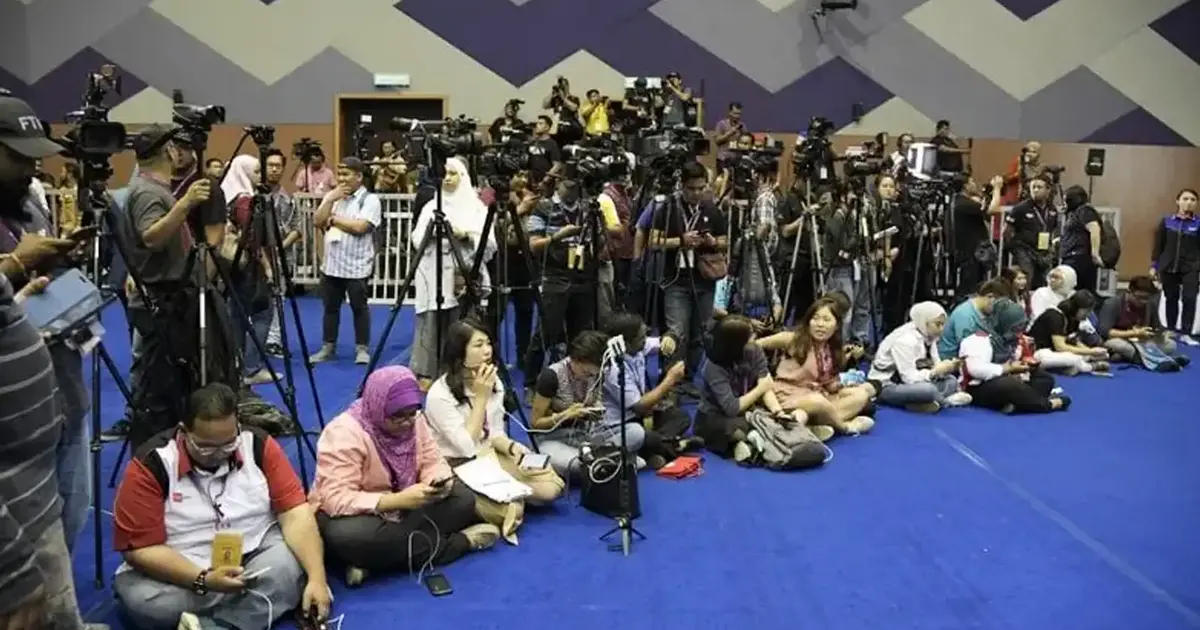
Prime Minister Anwar Ibrahim has positioned a new complaints mechanism as a safeguard against arbitrary action against media practitioners, requiring that any allegations against journalists be first submitted to the Malaysian Media Council for review before investigation or enforcement authorities become involved. The framework represents an attempt to establish institutional guardrails in a media landscape where tensions between press freedom and regulatory oversight remain persistently high across Southeast Asia.
The Malaysian Media Council, as the proposed intermediary body, would serve a filtering function intended to distinguish between legitimate concerns about journalistic standards and potentially unfounded or politically motivated complaints. This layered approach reflects international best practices in democracies seeking to balance accountability mechanisms with protection against governmental or corporate interference in editorial decisions. By requiring an initial assessment before formal action, the system theoretically prevents minor disputes or ideologically-driven claims from escalating into expensive legal battles or regulatory crackdowns.
The timing of this announcement carries significance within Malaysia's contemporary political context. Relations between government officials and media outlets have occasionally been fraught, with contentious coverage of ministerial decisions, policy implementation, and leadership issues generating disputes over accuracy and fairness. A structured complaints process could theoretically reduce ad hoc or retaliatory responses to critical reporting, though observers will monitor whether the mechanism operates with genuine independence or becomes another tool for suppressing inconvenient narratives.
For Malaysian journalists and news organisations, the framework presents both reassurance and concern. On one hand, formalising the complaints process through a professional body rather than allowing individual politicians or bureaucrats to initiate investigations offers some protection against arbitrary harassment. On the other, the requirement that all complaints pass through a single institutional gateway could become a bottleneck if the Malaysian Media Council lacks adequate resourcing, operates without transparent standards, or faces political pressure to reject complaints wholesale or accept them selectively based on political considerations rather than journalistic merit.
The Malaysian Media Council itself has been the subject of ongoing debate about its independence, composition, and effectiveness. For this complaints mechanism to function as intended, the council would need to demonstrate rigorous, impartial assessment criteria applied consistently regardless of which political party or government entity lodges a complaint. The council's reputation and credibility will determine whether industry players and the public perceive this framework as a genuine commitment to fair scrutiny or merely a cosmetic modification to existing power dynamics.
Regionally, Malaysia's approach reflects broader Southeast Asian concerns about reconciling media freedom with some form of accountability. Nations including Thailand, the Philippines, and Vietnam grapple with similar tensions, seeking mechanisms that prevent malicious misinformation while protecting legitimate journalism from government weaponisation. Malaysia's experiment with a formal complaints pathway could provide lessons, positive or cautionary, for other regional democracies refining their own media governance structures.
The practical implications for newsrooms and individual journalists remain to be tested. Newsroom managers will need to understand the council's complaint criteria and decision-making timelines to develop internal policies and risk management strategies. Journalists may find themselves with clearer parameters for investigating sensitive topics, though the psychological effect of knowing complaints are being processed through an institutional mechanism could either embolden or chill reporting depending on perceived fairness and independence.
International media freedom organisations will likely scrutinise how this mechanism functions in practice. Groups such as Reporters Without Borders and the International Federation of Journalists monitor institutional developments affecting press freedom globally. If Malaysia's system operates transparently with clear timelines, published decisions, and demonstrated independence, it could enhance the country's international standing on media rights. Conversely, if the council becomes perceived as a bottleneck designed to protect powerful interests from scrutiny, it could damage Malaysia's reputation and attract critical international attention.
The success of this framework will ultimately hinge on implementation details not yet publicly outlined. Key questions include how the Malaysian Media Council will evaluate complaints, what evidentiary standards apply, how quickly decisions will be rendered, whether complainants can appeal unfavourable determinations, how the council communicates findings, and what enforcement mechanisms follow council recommendations. A poorly designed or opaquely operated system could generate more frustration than resolution.
Stakeholders across Malaysia's media ecosystem—editors, journalists, publishers, press clubs, civil society advocates, and communication scholars—should engage constructively with the implementation process. Clear guidelines, transparent procedures, published decision rationales, and periodic independent audits of the council's operations could establish genuine confidence in the system's fairness. Conversely, opacity, inconsistent application of standards, or perceived political bias would swiftly undermine whatever legitimacy the framework seeks to establish.
As Malaysia continues developing its democratic institutions and regulatory frameworks, this complaints mechanism represents a moment where sophisticated design and genuine commitment to independence could meaningfully advance both press accountability and press freedom simultaneously. The challenge lies in translating the stated principle of fair scrutiny into institutional practice that protects journalism's social role while addressing legitimate concerns about accuracy and professional standards.

