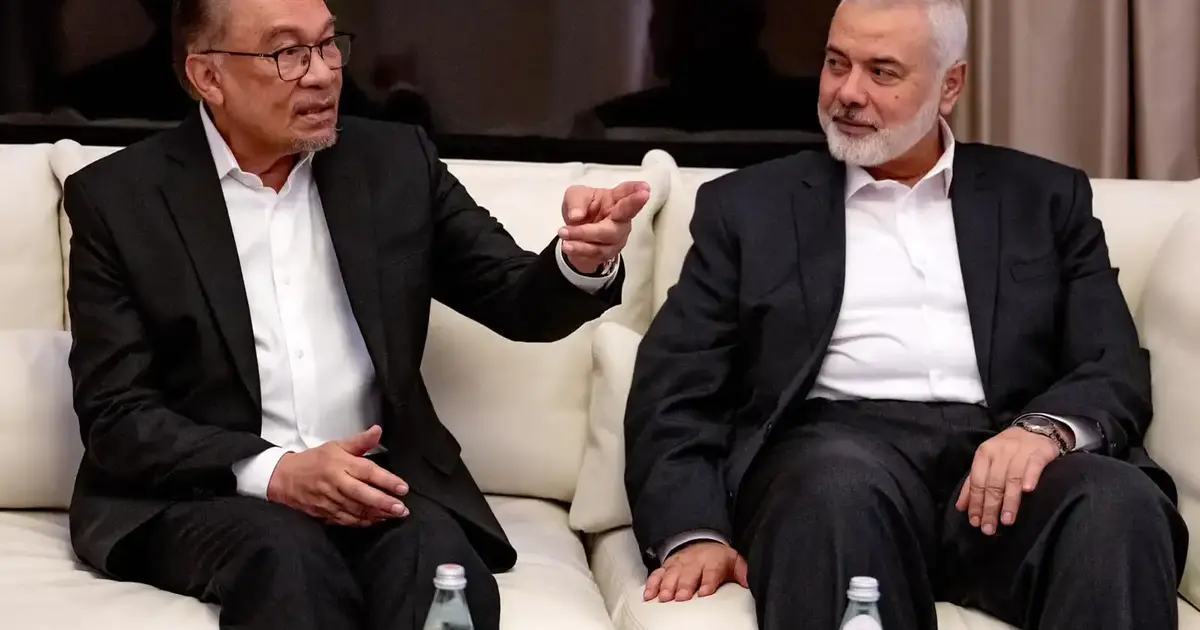
Prime Minister Anwar Ibrahim has moved swiftly to dismantle allegations that Malaysia served as a training ground for members of Hamas, describing the accusations as entirely without substantiation. Speaking on the matter, Anwar categorically denied that any such operations were conducted within Malaysian territory, effectively refuting suggestions that the country played host to militant training activities.
The denial arrives amid broader international scrutiny of Malaysia's diplomatic relationships and counterterrorism posture. For a nation that has long positioned itself as a bridge between the Western world and the Islamic sphere, allegations of harbouring or facilitating militant activities strike at the heart of its carefully cultivated geopolitical image. Anwar's prompt and forceful response underscores the Malaysian government's awareness of how such claims, whether substantiated or not, can damage bilateral relationships and invite unwanted international attention.
In a parallel disclosure that adds texture to his defence, Anwar revealed that he had apprised US President Donald Trump of a historical meeting he had conducted with a Hamas leader. The voluntary nature of this disclosure suggests a deliberate strategy to demonstrate transparency to Washington and preempt potential accusations of concealment. By placing his past interactions on record with the American president directly, Anwar appears to be signalling that Malaysia's engagement with diverse political actors—including those designated as terrorist organisations by some nations—occurs within bounds that are known to key international partners.
The timing of these statements carries significance within the context of Malaysia-US relations. Under the Trump administration, which has taken a notably harder line on designated terrorist organisations compared to its predecessor, such clarifications become essential diplomatic housekeeping. Malaysia, as a Muslim-majority nation with complex regional security challenges, must navigate the delicate terrain of maintaining its independence in foreign policy while also ensuring it does not alienate its Western security partners, particularly the United States.
Anwar's framing of the issue as baseless also reflects a broader pattern whereby Malaysian leadership increasingly challenges external assertions about the country's internal affairs. This posture aligns with a nationalist sentiment that has grown more pronounced in recent years, particularly among segments of the Malaysian public and political establishment who view foreign criticism as either uninformed or part of deliberate campaigns to undermine the nation's standing. By rejecting the allegations outright, Anwar positions himself as defending Malaysian sovereignty against external interference.
The historical context of Anwar's own political journey adds another layer to his present statements. His earlier career was marked by significant Islamist connections and activism, a fact that opponents and international observers have occasionally resurrected to question his judgment on security matters. By directly addressing his past Hamas contact and presenting it as something he has openly discussed with the American leadership, Anwar attempts to neutralise potential criticisms that he has hidden anything from scrutiny or acted in ways that conflict with international counterterrorism norms.
From a Southeast Asian perspective, Malaysia's position on such matters influences broader regional security dynamics. The rise of militant movements across the region, coupled with transnational networks that exploit porous borders and illicit funding mechanisms, means that any credible allegations of training operations would carry ramifications beyond Malaysia's borders. Neighbouring countries like Singapore, Thailand, and Indonesia monitor Malaysian security developments closely, given shared concerns about extremist movements and cross-border militant activity. Anwar's denial thus carries implications for regional stability and inter-ASEAN confidence.
The government's response also reflects the challenge that many developing democracies face in balancing multiple pressures: managing domestic Islamist constituencies that view certain organisations with sympathy, maintaining relationships with Western security partners who designate these same organisations as terrorist entities, and protecting national security from genuine threats. Malaysia's approach has historically involved quiet diplomacy rather than public confrontation, which makes Anwar's forthright statements on this occasion somewhat noteworthy.
Moreover, the distinction Anwar appears to draw between personal diplomatic engagement and institutional support for militant activities is important. Malaysia, under various governments, has hosted representatives from political movements across the spectrum, including Palestinian organisations. Such contacts do not necessarily equate to training operations or material support for armed wings of those movements. Anwar's insistence that the current allegations conflate these different activities suggests he views the charge as a conflation of legitimate diplomatic interaction with material support for militant activity.
Looking ahead, these statements are likely to feature prominently in Malaysia's diplomatic communications with Washington and other allied nations. They represent an investment in maintaining the credibility and trustworthiness that Malaysia requires to sustain its security partnerships and economic relationships. For Malaysian citizens and observers of the country's foreign policy, the prime minister's direct engagement with such serious allegations—rather than delegating the response to security officials or simply issuing a terse denial—signals that the government takes both the charges and the international relationships at stake with considerable seriousness.

