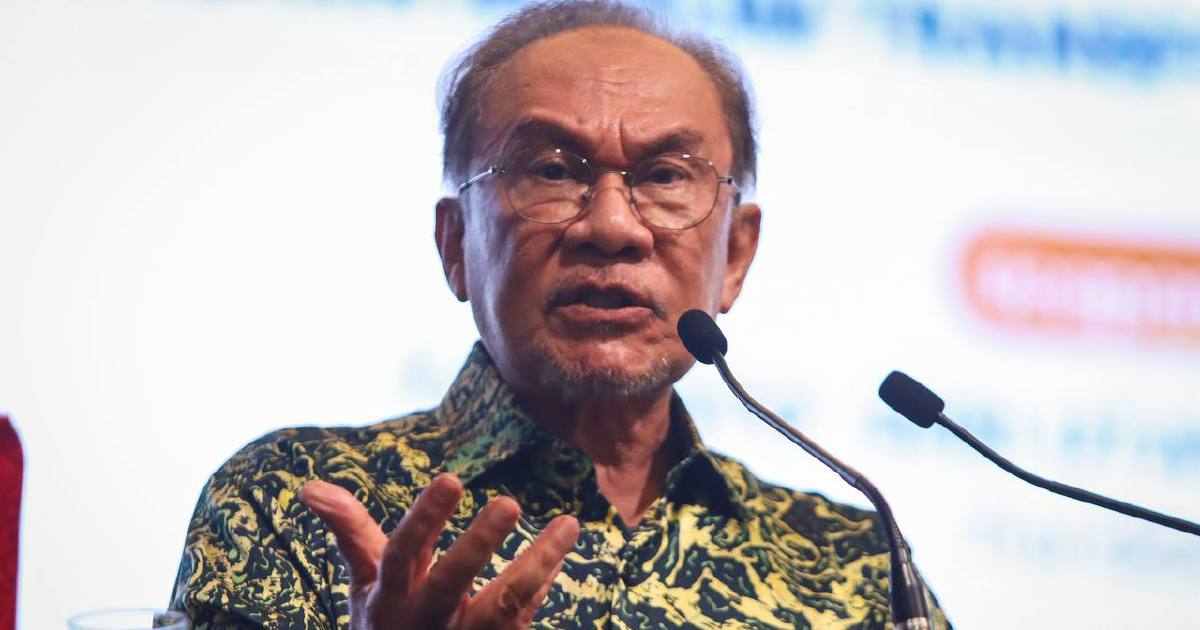
Prime Minister Datuk Seri Anwar Ibrahim has firmly rejected comments made by Kedah Menteri Besar Datuk Seri Muhammad Sanusi Md Nor regarding Tanah Melayu, instead advocating for an inclusive national vision that encompasses all Malaysian citizens. Speaking at Bukit Mertajam, the Prime Minister underscored that the nation's resilience and progress fundamentally depend on recognizing the contributions and belonging of every community within its borders.
The exchange reflects an ongoing tension within Malaysian politics over the interpretation and application of constitutional concepts rooted in the country's founding principles. The term Tanah Melayu, historically referring to the Malay Peninsula, carries significant cultural and political weight in Malaysian discourse, often invoking discussions about Bumiputera rights, constitutional guarantees, and the special position of Islam and the Malays. When Sanusi's remarks surfaced, they triggered broader questions about how contemporary leaders frame national identity and citizenship in a country with substantial communities of varied ethnic and religious backgrounds.
Anwar's intervention signals his administration's commitment to a more pluralistic framework for understanding Malaysian nationhood. His response emphasizes that strength emerges not from exclusionary definitions of belonging but from recognizing the stake that all communities have in the nation's future. This positioning aligns with his broader agenda of economic modernization and social cohesion, which requires maintaining the confidence and participation of Malaysia's diverse population in shared endeavours.
The timing of this disagreement occurs within a complex political environment where Kedah remains under PAS-led administration, while Anwar's coalition holds federal power. The contrasting rhetorical approaches between federal and state leadership highlight fault lines that persist even within ostensibly aligned political structures, particularly regarding the framing of Malay-Muslim interests versus multiethnic nationalism.
For Malaysian observers, the Prime Minister's remarks carry practical implications beyond symbolic posturing. An explicitly inclusive national narrative becomes particularly consequential when addressing economic policy, educational access, public employment, and business opportunities. If the government frames these matters through an expansive conception of citizenship, it creates intellectual and moral space for addressing grievances across communities and building consensus around shared development goals.
Sanusi's original comments warrant examination within Kedah's particular political context, where PAS has cultivated electoral support through appeals to Islamic governance and Malay identity. The state leader's invocation of Tanah Melayu likely resonates with segments of his constituency that view such assertions as necessary counterweights to perceived marginalization or dilution of traditional privileges. However, such framing risks alienating other communities and complicating efforts at national unity that higher-level government officials seek to foster.
Anwar's counter-narrative appeals to Malaysia's constitutional foundations, which while granting certain protections and privileges to Islam and the Malay-Muslim population, also explicitly guarantee the rights of other communities and establish a federal system with democratic participation open to citizens of all backgrounds. By rooting his inclusive vision in constitutional principles rather than invoking competing ethnic or religious claims, the Prime Minister positions his stance as legally grounded and institutionally stable.
The practical stakes of this debate extend to Southeast Asia's broader geopolitical positioning. Malaysia's ability to maintain internal cohesion and project stability depends significantly on avoiding the polarization that has weakened some regional neighbors. International investors, skilled professionals, and regional partners assess political risk partly through the lens of communal harmony and equal treatment of different groups. When national leaders publicly contest the basis of belonging, they risk signalling instability to constituencies beyond Malaysia's borders.
Within the government coalition itself, Anwar's criticism of Sanusi may also reflect calculations about managing different ideological tendencies. While PAS governs Kedah and holds federal parliamentary seats, the Prime Minister must balance respect for state autonomy with steering the national narrative toward frameworks that preserve governing coalition cohesion. By publicly clarifying the federal government's position on inclusive citizenship, Anwar establishes parameters that state-level leaders, even those from aligned parties, would find difficult to openly defy without inviting further federal scrutiny or public censure.
Educational and cultural institutions will likely register the implications of this high-level exchange. State media, school curricula, and civic education programs often reflect the values that senior political leaders emphasize. An administration that consistently reinforces inclusive citizenship messaging influences how younger Malaysians internalize their relationship to the state and to fellow citizens of different backgrounds. Conversely, if federal emphasis on inclusion encounters persistent state-level counter-narratives emphasizing exclusivity, confusion or resentment among citizens could intensify.
Looking forward, the challenge for Malaysia's political establishment involves reconciling genuine concerns of different communities with the imperative of maintaining a functional, equitable state. Anwar's response suggests his administration will continue advancing arguments rooted in shared national identity and constitutional pluralism, while likely avoiding direct confrontations with state leaders unless public statements cross thresholds deemed genuinely destabilizing. The success of this approach will depend substantially on demonstrating through policy that inclusive rhetoric translates into tangible fairness and opportunity across community lines.

