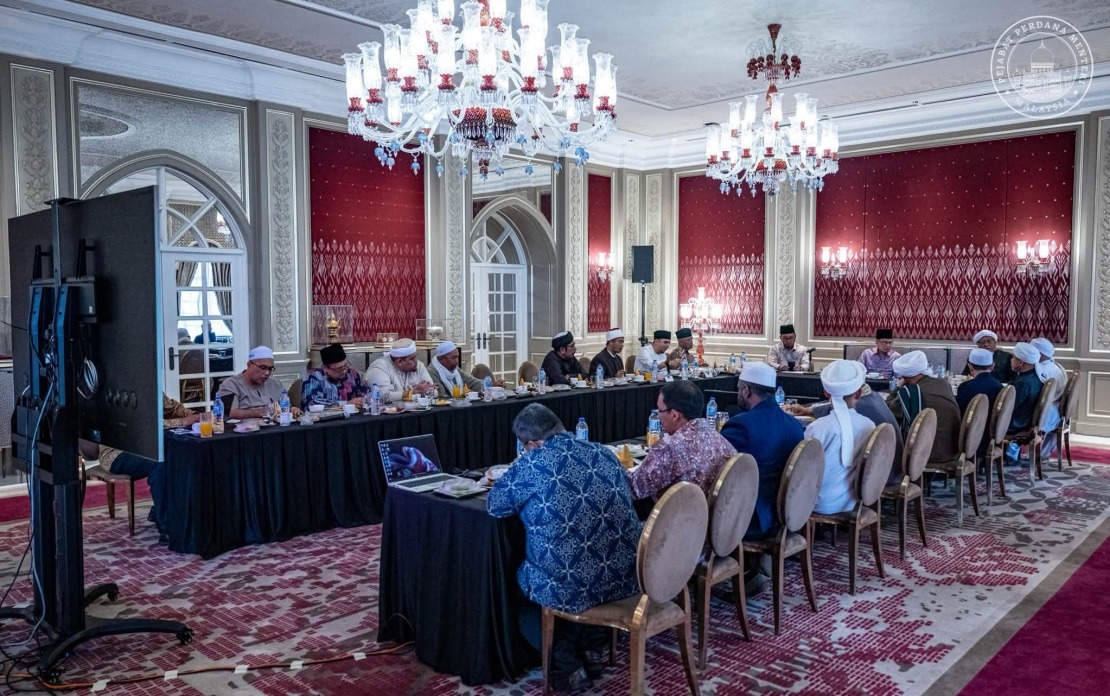
Prime Minister Datuk Seri Anwar Ibrahim has reaffirmed the government's commitment to drawing upon the counsel of religious scholars as a foundational element of policymaking, describing such engagements as essential opportunities for institutional reflection and refinement. Speaking following a series of muzakarah discussions held in conjunction with Maulidur Rasul celebrations, Anwar characterised these consultations not simply as protocol meetings but as substantive deliberative forums designed to ensure that government initiatives remain grounded in rigorous Islamic knowledge, corrected through expert guidance, and calibrated to respond to the evolving requirements of Malaysia's Muslim population alongside contemporary societal demands.
The Prime Minister's emphasis on scholarly consultation reflects a governing philosophy that places considerable weight on the intersection of religious expertise and state administration. By positioning these dialogues as mechanisms for refining policy approaches rather than merely seeking endorsements, Anwar appears to be signalling that the government views Islamic scholars as active partners in governance processes rather than peripheral commentators. This approach carries particular significance in the Malaysian context, where the relationship between state power and religious authority has historically shaped constitutional arrangements, legislative priorities, and public policy across multiple domains.
During the afternoon's discussions, Anwar met with Sheikh Dr Muhyiddin Awwamah, who represents Darul Hadis al-Awwamiyyah, a distinguished institution in Islamic scholarly circles. The choice of interlocutor is noteworthy given the prominence of Sheikh Dr Muhyiddin's lineage within Islamic academic traditions. His father, Al-'Allamah Sheikh Muhammad bin Awwamah, established himself as a towering figure in hadith scholarship, accumulating recognition across the Muslim world for his meticulous textual work and theoretical contributions to Islamic jurisprudence. This intergenerational dimension underscores how contemporary Islamic governance in Malaysia continues to draw authority from established scholarly lineages.
Anwar took the opportunity to express appreciation for the intellectual contributions of Sheikh Muhammad bin Awwamah, characterising his published works not merely as informational compilations but as embodiments of intellectual legacy that sustain continuity within Islamic scholarly traditions. This framing carries deeper implications about how knowledge transmission operates within Islamic circles and how state actors increasingly recognise the value of tapping into these established knowledge networks. The Prime Minister's explicit acknowledgment of these intellectual inheritances signals an understanding that contemporary Islamic governance benefits from anchoring itself to recognised scholarly genealogies rather than attempting to navigate religious matters through purely technocratic or political channels.
The timing of these consultations during Maulidur Rasul observances is deliberately symbolic. The commemoration of Prophet Muhammad's birth traditionally occasions reflection on Islamic values, scholarly tradition, and the application of religious principles to contemporary life. By scheduling high-level government consultations during this period, Anwar connects institutional policymaking to the rhythms and meanings embedded within Islamic calendrical observances. This temporal coordination reinforces the message that religious considerations are not compartmentalised elements of governance but rather intrinsic to how the government conceptualises its responsibilities toward the Muslim population.
The substance of Anwar's statements reveals an underlying tension within Malaysian governance that deserves closer examination. While emphasising the necessity of scholarly input, the Prime Minister simultaneously asserts that government efforts must be "refined according to the needs of the Muslim community and the demands of the times." This formulation grants state actors significant interpretive authority in determining what those needs and demands actually entail, potentially limiting the binding force of scholarly advice. Religious scholars may provide guidance, but ultimate decisions about policy direction remain concentrated within executive authority.
For Malaysian readers, particularly those concerned with the trajectory of Islamic governance and religious pluralism, these consultations merit scrutiny in terms of their substantive outcomes. While the Prime Minister's rhetoric emphasises genuine dialogue and mutual learning, documented evidence of how scholarly input actually shapes policy decisions remains opaque in most instances. Understanding whether these forums function as genuine consultation mechanisms or primarily serve legitimising purposes requires examining policy outputs and tracking the specific recommendations offered by scholars against subsequent government action.
The emphasis on seeking wisdom and understanding Islamic development trajectories also connects to broader questions about Malaysia's positioning within the Muslim world and its approach to modernisation. By regularly consulting established Islamic scholars, the government signals its commitment to ensuring that development and progress remain coherent with religious principles and scholarly consensus. This represents an alternative governance model to secular technocracies that bracket religious considerations from policy deliberation, though it raises distinct questions about whose voices within religious communities receive amplification through state forums.
The series of muzakarah discussions undertaken by the Prime Minister's office appears to constitute an ongoing institutional practice rather than ad hoc engagement. This regularity suggests that consultation with religious scholars has become embedded within standard governance procedures. For Southeast Asian observers, the Malaysian model of top-level political engagement with Islamic intellectuals offers insights into how Muslim-majority democracies can institutionalise religious expertise within secular constitutional frameworks without necessarily privileging particular theological positions or religious interpretations.
Moving forward, the effectiveness of these consultative arrangements will likely depend on their capacity to influence substantive policy outcomes across diverse government portfolios, from education and welfare to financial regulation and minority rights protection. The Prime Minister's framing suggests that government officials should view religious scholars not as obstacles to administrative efficiency but as valuable sources of normative guidance and community legitimacy. How this principle translates into actual practice, particularly when scholarly advice conflicts with political priorities or international obligations, will ultimately determine whether these dialogues represent meaningful institutional innovation or largely ceremonial exercises.

