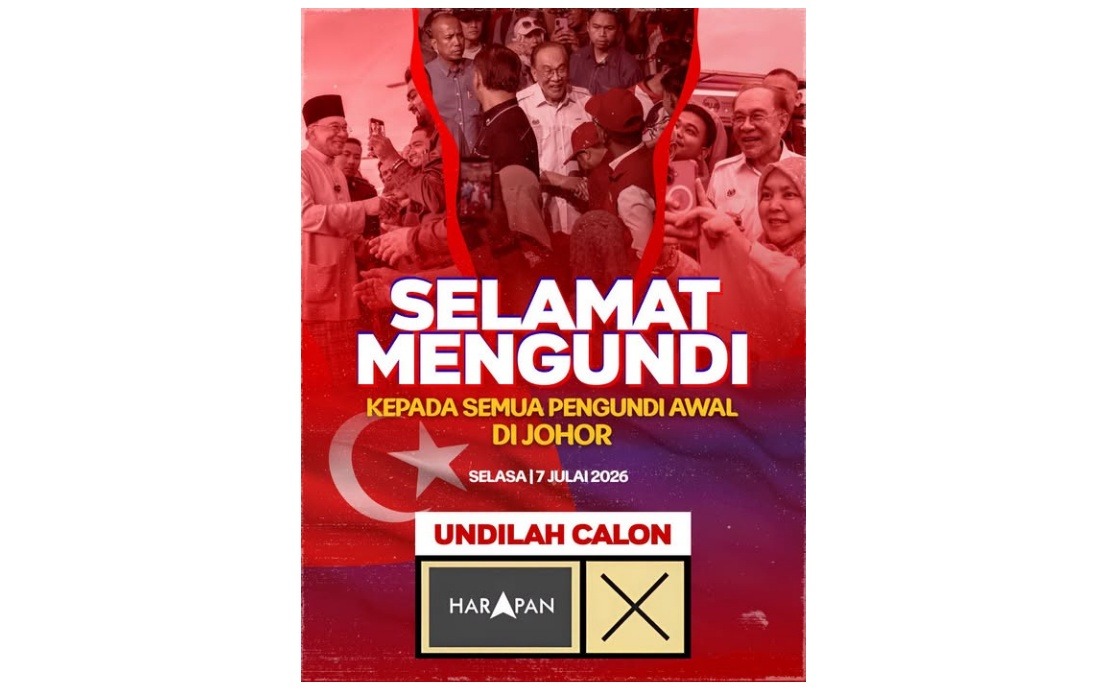
Prime Minister Datuk Seri Anwar Ibrahim has seized the opening day of early voting in the 16th Johor state election to make a direct appeal to military and police personnel and their families, urging them to support Pakatan Harapan candidates as the coalition charts its electoral strategy in one of Malaysia's largest state contests. Anwar's public endorsement through social media comes as approximately 24,751 eligible early voters began casting ballots across 64 designated centres throughout Johor on July 7, representing a significant bloc of support that could influence momentum heading into the main polling day on Saturday.
The early voting cohort comprises two distinct security sector groups whose participation is organised separately to accommodate operational requirements. Among the ballots being cast today are those from 12,041 members of the Malaysian Armed Forces and their spouses, whilst an additional 12,710 personnel from the Royal Malaysia Police and the General Operations Force, together with their families, are participating in the staggered voting arrangement. The logistics of coordinating this early vote involves 53 dedicated polling centres serving police and paramilitary voters opening at eight in the morning, whilst 11 additional centres cater to military personnel, with voting hours concluding between noon and six o'clock depending on location and voter density.
Anwar's messaging emphasises the stakes involved in Johor's election within the broader context of Pakatan Harapan's political objectives. By framing the contest as an opportunity to "secure the best for Johor," the Prime Minister positioned the election beyond routine state politics, implying that voters have a responsibility to determine the trajectory of Malaysia's second-largest state by population and a crucial economic hub in the nation's southern region. His exhortation to "vote Harapan" represents a consolidated campaign strategy whereby the coalition places its collective brand before voters rather than individual party identities, a tactic designed to maximise support across PH's constituent membership.
The coalition is pursuing an ambitious dominance of Johor's legislative chamber by contesting all 56 state seats, demonstrating confidence in its electoral prospects despite the state's historical significance as a Barisan Nasional stronghold. This comprehensive candidacy strategy distributes representation across three partners: PKR nominates 20 candidates, whilst Amanah fields 19 and DAP contributes 17 contestants. This allocation reflects internal negotiations within the coalition and represents an attempt to balance the interests of PH's component parties whilst maximising the coalition's capacity to govern should it secure a majority of the 56 available seats.
The overall election involves substantially broader participation beyond early voting, with 172 candidates registered to compete for the state seats and approximately 2.7 million eligible voters preparing to cast ballots on Saturday. This voter turnout represents a significant proportion of Johor's adult population and underscores the political importance attached to the contest by both governmental and opposition actors. The sheer scale of the election machinery required to accommodate such participation across a geographically extensive state illustrates the logistical complexity of electoral administration in Malaysia and the coordination required between state electoral authorities and security force personnel.
The timing of Johor's state election occurs within Malaysia's broader electoral calendar and reflects the constitutional requirements for state government renewal. For Pakatan Harapan, the Johor contest represents both an opportunity to demonstrate electoral viability in securing control of significant state governments and a test of whether the coalition's federal electoral victory translates into support at the regional level. Success in Johor would substantially reinforce PH's political positioning, whilst an electoral reversal would invite reconsideration of the coalition's strategy and public standing among Malaysian voters.
Anwar's personal intervention in the early voting campaign highlights the centrality of the Johor election to PH's political fortunes. As Pakatan Harapan's chair, Anwar's public statements carry symbolic weight in rallying party loyalists and conveying coalition unity. His decision to publicly encourage military and police voters specifically suggests recognition that these professional cohorts represent a distinct demographic whose voting patterns merit targeted messaging, particularly given their professional obligations and the potential for these voters to influence broader electoral sentiment within their professional communities and families.
The arrangement of early voting by security force membership reflects Malaysia's constitutional and operational necessity to accommodate personnel who may be unavailable during regular polling hours. This structured approach ensures comprehensive voter participation whilst respecting the security sector's operational continuity requirements. The staggered closing times across different polling centres accommodate variations in voter numbers and operational flexibility required by different military and police establishments across Johor's territory.
For Malaysian political observers and Southeast Asian analysts monitoring democratic processes in the region, Johor's state election provides substantive data regarding voter sentiment towards incumbent federal administration and the regional viability of Malaysia's coalition-based political model. The state's economic significance and substantial population base mean that electoral outcomes carry implications extending beyond Johor's borders, potentially affecting national political calculations and coalition stability. Anwar's explicit campaign engagement demonstrates the federal leadership's investment in converting early support demonstrated through military and police voting into broader electoral success on Saturday, when the state's general electorate determines whether Pakatan Harapan's optimistic messaging resonates with Johor's voters.

