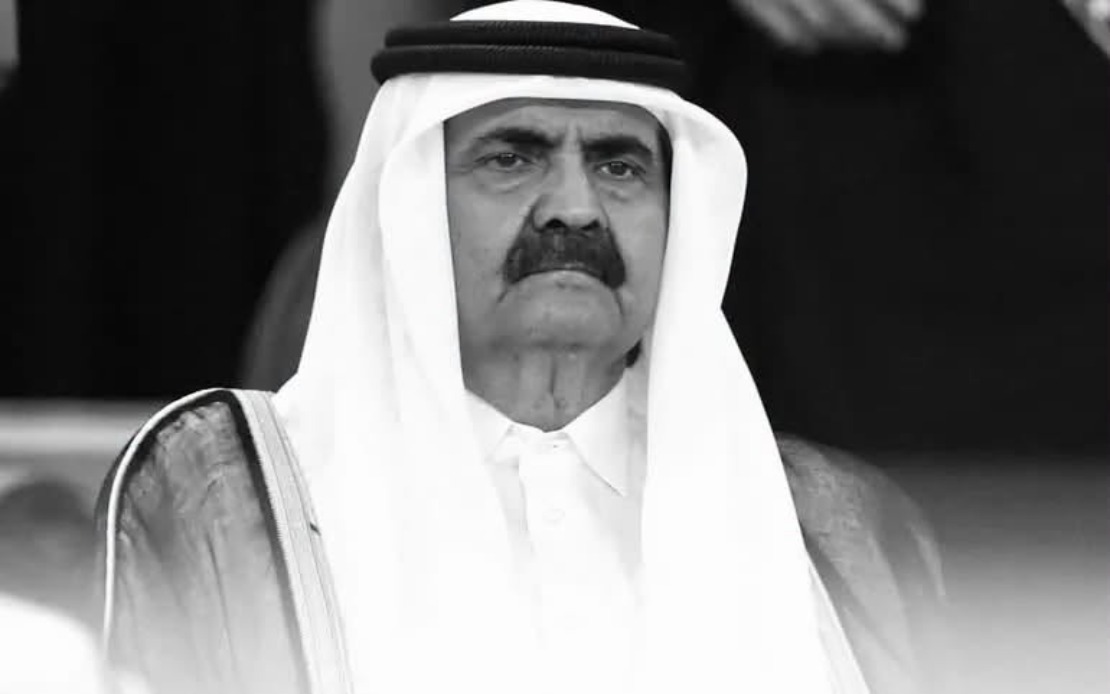
Prime Minister Datuk Seri Anwar Ibrahim has conveyed Malaysia's deepest condolences to Qatar's Amir Sheikh Tamim bin Hamad Al Thani, the Qatari royal family and the broader population of Qatar following the death of Sheikh Hamad bin Khalifa Al Thani, the Father Amir. The Malaysian leader expressed his sympathies through a Facebook statement on July 12, honouring the legacy of the senior statesman who shaped the Gulf state's trajectory during a transformative period in its modern history.
Sheikh Hamad's influence on Qatar proved foundational to the nation's emergence as a significant player on the world stage. During his 18-year tenure as Amir, the Father Amir oversaw a period of extraordinary economic expansion that repositioned Qatar from a regional player to a global financial and strategic power. The nation's oil and gas wealth, coupled with strategic investments and modernisation initiatives under his stewardship, created the economic foundations that continue to define Qatar's international standing today. Anwar specifically acknowledged these achievements, recognising how Sheikh Hamad's vision and governance transformed Qatar into a nation of considerable global consequence.
Beyond economic metrics, Sheikh Hamad's leadership elevated Qatar's voice in both regional diplomacy and international relations. The Father Amir cultivated Qatar's role as a bridge between diverse geopolitical interests, earning respect from nations across the Muslim world and establishing the country as a diplomatic hub. His influence extended to multilateral institutions and cross-border initiatives that shaped Middle Eastern politics and Gulf Cooperation Council dynamics. This diplomatic acumen became a defining characteristic of his reign and established precedents his successors have built upon.
Anwar highlighted what many observers regard as Sheikh Hamad's most consequential decision: his voluntary relinquishment of power in 2013. The Prime Minister characterised this transition as a rare expression of statesmanship, particularly significant in a regional context where succession planning and generational power transfers often prove contentious. By willingly transferring authority to his son Sheikh Tamim bin Hamad Al Thani, Sheikh Hamad demonstrated a commitment to institutional continuity and orderly governance that transcended personal or dynastic considerations. This decision ensured Qatar's stability during a critical juncture and preserved the nation's forward momentum.
The diplomatic relationship between Malaysia and Qatar carries substantial weight in Southeast Asian-Gulf relations. Anwar's characterisation of Sheikh Hamad as a steadfast friend of Malaysia reflects decades of bilateral engagement encompassing trade, investment, defence cooperation and cultural exchanges. Qatar's sovereign wealth funds have been significant investors in Malaysian infrastructure and corporate ventures, while Malaysia has maintained warm diplomatic ties with the Qatari leadership across multiple administrations. The death of a senior statesman who witnessed and facilitated this relationship development represents a meaningful moment in bilateral ties.
Sheikh Hamad's passing at the age of 74 marked the end of an era in Gulf politics. The Father Amir, who assumed leadership in 1995, navigated Qatar through periods of regional instability, technological transformation and evolving international power dynamics. His 18-year reign encompassed significant milestones including Qatar's emergence as a major natural gas exporter, the establishment of Al Jazeera as an influential global news network, and the nation's successful hosting of major international sporting events. These achievements underscored his vision for Qatar's place in the global order.
The transition from Sheikh Hamad to Sheikh Tamim in 2013 has proven durable and effective. Under the current Amir's leadership, Qatar has continued the modernisation trajectory established by his father whilst navigating complex regional challenges including the 2017 diplomatic blockade imposed by neighbouring countries. The continuity in governance philosophy suggests that Sheikh Hamad's institutional legacy remains embedded in Qatar's political structures and strategic orientation. The smooth succession represented a stabilising force in a volatile region.
Anwar's invocation of Islamic prayers—requesting that Allah SWT bless Sheikh Hamad's soul and grant strength to his family and people—reflects the spiritual dimension of Malaysia's response to the loss. Such sentiments resonate deeply within Islamic political culture and underscore the shared religious framework that has historically anchored Malaysia-Qatar relations. The Prime Minister's use of Al-Fatihah, the opening chapter of the Quran traditionally recited for the deceased, signals respect for both the individual and the broader Muslim community affected by his passing.
The death of senior statesmen in the Gulf carries implications for regional diplomatic networks and strategic partnerships. Sheikh Hamad's influence extended beyond Qatar's borders, and his relationships with leaders across the Muslim world and international community proved instrumental in establishing Qatar's diplomatic gravitas. Younger leaders like Sheikh Tamim inherit not only institutional frameworks but also the diplomatic capital accumulated through their predecessor's decades of engagement. The Father Amir's passing represents a symbolic transition point in Gulf politics, marking the diminishing of a generation of regional architects.
Malaysia's formal condolence represents appropriate diplomatic protocol whilst acknowledging genuine historical connections between the two nations. As a maritime Southeast Asian nation with significant Muslim populations and growing economic ties to Gulf states, Malaysia maintains strategic interest in Qatar's stability and continued regional engagement. The bilateral relationship has deepened through trade partnerships, Islamic finance collaboration and cultural initiatives. Sheikh Hamad's stewardship of Qatar during a formative period contributed to the conditions enabling these multifaceted connections to flourish.

