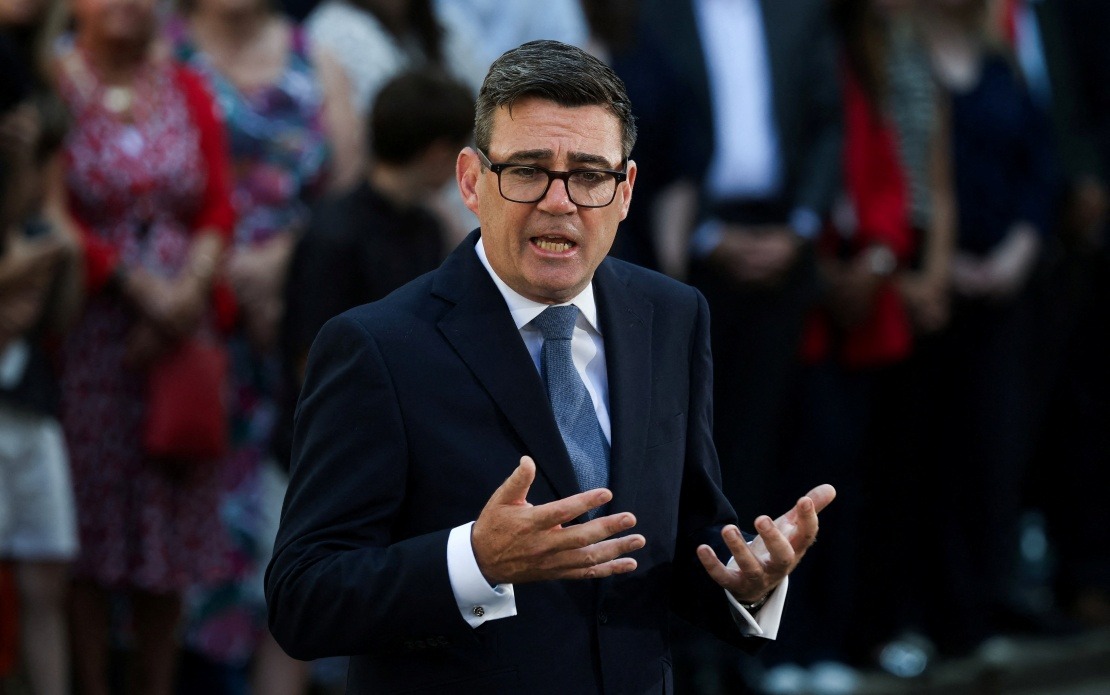
Prime Minister Datuk Seri Anwar Ibrahim has formally congratulated Andy Burnham following his elevation to the position of Prime Minister of the United Kingdom, simultaneously pledging Malaysia's commitment to strengthening the bilateral relationship between the two nations. Through a statement posted on social media, Anwar articulated his enthusiasm for collaborating with Burnham to advance a range of shared interests that reflect the evolving priorities of both countries in the contemporary global landscape.
Among the specific areas Anwar identified for deepened cooperation are the completion of a Digital Trade Agreement and expanded partnership in emerging technological domains. The Prime Minister emphasised artificial intelligence, digitalisation, clean energy, and defence as critical sectors where Malaysia and the United Kingdom can build complementary capabilities and expand mutual benefit. These priorities underscore Malaysia's strategic positioning as a regional tech hub whilst recognising Britain's advanced expertise in innovation and defence systems, suggesting concrete pathways for enhancing the partnership beyond traditional frameworks.
A particularly notable dimension of Anwar's message centred on international humanitarian concerns, specifically addressing the Gaza crisis. The Malaysian Prime Minister praised Burnham's candid acknowledgement that Britain's initial diplomatic response to the humanitarian situation fell short of what moral responsibility demanded. This recognition resonated with Anwar, who highlighted the importance of the United Kingdom leadership demonstrating what he characterised as clear moral authority on the matter. In his statement, Anwar observed that at a juncture when numerous Western nations have appeared reluctant to articulate unambiguous positions on the crisis, Burnham's willingness to acknowledge limitations in the previous government's approach represented a meaningful and constructive development.
The timing of this diplomatic outreach carries additional significance given the approaching milestone in Malaysia-UK relations. Anwar referenced the forthcoming 70th anniversary of formal diplomatic ties between the two nations, scheduled for next year, framing this as an opportune moment to reassess and reinvigorate the foundational commitment underlying the bilateral partnership. The observation suggests that Malaysia views the anniversary not merely as a historical marker but as a substantive opportunity to reset expectations and chart ambitious new directions for cooperation, particularly under Burnham's administration.
Burnham's ascension to the highest office in British politics occurred following the Labour Party's recent internal leadership transition. He assumed control of the Labour Party on Friday before being formally appointed as Prime Minister on Monday, making him Britain's seventh prime minister within the span of a single decade—a statistic that underscores the considerable political turbulence the United Kingdom has experienced in recent years. His appointment followed Keir Starmer's formal resignation, which the former prime minister submitted at Buckingham Palace in accordance with constitutional procedure.
Anwar's diplomatic gesture also extended to the outgoing British leader. The Malaysian Prime Minister conveyed appreciation to Keir Starmer for his efforts throughout his tenure in strengthening the Malaysia-UK relationship, offering wishes for Starmer's future success and endeavours. This acknowledgment of Starmer's contributions maintains continuity in the diplomatic relationship and demonstrates Malaysia's approach to transitions in international partnerships, emphasising stability and respect across changes in leadership.
The broader strategic context for Malaysia-UK engagement reflects the increasing importance both nations place on Indo-Pacific stability and regional security architecture. Malaysia, as a significant Southeast Asian economy and a nation with substantial maritime interests, values its defence and security partnerships with established military powers. The United Kingdom's renewed focus on Indo-Pacific engagement through initiatives like the AUKUS arrangement and enhanced naval presence in the region aligns with Malaysia's interest in maintaining a stable balance of power and ensuring freedom of navigation in critical sea lanes.
The emphasis on digital trade and artificial intelligence collaboration reflects contemporary economic realities. Both Malaysia and the United Kingdom recognise that technological competitiveness increasingly determines economic prosperity. Malaysia's emergence as a regional leader in digital innovation and fintech, combined with Britain's world-class research institutions and technological expertise, creates natural synergies. A formalised Digital Trade Agreement would establish frameworks for easier cross-border data flows, technology transfer, and joint innovation initiatives, positioning both nations to compete more effectively in global digital markets.
Clean energy cooperation represents another area where Malaysia and the United Kingdom share complementary interests and capabilities. Malaysia possesses significant renewable energy potential and is actively pursuing its commitment to carbon neutrality, whilst the United Kingdom has established itself as a leader in renewable energy transition and green financing mechanisms. Collaborative efforts in this domain could facilitate knowledge exchange, investment flows, and technology deployment that accelerate Malaysia's energy transition whilst providing British companies access to growing Southeast Asian clean energy markets.
The significance of Anwar's initiative extends beyond ceremonial diplomatic courtesy. By reaching out early in Burnham's tenure with a comprehensive agenda addressing multiple dimensions of bilateral cooperation, Malaysia positions itself as a proactive and substantive partner in Britain's strategic recalibration towards the Indo-Pacific region. For Malaysian readers and policymakers, this engagement signals the government's determination to leverage the UK relationship as part of a broader diversification strategy in international partnerships, particularly as Malaysia navigates great power competition and seeks to maintain strategic autonomy in an increasingly complex geopolitical environment.

