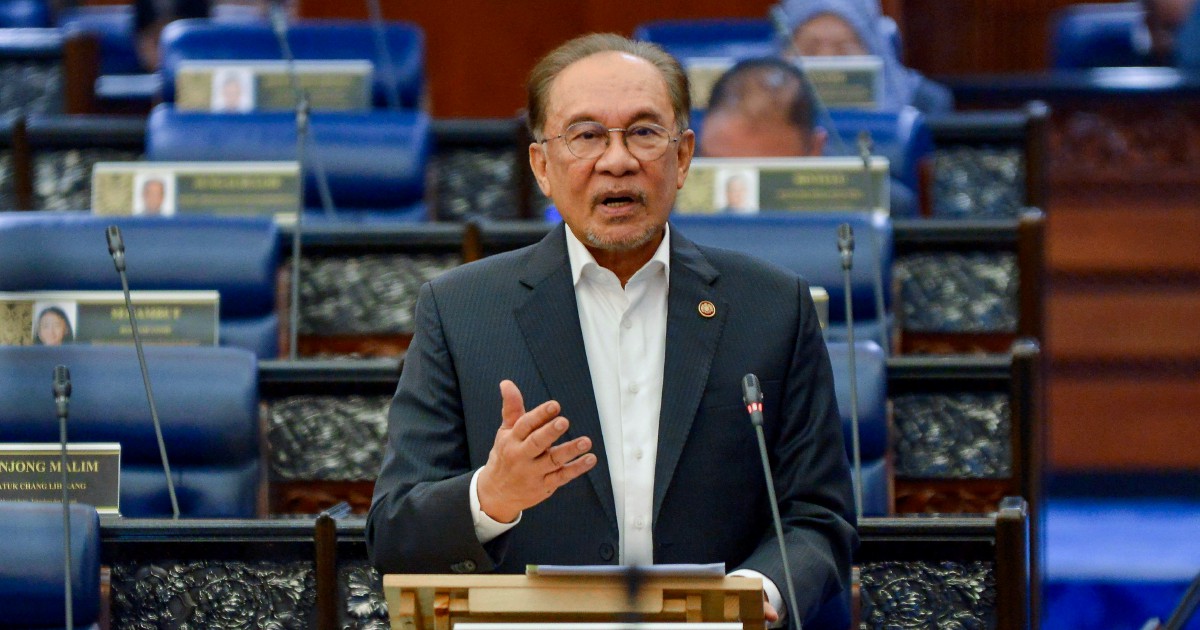
Prime Minister Datuk Seri Anwar Ibrahim has drawn attention to a significant imbalance in Malaysia's public pension financing, highlighting that the Retirement Fund Incorporated (KWAP) generates investment returns of RM12.9 billion annually yet faces annual pension obligations totalling nearly RM45 billion. The shortfall underscores mounting pressure on government finances as the nation's civil service pension liabilities continue to outpace investment performance and requires the Treasury to make up the difference each fiscal year.
The figure represents a substantial structural challenge within Malaysia's public sector employment framework. KWAP, which manages retirement savings and pension entitlements for federal government employees and certain statutory bodies, has historically delivered respectable investment returns relative to regional peers. However, the scale of pension commitments—driven by decades of accumulated service obligations and an aging civil service population—has grown to exceed what investment income alone can sustain. The RM32.1 billion annual funding gap must be bridged through general Treasury allocations, effectively making pension liabilities a competing claim against other government spending priorities including education, healthcare, and infrastructure.
This disclosure carries particular relevance for Malaysia's medium-term fiscal planning. Government pension obligations represent a fixed, non-discretionary expense that continues to rise as more civil servants reach retirement age. The baby boomer generation entering their pension years has inflated beneficiary rolls significantly over the past decade, whilst the number of active contributors has grown more slowly. This demographic trajectory mirrors challenges facing developed nations with mature social security systems, and raises questions about the long-term sustainability of current benefit structures without reform.
The pension funding gap also illustrates broader investment performance considerations. KWAP's RM12.9 billion annual return translates to a yield that, whilst reasonable in absolute terms, reflects cautious asset allocation decisions that prioritise capital preservation over growth. Malaysian pension funds typically maintain substantial allocations to fixed income securities and government bonds, which provide stability but generate lower yields than diversified equity portfolios. Rebalancing toward higher-yielding assets carries risks, particularly in volatile markets, yet maintaining conservative positioning ensures that pension funding gaps will persist indefinitely without supplementary measures.
For Malaysia's working population and prospective retirees, the revelation underscores the distinction between formal civil service pensions and retirement provision for private sector employees. Civil servants benefit from defined-benefit arrangements where pension payments are guaranteed regardless of investment performance, with the government absorbing any shortfalls. This contrasts sharply with the private sector's reliance on the Employees Provident Fund (EPF), which operates on a defined-contribution basis where retirement income depends directly on accumulated savings and market performance. The revealed gap suggests that public sector pensions represent an increasingly expensive benefit relative to alternative retirement arrangements.
Anwar's acknowledgement of the pension funding challenge reflects growing recognition within government that current trajectories are unsustainable. Previous administrations have largely avoided confronting pension reform directly, partly due to political sensitivity among civil service unions and partly due to the complexity of restructuring established entitlements. However, maintaining a RM32 billion annual subsidy whilst managing inflation and competing fiscal demands leaves little room for manoeuvre. Some economists and policy analysts have suggested that addressing the gap requires a combination of measures including adjusting benefit formulas for future retirees, raising contribution rates, or gradually raising the retirement age in line with increasing life expectancy.
The fiscal implications extend beyond pension payments themselves. Every ringgit allocated to pension shortfalls represents a ringgit unavailable for discretionary spending or debt reduction. Malaysia's debt-to-GDP ratio, whilst manageable, limits additional borrowing capacity to finance persistent operating deficits. By calling attention to the pension funding challenge, Anwar appears to be laying groundwork for potential policy adjustments or at least managing expectations regarding budget constraints in coming years. Southeast Asian governments including Thailand and Indonesia have undertaken similar pension reform exercises, with mixed results in terms of political acceptance.
Regionally, Malaysia's pension funding situation reflects a pattern emerging across developed and developing economies as populations age and defined-benefit systems prove increasingly expensive. Singapore has managed pension sustainability through careful system design and parametric adjustments over time, whilst the Philippines and Vietnam continue grappling with underfunded public retirement schemes. Malaysia's relative wealth and institutional capacity provide opportunities for proactive reform before the situation becomes acute, distinguishing it from several regional peers facing more severe pension crises.
The announcement also highlights the importance of public financial literacy regarding pension systems. Many Malaysian workers and citizens may not fully appreciate how government pensions are financed or the magnitudes involved. Transparency regarding the funding gap serves an educational function, gradually building public understanding that current benefit structures may require modification. Government communications that frame pension sustainability as a shared challenge rather than a burden imposed by specific groups may facilitate eventual acceptance of necessary changes.
Looking forward, the trajectory of KWAP's investment returns relative to pension obligations will likely dominate discussions regarding Malaysia's long-term fiscal health. Investment performance depends partly on global economic conditions and asset valuations beyond Malaysian control. However, domestic policy choices regarding contribution rates, benefit eligibility, and asset allocation strategies remain within government discretion. Anwar's highlighting of the funding gap suggests that decisions on these matters may be forthcoming, with potential implications for both current retirees and future generations of civil servants entering the workforce.

