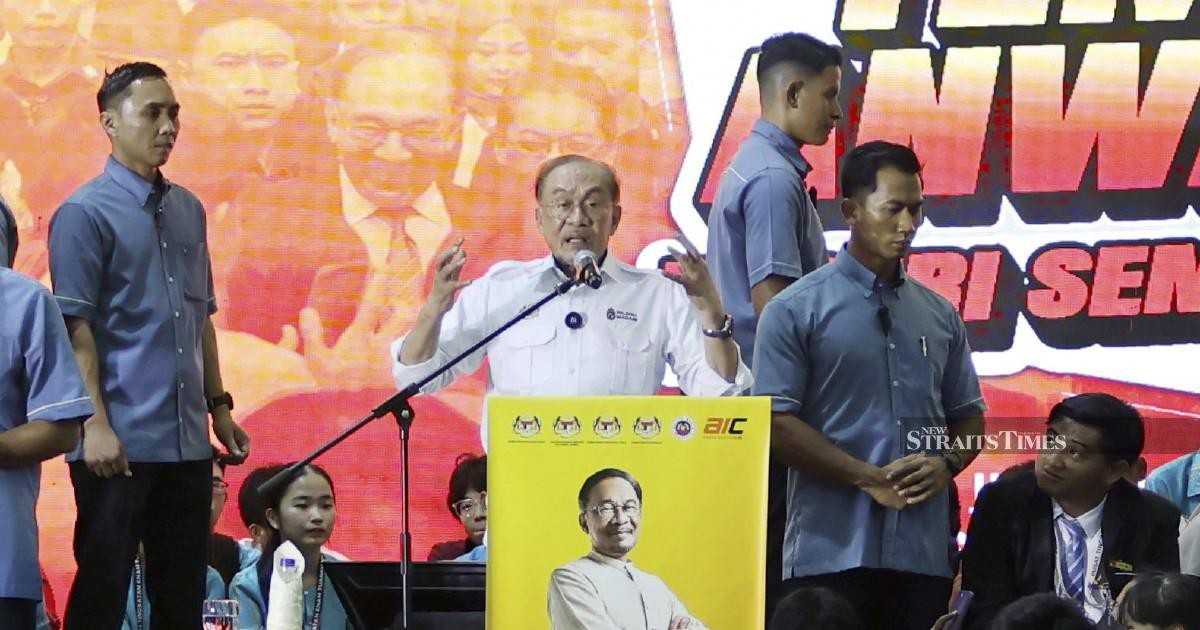
Prime Minister Datuk Seri Anwar Ibrahim has defended the government's decision to inject capital into Tabung Haji, framing the intervention as an essential measure to prevent the institution from sliding into complete financial ruin. Speaking in Seremban, Anwar underscored the gravity of the situation confronting the Islamic pilgrimage savings fund, emphasizing that without swift governmental action, TH would have faced an irreversible bankruptcy scenario that could have devastated millions of Malaysian Muslim savers.
The backdrop to this intervention reveals a deeply troubled institutional trajectory. Tabung Haji, established in 1963 as Malaysia's dedicated fund for facilitating Hajj pilgrimages among the Muslim population, has struggled significantly in recent years as accumulated losses mounted beyond sustainable levels. The organization's financial deterioration became increasingly visible to stakeholders and regulatory bodies, signalling systemic problems requiring urgent remedial action rather than incremental reform measures. This deterioration represents more than a technical accounting crisis; it threatens the savings and aspirations of millions of Malaysians who have contributed to the fund across decades with the expectation of reliable service.
The prime minister's framing of the intervention as unavoidable reflects the limited options available to policymakers facing institutional insolvency. When a financial entity reaches the precipice of bankruptcy, the conventional business approach of allowing market forces to operate becomes untenable, particularly when the entity serves a crucial social and religious function for a significant portion of the population. Government intervention in such circumstances becomes a matter of public interest protection rather than mere economic rescue, as the consequences of TH's collapse would extend far beyond institutional failure into broader societal repercussions.
Understanding Tabung Haji's operational challenges requires recognizing the fund's unique position within Malaysia's financial ecosystem. Unlike conventional investment vehicles, TH operates under the dual mandate of generating returns for contributors while facilitating affordable access to one of Islam's five pillars. This inherent tension between commercial performance and social responsibility has historically constrained TH's ability to pursue aggressive investment strategies that might have enhanced profitability. Additionally, the fund manages complex administrative operations encompassing hajj logistics, accommodation coordination, and financial services, creating operational complexities that conventional financial institutions do not encounter.
The mounting losses that precipitated this intervention reflect multiple contributing factors accumulating over time. Operational inefficiencies, suboptimal investment returns, and the impact of external shocks including the global pandemic have collectively strained TH's financial position. The organization's capital base eroded as years of deficits consumed reserves, progressively reducing the institution's capacity to absorb further adverse developments. Without intervention, projections indicated that TH would exhaust remaining reserves within a definable timeframe, leaving the fund unable to honour withdrawal requests or facilitate pilgrimage arrangements for contributors.
For Malaysian readers, the implications of this intervention extend beyond mere financial rehabilitation. Tabung Haji represents not merely an investment vehicle but a cultural and religious institution deeply embedded in the aspirations of Muslim Malaysians planning their spiritual journey to Mecca. The fund's financial stability directly affects the accessibility and affordability of hajj for ordinary Malaysians, many of whom depend on TH's structured savings mechanism to accumulate sufficient funds for pilgrimage. A TH collapse would have created profound disruption for hundreds of thousands of contributors holding active accounts or recently completed pilgrimages.
From a regional perspective, Malaysia's handling of the Tabung Haji crisis carries implications for other Southeast Asian nations operating similar Islamic finance institutions. The region hosts substantial Muslim populations with comparable aspirations regarding hajj participation, and several countries maintain their own pilgrimage funds requiring careful financial stewardship. Malaysia's experience demonstrates both the necessity of robust governance frameworks for such institutions and the potential consequences of inadequate oversight mechanisms failing to detect and address deteriorating financial health before critical junctures emerge.
The government's intervention also highlights broader questions regarding institutional governance and accountability. While emergency capital injections address immediate solvency concerns, they do not automatically resolve underlying operational or structural deficiencies that generated the financial crisis initially. Anwar's comments suggest recognition of the urgency, but effective long-term solutions would necessarily encompass comprehensive institutional reform, strengthened internal controls, enhanced investment governance, and renewed alignment between TH's commercial objectives and its social mandate.
Looking forward, the sustainability of this rescue depends critically on implementing substantive reforms that address root causes of TH's financial deterioration. Policymakers and TH management face the imperative of restoring contributor confidence while ensuring the fund operates with fiscal discipline and professional governance standards befitting an institution managing substantial public assets. The government's financial commitment must therefore be accompanied by genuine structural transformation rather than functioning as a temporary stabilization measure postponing inevitable reckoning with systemic problems.
For Malaysian savers and prospective pilgrims, Anwar's explanation of the intervention provides some reassurance regarding institutional continuity, yet raises concurrent questions about future financial management. The prime minister's emphasis on preventing bankruptcy frames the rescue as protective intervention, but successful rehabilitation will require demonstrating that TH can generate sustainable returns while maintaining affordable access to pilgrimage services. The coming months and years will reveal whether this intervention represents genuine institutional renewal or merely temporary financial stabilization before recurring crises emerge.

