%22%2F%3E%3C%2Fpattern%3E%3C%2Fdefs%3E%3Crect%20width%3D%22100%25%22%20height%3D%22100%25%22%20fill%3D%22url(%23ph2dcoog)%22%2F%3E%3Crect%20width%3D%22100%25%22%20height%3D%22100%25%22%20fill%3D%22url(%23ph2dcoop)%22%2F%3E%3Ctext%20x%3D%2250%25%22%20y%3D%2250%25%22%20text-anchor%3D%22middle%22%20dominant-baseline%3D%22central%22%20fill%3D%22rgba(255%2C255%2C255%2C0.95)%22%20font-family%3D%22Georgia%2C%20'Times%20New%20Roman'%2C%20serif%22%20font-weight%3D%22700%22%20font-size%3D%22272%22%20letter-spacing%3D%22-0.02em%22%3EAnwar%3C%2Ftext%3E%3C%2Fsvg%3E)
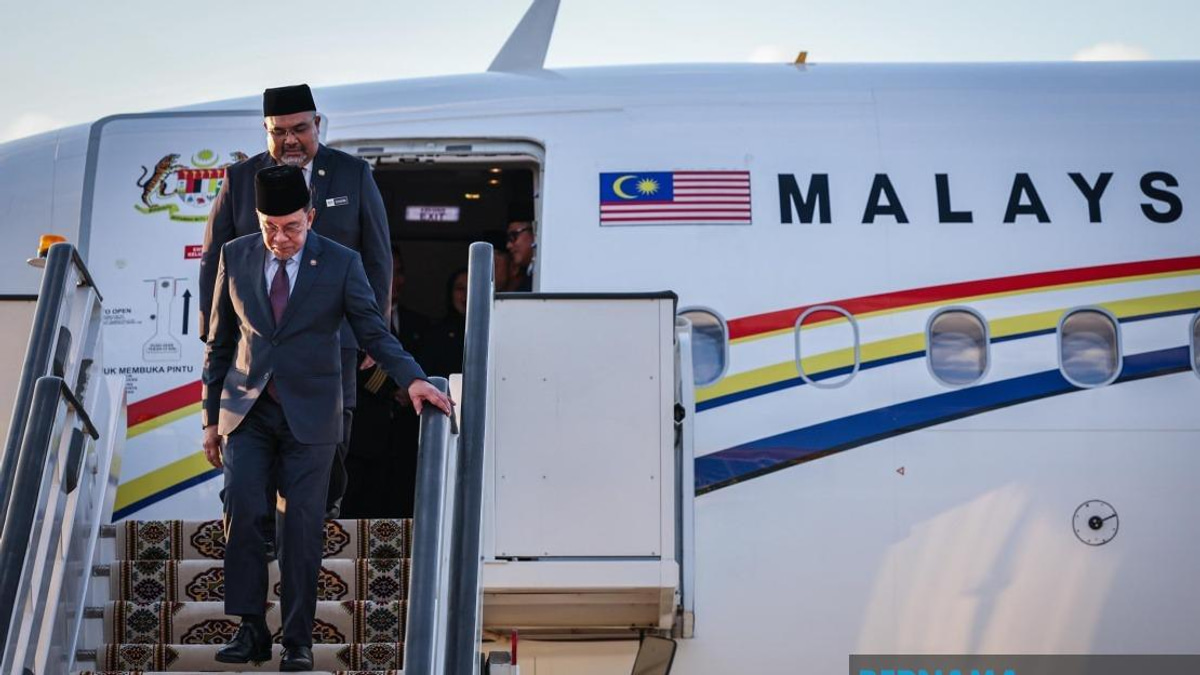
Prime Minister Datuk Seri Anwar Ibrahim departed from Subang Air Base on Sunday to lead Malaysia's representation at a landmark gathering in Russia that underscores the region's diplomatic engagement with Moscow despite global geopolitical tensions. His journey to Kazan marks a significant moment for ASEAN's strategic partnerships as the regional bloc commemorates 35 years of formal relations with Russia, a milestone originally established in Kuala Lumpur in 1991. The timing of this high-level visit reflects Malaysia's commitment to maintaining balanced international relations and strengthening ties across diverse geopolitical spheres.
The Prime Minister confirmed that bilateral discussions with Russian President Vladimir Putin are scheduled during the summit, signalling the importance both nations place on their economic and strategic relationship. Beyond the formal state interactions, Anwar will participate in the Russia-ASEAN Business Forum, where trade and investment opportunities are expected to dominate the agenda. This dual engagement—combining governmental diplomacy with business engagement—reflects contemporary approaches to international relations where commercial partnerships complement political frameworks.
Anwar's delegation carries considerable institutional weight, reflecting the gravity Malaysia assigns to the engagement. Minister of Investment, Trade and Industry Datuk Seri Johari Abdul Ghani will accompany the Prime Minister, positioning trade discussions at the forefront of the visit. Minister of Economy Akmal Nasrullah Mohd Nasir's participation further emphasises the economic dimensions of the bilateral relationship, while support personnel from both the Prime Minister's Office and the Foreign Ministry will ensure comprehensive coordination. This composition suggests Malaysia intends to extract maximum value from the diplomatic opening, whether through negotiating commercial terms or exploring infrastructure collaboration.
The ASEAN-Russia Commemorative Summit, scheduled for June 17 to 18, provides an institutional platform for the ten-member regional association to collectively assess three and a half decades of engagement with Russia and establish strategic priorities for the coming years. According to Malaysia's Foreign Ministry, the gathering will examine cooperative achievements since 1991 and chart new directions within the ASEAN-Russia Strategic Partnership framework. This retrospective approach allows member states to consolidate successful initiatives while identifying areas requiring renewed focus or innovation.
Trade and investment cooperation stands prominently among anticipated discussion topics, reflecting the mutual interest both sides hold in deepening commercial ties. Energy cooperation represents another critical dimension, particularly relevant given Russia's position as a major energy producer and ASEAN's diverse energy requirements across its member economies. As several Southeast Asian nations grapple with meeting rising demand while transitioning toward more sustainable energy systems, Russian expertise and resources carry substantial strategic value in regional energy security conversations.
Food security emerges as a particularly pressing agenda item for ASEAN, a region housing over 650 million people and facing increasing pressure from climate change, population growth, and competing land-use demands. Russia's vast agricultural capacity positions it as a potential partner in addressing regional food supply challenges, whether through technology transfer, direct commodity trade, or investment in local agricultural infrastructure. Digital economy discussions will likely explore technology partnerships, cybersecurity frameworks, and digital infrastructure development—areas where both parties recognise growing interdependence.
Science and technology cooperation offers avenues for joint research initiatives and technological advancement that could benefit diverse sectors across Southeast Asia. Cultural, educational, and people-to-people exchanges mentioned in the summit's projected agenda serve the longer-term strategic purpose of building mutual understanding and creating sustained institutional connections that transcend individual political administrations. Such exchanges foster the human relationships and shared knowledge networks that provide resilience to bilateral relationships during periods of diplomatic tension or geopolitical flux.
Following the Kazan summit, Anwar will travel to Ashgabat, Turkmenistan, for an official state visit at the invitation of President Serdar Berdimuhamedov. This sequential engagement reflects broader Malaysian foreign policy objectives in Central Asia, where Turkmenistan represents a significant energy producer and gateway to regional markets. The back-to-back visits underscore Malaysia's strategy of deepening engagement across Eurasia, strengthening ties with nations that exercise considerable influence over regional trade routes and energy flows affecting Southeast Asia.
For Malaysian observers, these diplomatic initiatives carry implications extending beyond ceremonial exchanges. Successful trade negotiations during the Russia engagement could unlock new markets for Malaysian goods and services, particularly in sectors where ASEAN maintains competitive advantages. Energy cooperation agreements might influence Malaysia's own energy security calculus, especially as the nation navigates its long-term energy policy amid global transitions. The Turkmenistan visit potentially opens avenues for Malaysian businesses in energy, infrastructure, and services sectors operating across Central Asia.
The visits also reflect Malaysia's positioning as a non-aligned nation capable of maintaining substantive engagement across competing global power blocs. While Western nations have imposed sanctions on Russia following its invasion of Ukraine, Southeast Asian countries have pursued more nuanced diplomatic postures, balancing strategic interests with international normative concerns. Malaysia's approach—neither embracing Russia as an exclusive partner nor severing relations—aligns with broader ASEAN principles of non-interference and equitable engagement with all powers.
Regionally, ASEAN's collective engagement with Russia carries significance for Southeast Asian autonomy and relevance in global affairs. By maintaining institutionalised dialogue frameworks and substantive cooperation areas, the bloc preserves its agency as an independent actor rather than deferring entirely to Western-led international institutions and alliances. This calculated balancing act requires sophisticated diplomacy and clear articulation of national interests, capabilities Anwar's administration appears committed to demonstrating through these high-profile engagements. The success of these visits will likely influence regional perceptions of Malaysia's diplomatic effectiveness and ASEAN's capacity for independent strategic action.