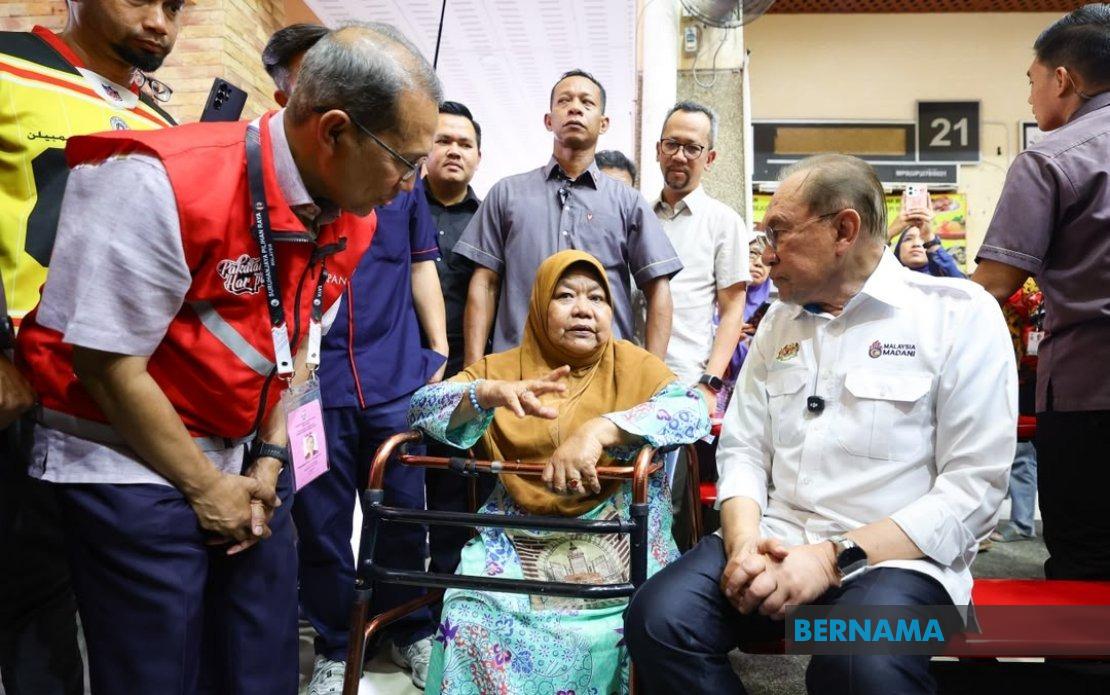
Prime Minister Datuk Seri Anwar Ibrahim used a community engagement session in Ampangan, Negeri Sembilan, on July 22 to showcase what he termed the Pakatan Harapan (PH)-led state government's commitment to transparent resource management and grassroots development. Speaking at the Santai Petang Bersama Warga Ampangan event, Anwar pointed to reciprocal river widening and deepening initiatives across the state as concrete evidence that the coalition government prioritises both infrastructure improvement and accountability to residents.
The reciprocal project model Anwar described operates by extracting sand from dredging activities and reinvesting the proceeds into maintenance and infrastructure upgrades for the affected river systems. This approach, he argued, demonstrates how development funds can be cycled back into communities rather than lost to opacity or misallocation. The Ampangan river project serves as the flagship example, simultaneously tackling the area's chronic flooding problems while generating sustainable revenue streams for ongoing maintenance work that would otherwise burden state budgets.
Anwar's remarks come as Pakatan Harapan intensifies its campaign ahead of the 16th Negeri Sembilan State Election scheduled for August 1, with early voting set for July 28. The Prime Minister's presence in the state underscores the coalition's determination to retain control of Negeri Sembilan, a traditionally important battleground in Malaysian politics. Anwar made explicit the electoral stakes, urging residents to extend their mandate to PH so the party can continue implementing development programmes aligned with community welfare.
The Prime Minister contextualised his governance philosophy by referencing his involvement in a Port Dickson hotel development project, where he said negotiations incorporated protections for local fishing communities. His narrative placed emphasis on how major development decisions should weigh social consequences alongside economic returns, particularly ensuring that vulnerable groups benefit from modernisation rather than being displaced or marginalised by it. This framing attempts to position PH as a coalition that integrates social considerations into infrastructure planning.
Integrity in governance emerged as a central theme in Anwar's address to the Ampangan community. He stressed that the foundation of all development, both in Negeri Sembilan and nationally, must rest on ethical administration and genuine commitment to public interest. Without explicitly naming political opponents, this messaging implies that PH's approach differs fundamentally from alternative political arrangements, casting the election as a choice between integrity-based leadership and untrustworthy alternatives.
PH is contesting all 36 state seats in this election with a coalition composition of 16 candidates from PKR, 11 from DAP, and nine from Amanah. This allocation reflects ongoing negotiations within the coalition about seat distribution and candidate selection. The balance across three parties with distinct voter bases and regional strengths suggests strategic positioning to maximise appeal across Negeri Sembilan's diverse constituencies, from urban centres to rural agricultural areas.
Anwar's final appeal to voters emphasised character and trustworthiness as decision-making criteria. He encouraged Negeri Sembilan residents to select candidates based on personal integrity and dignity regardless of ethnicity, invoking Islamic language ("insya-Allah") while promoting multiethnic solidarity. This inclusive messaging acknowledges Negeri Sembilan's demographic composition and attempts to appeal to voters across communal lines by framing the election as fundamentally about choosing principled individuals rather than playing to narrow identity politics.
The timing of Anwar's campaign visit reflects broader PH strategy as nomination day approaches and the electoral calendar accelerates. By personally engaging with grassroots communities like Ampangan's residents, the Prime Minister demonstrates that central party leadership remains invested in state-level contests. This approach serves multiple purposes: it signals confidence in PH's ground-level machinery, provides local candidates with association with national leadership, and generates media coverage of PH campaign messaging ahead of the official campaign period.
For Malaysian political observers, the Negeri Sembilan election carries significance beyond the state itself. Results will partially indicate whether PH's governance record since returning to federal power in 2022 has resonated with voters and whether the coalition can maintain momentum in traditionally competitive states. Negeri Sembilan's voting patterns often reflect broader national sentiment, making the August 1 outcome a potential bellwether for PH's political fortunes heading into the next federal election cycle.
The reciprocal river project model that Anwar highlighted also deserves scrutiny as a policy innovation. If genuinely generating sustainable funding streams for maintenance while solving flooding problems, such schemes could be replicated across other Malaysian states facing similar infrastructure challenges. However, the success of such programmes ultimately depends on rigorous project management, transparent financial accounting, and verifiable environmental outcomes—standards that Anwar implicitly claimed PH governments meet but which voters will need to assess independently through available evidence and community feedback.

