%22%2F%3E%3C%2Fpattern%3E%3C%2Fdefs%3E%3Crect%20width%3D%22100%25%22%20height%3D%22100%25%22%20fill%3D%22url(%23ph46lybg)%22%2F%3E%3Crect%20width%3D%22100%25%22%20height%3D%22100%25%22%20fill%3D%22url(%23ph46lybp)%22%2F%3E%3Ctext%20x%3D%2250%25%22%20y%3D%2250%25%22%20text-anchor%3D%22middle%22%20dominant-baseline%3D%22central%22%20fill%3D%22rgba(255%2C255%2C255%2C0.95)%22%20font-family%3D%22Georgia%2C%20'Times%20New%20Roman'%2C%20serif%22%20font-weight%3D%22700%22%20font-size%3D%22272%22%20letter-spacing%3D%22-0.02em%22%3EAnwar%3C%2Ftext%3E%3C%2Fsvg%3E)
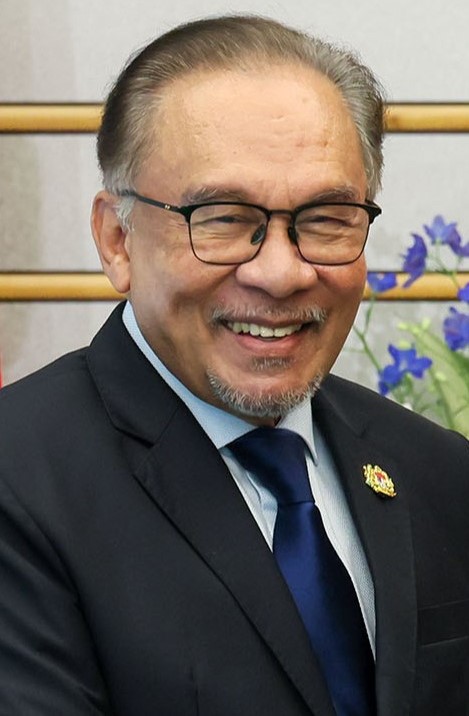
Prime Minister Datuk Seri Anwar Ibrahim extended a formal welcome to Bangladesh Prime Minister Tarique Rahman through an official luncheon held at the Seri Perdana Complex in Putrajaya on June 22, underscoring Malaysia's commitment to deepening ties with its South Asian neighbour. The carefully orchestrated state function served as both a diplomatic gesture and a platform to highlight shared cultural values between the two Muslim-majority nations, with particular emphasis placed on culinary traditions of the region. The meal itself carried symbolic weight, featuring Malaysia's prized durian alongside jackfruit specially imported from Bangladesh, a choice that reflected the hosts' intention to celebrate both nations' agricultural heritage and economic interdependence.
The two leaders arrived together at 11:50 am in the same vehicle, a deliberate protocol choice emphasizing their rapport and the significance Malaysia places on this bilateral engagement. Their arrival was marked by an enthusiastic reception orchestrated by students from five institutions across the Klang Valley and Putrajaya, including Sekolah Kebangsaan Presint 8(2) in Putrajaya, Sekolah Menengah Kebangsaan Dengkil, SMK Agama Sungai Merab, Sekolah Menengah Sains Selangor, and Sekolah Menengah Agama Persekutuan Kajang. The inclusion of schoolchildren from diverse educational backgrounds underscored Malaysia's effort to present a unified, progressive image to its visitor. Performance artists from Istana Budaya executed a traditional welcome dance, further enriching the cultural dimension of the occasion and demonstrating the ceremonial importance afforded to the Bangladeshi delegation.
Tarique Rahman's presence in Malaysia carried considerable diplomatic weight, as this constituted his inaugural official bilateral visit abroad since he assumed office in February 2026. The timing and destination of this first journey signal Bangladesh's strategic interest in strengthening regional partnerships, particularly with a major Southeast Asian economy that commands considerable influence within ASEAN and the broader Indo-Pacific framework. For Malaysia, hosting this initial state visit represented an opportunity to position itself as a preferred economic and diplomatic partner within South Asia, a region often dominated by India's gravitational pull in regional affairs.
The attendance roster revealed the high-level commitment Malaysia invested in the engagement, with Foreign Minister Datuk Seri Mohamad Hasan, Home Affairs Minister Datuk Seri Saifuddin Nasution Ismail, and Investment, Trade and Industry Minister Datuk Seri Johari Abdul Ghani all present alongside their spouses where applicable. The inclusion of the Human Resources Minister Datuk Seri R. Ramanan suggested that discussions likely encompassed labour mobility and skills development, areas of mutual interest given Bangladesh's substantial overseas migrant workforce and Malaysia's reliance on foreign talent across multiple sectors. The Minister in the Prime Minister's Department (Religious Affairs) Dr Zulkifli Hasan's participation hinted at potential cooperation on Islamic affairs and halal standards, domains where both countries maintain leadership positions within the Organisation of Islamic Cooperation.
Prior to the luncheon, Tarique underwent the full ceremonial protocol of an official state visit, beginning with formal reception rites at the Perdana Putra Complex before engaging in bilateral discussions with Anwar. These preliminary meetings typically establish the framework for broader cooperation, allowing leaders to align on strategic priorities and identify concrete initiatives for deepening engagement across multiple domains. Such conversations between heads of government frequently produce outcome documents or joint statements that crystallize mutual commitments and chart pathways for follow-up action at ministerial and technical levels.
The statistical foundation underlying this diplomatic engagement reflects substantial economic interdependence between the two nations. In 2025, bilateral trade reached RM12.18 billion, equivalent to US$2.84 billion, positioning Bangladesh as Malaysia's 28th largest trading partner globally and second-largest within the South Asian region after India. This ranking underscores Bangladesh's growing economic significance in Malaysia's external trade portfolio, a trajectory that reflects both nations' development trajectories and structural economic complementarities. The merchandise composition of this trade reveals clear comparative advantages and supply-chain integration: Malaysian exports to Bangladesh totalled RM10.08 billion, with petroleum products dominating this outflow, reflecting Bangladesh's energy requirements as it pursues rapid industrialization and development ambitions.
Conversely, Malaysian imports from Bangladesh amounted to RM2.10 billion, comprising predominantly textiles, apparel, and footwear—sectors where Bangladesh has established itself as a global manufacturing powerhouse. This unbalanced trade structure, favourable to Malaysia, nevertheless demonstrates significant commercial activity and interdependence. The textile and garment sectors, which constitute Bangladesh's principal manufacturing base, remain critical to that nation's employment and export earnings. For Malaysian businesses, Bangladesh represents both a competitor in certain manufacturing domains and a source of cost-effective inputs and finished goods that feed into Malaysia's broader regional and global supply chains.
From Malaysia's perspective, this engagement reflects strategic calculations about regional stability and economic opportunity in South Asia. Bangladesh, with its population exceeding 170 million, represents an enormous consumer market with expanding purchasing power. The nation's garment industry, pharmaceutical sector, and agricultural production create multiple avenues for Malaysian investment, technology transfer, and joint ventures. Conversely, Bangladesh benefits from Malaysia's advanced financial services, petrochemical expertise, and established position within ASEAN, the latter offering potential pathways for Bangladesh to strengthen institutional ties with Southeast Asia's premier regional bloc.
Wisma Putra's official statement characterizing this visit as an opportunity to strengthen bilateral ties and deepen cooperation in areas of mutual interest reflected the measured diplomatic language that typically accompanies such high-level exchanges. Behind this conventional formulation lay substantive opportunities spanning investment facilitation, trade expansion, labour cooperation, and cultural exchanges. The stated objective of advancing ties across unspecified domains of mutual interest suggested that concrete negotiations were expected to identify specific sectors and mechanisms for enhanced collaboration, potentially including preferential trade arrangements, sectoral cooperation agreements, or coordinated positions on regional and international issues.
For Malaysia's broader foreign policy architecture, Tarique's visit represented part of a deliberate effort to cultivate partnerships beyond ASEAN and Northeast Asia, where much Malaysian diplomatic attention traditionally concentrates. South Asia, encompassing nearly two billion people and substantial economic potential, remains an underdeveloped frontier for many Southeast Asian powers in terms of institutional engagement and bilateral cooperation depth. By hosting Tarique's first official bilateral visit abroad at such a prominent platform, Malaysia signalled its ambition to become a privileged interlocutor for Bangladesh within Southeast Asia, a position that carries both opportunities and responsibilities.
The visit also carried implicit significance for Malaysia's Muslim identity and regional role. As chair of the Organisation of Islamic Cooperation from 2024 to 2026, Malaysia has positioned itself as an advocate for Muslim-majority developing nations and a bridge between the Islamic world and the broader international community. Bangladesh, with the world's third-largest Muslim population and growing soft power influence, represents a natural partner in advancing such agendas. Cooperation on Islamic finance, halal standards, religious education, and the contemporary challenges facing Muslim societies could yield mutual benefits and reinforce Malaysia's leadership within Islamic institutions and forums.
The ceremonial dimension of this luncheon—with its careful choreography, cultural performances, and roster of ministerial attendees—reflected the investment Malaysia places in diplomatic engagement with rising powers in neighbouring regions. Tarique Rahman's administration, which assumed office following significant political upheaval in Bangladesh in 2024, represents a government seeking to stabilize its nation and chart a new developmental course. Malaysia's warm reception and high-level engagement conveyed a message that this new Bangladeshi leadership would find Malaysia receptive to partnership proposals and committed to deepening regional cooperation. The trajectory of Malaysian-Bangladesh relations over the coming months and years will likely reflect the foundations established during this inaugural state visit.