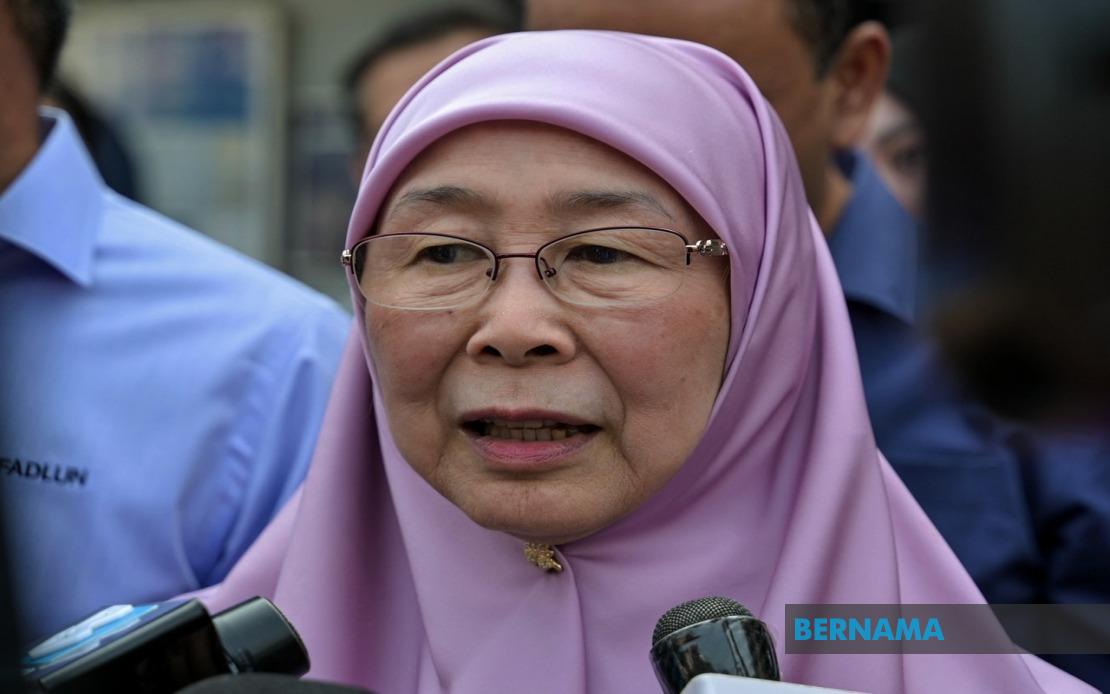
Prime Minister Datuk Seri Anwar Ibrahim is anticipated to leave hospital today after completing his medical treatment, according to an announcement made by his wife Datuk Seri Dr Wan Azizah Wan Ismail on Tuesday. The announcement comes just four days after the Prime Minister underwent a planned surgical intervention at a medical facility in Kuala Lumpur.
Dr Wan Azizah relayed her husband's gratitude towards members of the public, the medical fraternity, and well-wishers who have extended their support and prayers throughout his hospitalisation period. The Prime Minister's office stated that Datuk Seri Anwar Ibrahim remained appreciative of the outpouring of concern from Malaysians during his recovery phase.
The surgical procedure undertaken on Monday was a laparoscopic operation specifically designed to address a para-umbilical hernia, a condition characterised by tissue protrusion near the area surrounding the umbilicus. Laparoscopic surgery represents a minimally invasive approach, utilising small incisions and specialist instrumentation to complete the procedure with reduced trauma to surrounding tissues compared to conventional open surgery techniques. The choice of this surgical method typically results in shorter hospitalisation periods and faster recovery trajectories for patients.
Dr Wan Azizah made the discharge announcement while attending the Semarak Merdeka programme, a public celebration marking the early launch of Malaysia's 2026 National Month festivities. The event was held at the Bandar Tun Razak branch of the Kuala Lumpur City Hall, bringing together community members and government representatives to commemorate the nation's independence heritage and cultural significance.
The timing of the Prime Minister's surgical treatment and subsequent recovery has been closely observed given his prominent position in Malaysia's political structure and ongoing responsibilities for national governance. The successful completion of the elective procedure without reported complications represents a positive outcome for the nation's leadership continuity during a period when various governmental matters require executive attention.
Parabolic hernias, the specific condition treated through Monday's operation, develop when weakened abdominal wall tissue allows internal structures to protrude outward, creating a visible bulge typically positioned in the midline area beneath the navel. While not immediately life-threatening in most cases, such hernias can become uncomfortable or develop complications if left untreated, making elective surgical intervention a prudent medical decision.
The laparoscopic approach employed in the Prime Minister's case represents contemporary surgical best practice for hernia repairs. This technique involves inserting a thin camera and surgical instruments through minimal incisions, allowing surgeons to visualise the operative field and perform necessary repairs with enhanced precision. Recovery from laparoscopic procedures typically progresses more rapidly than from open surgical interventions, potentially enabling the Prime Minister to resume his official duties relatively promptly.
For Malaysian citizens and residents, the successful medical intervention underscores the quality of healthcare services available within Malaysia's medical system. The fact that the Prime Minister chose to undergo treatment domestically reflects confidence in local surgical expertise and hospital infrastructure, demonstrating the capability of Malaysian healthcare institutions to manage complex surgical procedures effectively.
The public's response to news of the Prime Minister's hospitalisation and anticipated discharge illustrates the significance placed on leadership stability and continuity of governance within Malaysian society. The widespread prayers and well-wishes extended by citizens across various communities demonstrate a shared concern for the wellbeing of the nation's chief executive, transcending political and demographic boundaries.
As the Prime Minister prepares to resume his official functions following his discharge, the Malaysian government can anticipate the continuation of executive operations and policy implementation across various portfolios. The relatively straightforward nature of the surgical procedure and the prompt recovery timeline suggest minimal disruption to the functioning of the Prime Minister's Office or broader governmental activities.
The incident also serves as a reminder of the importance of proactive healthcare management among individuals at all levels of society, including those in high-pressure positions. The Prime Minister's decision to address the hernia condition through planned surgical intervention rather than allowing it to potentially worsen represents a practical approach to personal health maintenance, something that may resonate with Malaysian workers and professionals managing their own healthcare requirements.

