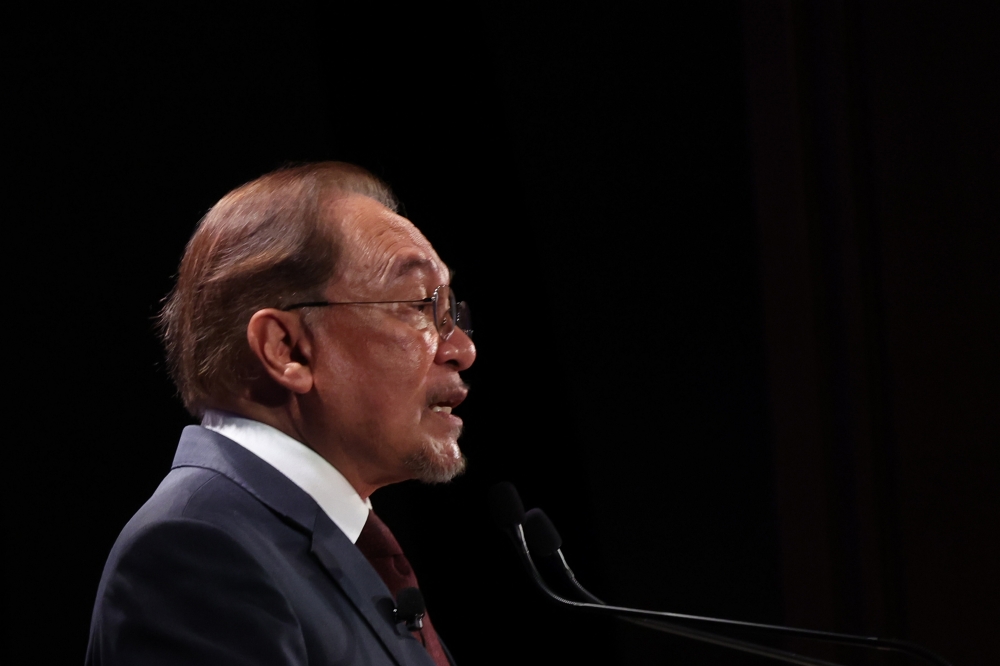
Prime Minister Datuk Seri Anwar Ibrahim has taken legal action against PAS deputy president Tuan Ibrahim Samsudin, filing a defamation suit that underscores the growing acrimony between Malaysia's ruling coalition and the opposition Islamist party. The development marks another flashpoint in the political relationship between these major actors, as personal grievances increasingly translate into courtroom battles rather than remaining confined to parliamentary debate or public statements.
The lawsuit centres on comments attributed to Tuan Ibrahim that Anwar's legal team contends constitute defamation and cause reputational harm. While the specific nature of these remarks has not been exhaustively detailed in public disclosures, the filing itself signals that the Prime Minister views the allegations as sufficiently serious to warrant formal legal recourse rather than dismissal or rebuttal through conventional political channels. This escalation reflects a broader pattern where Malaysian political disputes increasingly culminate in litigation, a trend that has characterised the post-2018 era of political realignment.
The relationship between Anwar's coalition government and PAS has been notably fractious despite their shared Islamic credentials and Malay-Muslim voter base. Unlike Anwar's Pakatan Harapan coalition partner PKR and other DAP-affiliated parties, PAS has maintained its independent positioning in the Dewan Rakyat, occasionally voting with the government on key legislation but refusing formal coalition membership. This structural separation has permitted PAS to maintain rhetorical distance from the government while simultaneously engaging with it on policy matters, creating an ambiguous political dynamic that periodically erupts into conflict.
Tuan Ibrahim, as deputy president of PAS and a veteran politician with significant influence within the party's organisational hierarchy, occupies a position where his public utterances carry considerable weight. The party has long maintained a critical stance toward what it characterises as the DAP's secular influence within the Pakatan coalition, and this lawsuit may partially reflect tensions around such ideological positioning. PAS's criticism of coalition governance has occasionally ventured into personal attacks, particularly regarding Anwar's stewardship of the economy and his handling of religious matters.
The defamation suit arrives at a juncture when Malaysian politics continues navigating the aftermath of the February 2023 cabinet formation and subsequent reshuffles that have attempted to stabilise the coalition government. Relations between coalition partners have remained volatile, with various disputes over ministerial allocation, budgetary priorities, and policy direction generating friction. Against this backdrop, the litigation against a major opposition figure signals that the government intends to defend itself through legal mechanisms when it perceives coordinated attacks on its credibility.
From a broader governance perspective, the prevalence of defamation suits among political figures raises questions about whether such disputes should be resolved through parliamentary mechanisms, public debate, or the court system. Some observers contend that litigation deflects political energy from substantive policy discussions, whilst others argue it provides necessary recourse when statements cross into demonstrable falsehood. The Malaysian judiciary has occasionally expressed concern about becoming an arena for settling purely political scores, yet defamation remains a legitimate legal avenue available to aggrieved parties.
For PAS, the lawsuit presents both a challenge and potentially a rallying point. The party has positioned itself as a defender of Muslim interests and religious conservatism, and could frame legal action against its deputy president as governmental intimidation of dissent. Conversely, the lawsuit carries reputational implications for Tuan Ibrahim personally, and the outcome may influence perceptions of his standing within party leadership and his credibility in future political discourse. The party's response—whether to mount a vigorous legal defence, settle the matter, or pursue a political counter-narrative—will reveal its strategic priorities.
The Malaysian legal system's handling of political defamation cases has evolved significantly over recent decades. Courts have attempted to distinguish between legitimate political criticism protected under parliamentary privilege or public interest doctrines, and statements sufficiently false and damaging to constitute actionable defamation. This lawsuit will likely involve extensive legal argumentation about whether Tuan Ibrahim's remarks fall within permissible political speech or constitute defamation, with implications extending beyond the immediate parties involved.
For Malaysian democracy and institutional health, the trajectory of such disputes warrants careful consideration. While protecting individual reputation through defamation law remains important, an ecosystem where political figures routinely resort to litigation risks creating a chilling effect on public discourse and legitimate criticism of those in power. Conversely, permitting demonstrably false and damaging statements to circulate unchallenged without legal consequence also undermines the incentive structure for responsible public speech. The court's adjudication of this specific case will necessarily balance these competing considerations.
The broader implications for Malaysian politics extend to coalition stability and opposition positioning. As the government approaches the midpoint of its term facing economic challenges and public dissatisfaction, internal coalition dynamics and relationships with opposition parties take on heightened significance. This lawsuit, whilst ostensibly a personal matter between two political figures, operates within a political ecosystem characterised by coalition fragility and ongoing competition for public legitimacy between governing and opposition forces in a pluralistic, religiously diverse democracy.

