%22%2F%3E%3C%2Fpattern%3E%3C%2Fdefs%3E%3Crect%20width%3D%22100%25%22%20height%3D%22100%25%22%20fill%3D%22url(%23ph25gbag)%22%2F%3E%3Crect%20width%3D%22100%25%22%20height%3D%22100%25%22%20fill%3D%22url(%23ph25gbap)%22%2F%3E%3Ctext%20x%3D%2250%25%22%20y%3D%2250%25%22%20text-anchor%3D%22middle%22%20dominant-baseline%3D%22central%22%20fill%3D%22rgba(255%2C255%2C255%2C0.95)%22%20font-family%3D%22Georgia%2C%20'Times%20New%20Roman'%2C%20serif%22%20font-weight%3D%22700%22%20font-size%3D%22272%22%20letter-spacing%3D%22-0.02em%22%3EAnwar%3C%2Ftext%3E%3C%2Fsvg%3E)
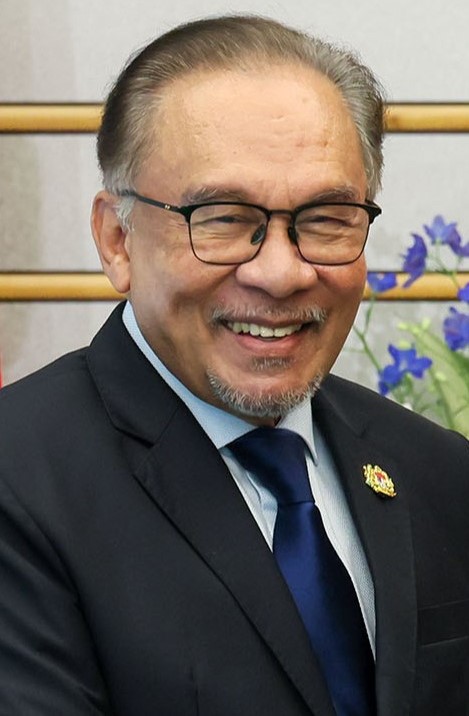
Prime Minister Anwar Ibrahim took centre stage on June 22, 2026, to unveil Pakatan Harapan's full slate of candidates for the 16th Johor State Election at a major rally held at Padang Bukit Gambir Extreme Park, signalling the coalition's determination to retain control of Malaysia's second-largest state in what promises to be a fiercely contested electoral battle. The "Night of Hope" gathering served as a platform to reaffirm PH's strategic priorities for the peninsula's southern anchor state, where competition from the Barisan Nasional coalition and increasingly assertive conservative Islamist movements has intensified over recent years.
The timing of the announcement reflects Pakatan Harapan's confidence in its organisational machinery and the coherence of its message, even as the coalition navigates the complex political terrain of Johor—a state where Malay-Muslim sensitivities and economic concerns intersect powerfully. By hosting the event in the evening and framing it explicitly as a "night of hope," PH crafted a carefully calibrated narrative suggesting renewal, forward momentum, and renewed commitment to voters who may have grown weary of political uncertainty or disappointed by governance performance in their constituencies.
Anwar's remarks at the gathering distilled the coalition's campaign philosophy into accessible language targeting household concerns. His statement that "politics should serve the people, strengthen communities, create opportunities for our youth, support our businesses, and ensure a better quality of life for every family across Johor" articulated a voter-centric agenda intended to transcend partisan dividing lines and appeal to pragmatists more interested in tangible service delivery than ideological positioning. This framing—politics as a mechanism for material improvement rather than a struggle for competing visions of the nation—reflects a deliberate strategic choice to emphasise competence and results-oriented governance.
The Malaysia Madani vision, which serves as the overarching ideological framework for the Anwar government at the federal level, was prominently woven into the campaign messaging for this Johor election. The concept, centring on prosperity, inclusivity, and anti-corruption governance, attempts to position Pakatan Harapan as the custodian of modern, inclusive nation-building distinct from both the Barisan Nasional's historical establishment narrative and Perikatan Nasional's more ethno-religious positioning. For Johor specifically, this represents an attempt to appeal to the state's diverse voter base, including significant Chinese and Indian communities alongside the Malay-Muslim majority, by emphasising shared economic interests and institutional integrity.
The emphasis on unity, integrity, compassion, and progress—the four pillars explicitly articulated at the event—constitutes PH's attempt to occupy the moral and ethical high ground in the electoral contest. The coupling of integrity with compassion particularly addresses public concern about corruption and rent-seeking behaviour among political elites, perennial issues that have damaged the credibility of multiple governments in Malaysia. By anchoring its campaign in these values, Pakatan Harapan seeks to distinguish itself from competitors perceived as either complicit in endemic graft or lacking in social awareness.
The candidate announcement event itself carries significance beyond the mere listing of names and constituencies. Such gatherings function as important morale-boosting exercises for party activists and grassroots workers who will shoulder the burden of door-to-door campaigning, telephone banking, and community engagement during the election period. The presence of Anwar Ibrahim, whose personal political narrative emphasises perseverance through adversity, amplifies the symbolic power of the event and sends a signal of central party commitment to the Johor battleground.
Johor's electoral dynamics bear particular importance to the stability of the federal government. As Malaysia's most populous state outside Selangor, it commands substantial parliamentary representation and has historically functioned as a political barometer reflecting national sentiment. The state's economic heft—encompassing manufacturing, agriculture, shipping, and tourism—means that governance performance there carries tangible consequences for the livelihoods of millions. A weakened PH position in Johor could embolden opposition forces in Kuala Lumpur and complicate Anwar's parliamentary mathematics, potentially constraining his policy agenda on critical issues from economic reform to institutional strengthening.
The coalition faces a complex calculus in Johor because the state presents competing priorities that occasionally tension with one another. Rapid urbanisation in the southern corridor creates a demographically younger, more commercially-minded electorate potentially receptive to PH's reformist agenda. Simultaneously, rural constituencies and smaller towns harbour voters with more conservative social preferences who may prove susceptible to messaging from Perikatan Nasional or Barisan Nasional emphasising religious and cultural preservation over progressive economic policies. PH's candidates must therefore navigate this ideological and demographic complexity with considerable sophistication.
The comprehensive nature of the candidate announcement—with PH fielding contestants for all Johor state seats—demonstrates the coalition's intention to contest the election comprehensively rather than ceding any ground to competitors. This approach differs from earlier electoral strategies where weaker constituencies might have been sacrificed in favour of concentrating resources on winnable seats. The decision to field a full slate reflects either confidence in improved ground organisation and financial capacity, or alternatively, a strategic calculation that even narrow losses in difficult seats contribute to a broader narrative of contested legitimacy that can be leveraged against winning opponents.
For regional observers and Malaysia's international partners, the Johor election carries significance as a further test of whether democratic competition in Malaysia can proceed along constructive lines or whether polarisation will intensify. A decisive PH victory would strengthen Anwar's hand in pursuing institutional reforms and economic restructuring initiatives that have garnered international attention. Conversely, significant PH losses would energise opposition forces and potentially force the federal government into more fragile coalition arrangements that could constrain policy ambition and institutional change.
Looking forward, the campaign period will reveal whether PH's emphasis on integrity, inclusive governance, and material improvement resonates sufficiently with Johor voters to overcome any incumbent disadvantages and maintain the coalition's control of state government. The party's ability to mobilise candidates effectively, communicate its vision persuasively, and demonstrate governance accomplishments will determine whether the June 22 "Night of Hope" represents the beginning of a successful electoral campaign or merely a moment of symbolic aspiration ultimately disconnected from electoral reality.