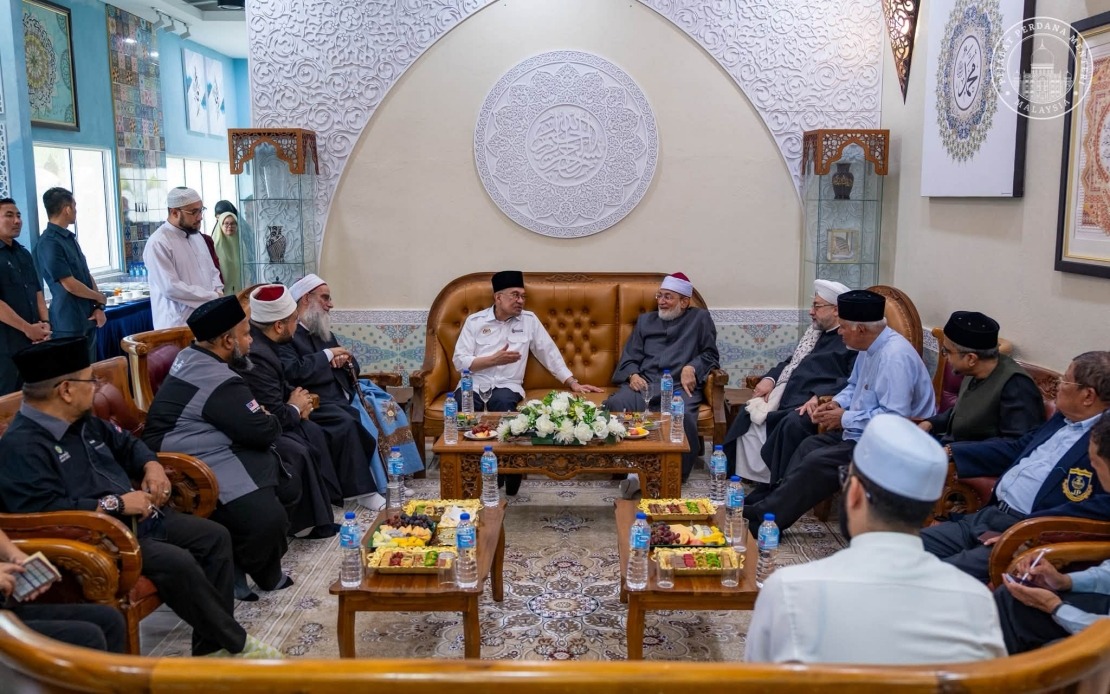
Prime Minister Datuk Seri Anwar Ibrahim has taken time out of his official schedule to meet with three internationally recognised Islamic scholars who are currently residing in Malaysia. The meetings underscore the government's commitment to engaging with prominent religious figures and leveraging their expertise to advance Islamic knowledge within the country. The three visiting scholars represent different but complementary specialisations within Islamic learning, reflecting the breadth of theological knowledge available to Malaysian audiences.
The first scholar, Al-Fadhil Al-Allamah Al-Muhaddith Syeikh Dr Mustafa al-Nadwi Al-Hasani, is an Egyptian hadith specialist whose scholarly credentials span decades of rigorous Islamic study. Hadith scholarship—the study of the sayings and actions of Prophet Muhammad—forms a foundational pillar of Islamic jurisprudence and practice. The presence of such an accomplished hadith scholar in Malaysia provides local Muslim communities with access to rare expertise in authenticating religious traditions and understanding their application to contemporary life. His contributions to Islamic scholarship have been recognised across the Muslim world, making his visit of considerable significance to Malaysian religious institutions seeking to deepen their scholarly frameworks.
The second visiting luminary, Al-Fadhil Al-Allamah Al-Muqri' Syeikh Dr Ahmad Isa Al-Ma'sarawy, has earned international renown as a Quran reciter of exceptional calibre. The art of Quranic recitation—known as tajweed—requires meticulous attention to pronunciation, rhythm, and reverence, and practitioners of this discipline at Al-Ma'sarawy's level are few and highly sought after. His presence in Malaysia facilitates opportunities for devotional learning among those seeking to improve their own recitation practices and deepen their spiritual connection to the Islamic holy text. Such expertise is particularly valued during periods like Ramadan, when Quranic engagement intensifies across Muslim communities.
The third scholar, Al-Fadhil Al-Syeikh Maulana Al-Sayyid Afeefuddin Al-Jailani, serves as grand custodian of the waqf properties, mosques, and sacred sites associated with Syeikh Abdul Qadir Al-Jailani, one of Islam's most venerated historical figures. This role carries substantial responsibility for maintaining these religious endowments and ensuring their proper administration according to Islamic principles. The custodianship of waqf systems—voluntary charitable endowments—represents an essential component of Islamic institutional practice, particularly relevant to Malaysia where waqf management remains an active area of governance and religious education.
According to Anwar's public statement shared via Facebook, the Prime Minister utilised these encounters to inquire about the scholars' wellbeing and seek their guidance and prayers. Such diplomatic gestures, while seemingly ceremonial, carry symbolic weight in affirming the government's respect for Islamic learning and its recognition that spiritual leaders merit engagement beyond purely administrative contexts. The request for prayers represents a spiritual dimension to governance that resonates with Malaysia's Muslim-majority population and reinforces the legitimacy of political leadership through religious acknowledgment.
Anwar specifically expressed appreciation for the scholars' voluntary commitment to travelling to Malaysia and dedicating their time to sharing Islamic knowledge and wisdom with local audiences. This framing positions the Prime Minister as a facilitator of educational exchange, suggesting that their visit serves broader purposes of knowledge dissemination within Malaysian society. The emphasis on their willingness to contribute reflects awareness that hosting such eminent figures requires reciprocal respect and recognition of the value they bring to domestic religious discourse.
The meetings occurred at Nasyrul Quran, an institution dedicated to Quranic education and promotion, which serves as an appropriate venue for such scholarly encounters. The choice of location signals intentionality in connecting visiting expertise with existing Malaysian institutions working toward similar educational goals. Nasyrul Quran's focus on Quranic knowledge aligns naturally with the scholarly competencies represented by these three visitors, suggesting coordinated programming to maximise their impact during their Malaysian sojourn.
Anwar's articulation of the visit's purpose—to strengthen societal efforts toward virtue, knowledge, and communal harmony—reflects contemporary discourse around Islam's role in nation-building. By linking these scholarly visits to concrete developmental objectives of a virtuous society, the Prime Minister frames religious engagement as integral to Malaysia's broader governance agenda. This positioning is particularly relevant given Malaysia's ongoing negotiation of its identity as a modern, pluralistic state with significant Muslim institutional frameworks and constitutional recognition of Islam's special position.
The timing and execution of these meetings, despite Anwar's acknowledged busy schedule, conveys priority attachment to religious dialogue and engagement with Islamic scholarship. For an elected head of government to publicly allocate time for such encounters demonstrates the significance accorded to intellectual and spiritual dimensions of leadership. The public documentation through social media further amplifies the message beyond the private interactions themselves, ensuring broader awareness within both religious and general audiences.
For Malaysian Muslim communities, the visit by these three distinguished scholars presents opportunities for enhanced religious learning through lectures, workshops, or educational initiatives during their stay. The geographic reach of such engagement extends beyond Kuala Lumpur, as visiting scholars typically undertake broader speaking tours affecting awareness and practice across multiple regions. This dispersal of knowledge networks helps strengthen Malaysia's position within global Islamic intellectual circles while demonstrating that the country remains an attractive destination for scholarly exchange and collaborative religious education initiatives.

