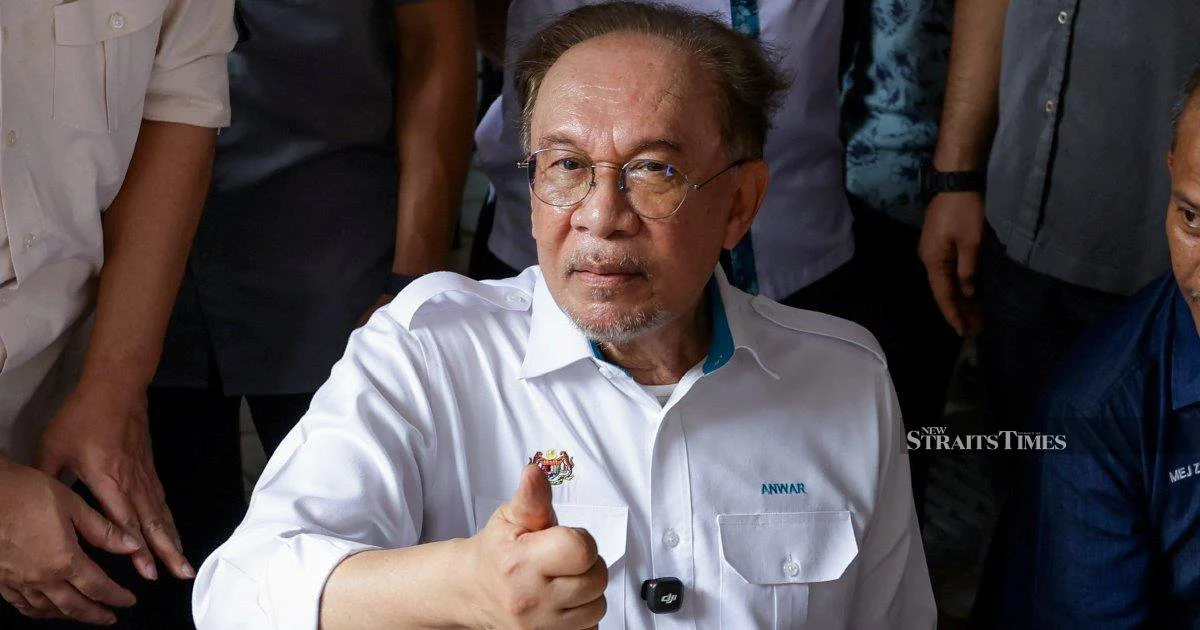
Prime Minister Datuk Seri Anwar Ibrahim has consolidated his position as Malaysia's most favoured political leader, according to the latest findings from the Merdeka Centre for Opinion Research, the country's respected independent polling organisation. The survey results underscore a significant shift in public sentiment following his ascension to the top office, reflecting how his administration's policy directions and governance approach have resonated with Malaysian voters across multiple demographic segments.
The Merdeka Centre's methodology, which has tracked Malaysian political preferences for decades, captures the evolving nature of public confidence in the nation's leadership. Anwar Ibrahim's elevated ranking suggests that his tenure as Prime Minister has strengthened his political standing compared to earlier periods, indicating potential consolidation of support among both traditional Pakatan Harapan constituencies and swing voters concerned with economic management and stability. This positive trajectory carries implications for the ruling coalition's electoral prospects and the government's capacity to advance policy initiatives with public backing.
Within the same survey, Datuk Seri Zahid Hamidi registered the lowest approval rating among measured political figures, a development that reflects the complex dynamics within Malaysia's coalition politics. Zahid, who leads the United Malays National Organisation and serves as Deputy Prime Minister, has faced sustained criticism regarding various governance matters and party-internal challenges. His comparatively weak standing contrasts sharply with Anwar Ibrahim's ascendancy, highlighting how individual political fortunes can diverge significantly even within the same governing coalition.
The disparity between approval ratings among top leaders raises important questions about internal coalition cohesion and the distribution of political capital within the government. While Anwar Ibrahim benefits from the premium typically afforded to a sitting Prime Minister, Zahid Hamidi's weaker position may complicate efforts to maintain UMNO's institutional influence and leverage within the broader Pakatan Harapan-UMNO-Barisan Nasional governing arrangement. This dynamic has considerable bearing on policy implementation and intra-coalition negotiations on contentious issues.
Public opinion surveys of this nature serve as important barometers for political leadership, particularly in Malaysia's context where electoral cycles interact with complex inter-party dynamics and shifting voter coalitions. The Merdeka Centre's findings suggest that Anwar Ibrahim has successfully maintained popular appeal despite the inherent challenges of governing a diverse, multi-ethnic democracy grappling with inflation, job market uncertainties, and ongoing demands for economic reform. His approval rating reflects public perception of his government's performance on matters ranging from institutional management to economic stewardship.
The timing of this survey captures a period of significant political development in Malaysia, where questions about governmental effectiveness and leadership vision remain paramount for voters. Anwar Ibrahim's strong showing may indicate that sections of the electorate remain committed to his administration's agenda, or alternatively that public opinion has stabilised around the current political configuration following the transition from the Muhyiddin Yassin and Ismail Sabri Yaakob administrations. These nuances matter considerably for understanding the trajectory of Malaysian politics beyond headline approval figures.
For the opposition and other political formations monitoring these metrics, the Merdeka Centre results present a challenging landscape. When a sitting Prime Minister commands strong approval ratings, opposition parties face steeper obstacles in convincing voters to effect political change. This advantage, however, remains contingent on the government's continued performance and its ability to address pressing economic and social concerns that preoccupy ordinary Malaysians. Economic conditions, in particular, carry disproportionate weight in shaping public sentiment toward any sitting government.
The regional dimension of these political shifts merits consideration as well. Malaysia's political health and the relative stability of its governance directly influence its standing within ASEAN and its capacity to engage in multilateral cooperation. A government enjoying robust public support possesses greater domestic mandate to negotiate international agreements and pursue strategic initiatives. Conversely, leadership perceived as weakened domestically may encounter constraints in advancing ambitious regional policies or security arrangements.
For Malaysian political watchers, the Merdeka Centre survey serves as a reminder that approval ratings constitute only one variable within the broader political equation. Structural factors, including institutional arrangements, electoral system mechanics, and the specific timing of any future electoral tests, will ultimately determine political outcomes. Nevertheless, Anwar Ibrahim's strong standing provides the current government with valuable political capital for advancing its legislative agenda and maintaining coalition discipline during periods of tension or disagreement.
The contrasting fortunes of Anwar Ibrahim and Zahid Hamidi also illuminate broader patterns within Malaysia's political ecosystem, where individual leaders' personal popularity can diverge substantially from their party or coalition performance. This phenomenon suggests that Malaysian voters increasingly evaluate political figures on an individual basis rather than adopting wholesale party loyalty, a development that rewards effective communication and perceived competent governance while punishing leaders associated with controversy or ineffectiveness. As the political landscape continues evolving, these granular measures of public opinion will remain essential for understanding the foundations of political power and the prospects for governmental stability and change.

