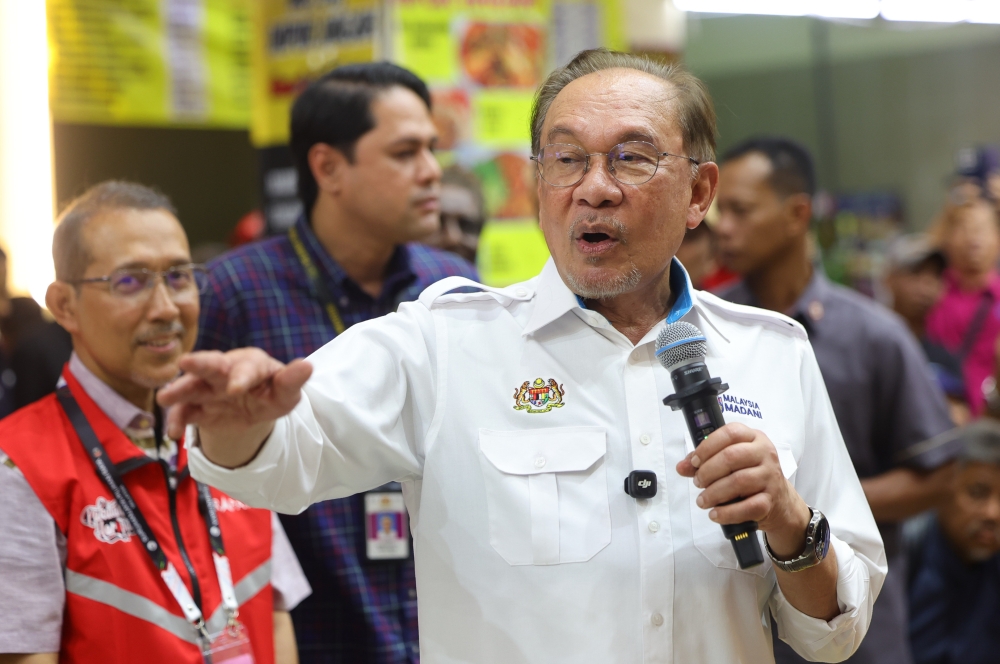
Prime Minister Datuk Seri Anwar Ibrahim is making a determined push in Negeri Sembilan during the closing days of the state election campaign, embarking on an exhaustive schedule of events across the region that underscores the federal leadership's commitment to securing a strong performance in this traditionally competitive battleground.
The intensive campaign effort reflects the strategic importance Putrajaya attaches to Negeri Sembilan, a state that has historically served as a barometer for national political sentiment. By personally leading the charge during the final stretch before polling day, Anwar is signalling that the federal government views the outcome as crucial not merely for state-level governance but as a crucial test of the administration's broader political mandate and ability to maintain coalition cohesion.
The packed itinerary spanning multiple constituencies demonstrates a calculated approach to resource deployment. Rather than dispersing attention across numerous states, the concentrated focus on Negeri Sembilan allows the Prime Minister to maximise media coverage, energise grassroots party machinery, and deliver the message directly to voters in key battleground areas. This targeted strategy is particularly important in marginal constituencies where the contest between ruling coalition and opposition forces remains closely contested.
Anwar's personal involvement in ground-level campaigning serves multiple political functions simultaneously. His presence at rallies and community engagements provides legitimacy to local candidates and reinforces the ruling coalition's narrative about competent, accessible governance. For supporters, it represents tangible acknowledgment of their concerns; for wavering voters, it offers an opportunity to assess the Prime Minister's commitment to their state directly rather than through mediated political communications.
The final campaign phase is proving critical across Malaysia's competitive political landscape. Negeri Sembilan, with its mix of urban centres and rural constituencies, presents challenges and opportunities that require sophisticated political judgment. The state has witnessed shifting electoral dynamics in recent election cycles, making it impossible for any camp to take voter support for granted. Consequently, the visible commitment of top leadership becomes a factor in mobilising base support and potentially persuading undecided voters.
Federal investment in state campaigns has become standard practice in Malaysian politics, particularly when national governments face questions about their grip on power. The Anwar administration's willingness to commit prime ministerial time and resources to Negeri Sembilan indicates confidence in the ruling coalition's organisational capacity while also suggesting awareness that complacency could prove costly. The opposition has similarly been active in pressing its alternative vision for state governance.
Campaign schedules of this intensity place significant physical and logistical demands on political figures and their teams. The Prime Minister must balance these campaign obligations with ongoing responsibilities for national administration, requiring careful coordination between the Prime Minister's Office and campaign structures. This juggling act has become a defining feature of modern Malaysian politics, where the lines between government business and party politics frequently overlap.
The broader implications for Malaysian politics extend beyond immediate electoral calculations. How ruling coalitions perform in state-level contests influences their negotiating position within complex coalition arrangements. Strong performances can strengthen federal leadership's hand in managing alliance partners, while disappointing results may embolden rivals within coalition structures or invigorate opposition movements. For Negeri Sembilan specifically, the election will determine which political force controls state resources, patronage networks, and the ability to shape local development priorities.
Voters in Negeri Sembilan are navigating multiple considerations as they prepare for the ballot. Economic concerns, local development issues, state-level governance competence, and national political dynamics all intersect in their decision-making. The intensive late-stage campaign activity reflects recognition that these final days often prove decisive, with undecided voters potentially breaking toward campaigns that appear energetic and well-organised.
The campaign's intensity also reflects genuine uncertainty about electoral outcomes. Malaysian elections have produced surprising results in recent years, defying confident predictions by political analysts and forcing established power structures to adapt. This unpredictability means that even seemingly dominant political forces cannot assume victory and must mobilise their full resources to ensure support translates into actual votes on polling day.
For Southeast Asian observers, Malaysia's state-level elections offer insights into how democracy functions in a multiethnic, multi-religious context where coalition politics and careful power-sharing arrangements remain essential. The Negeri Sembilan campaign demonstrates how federal and state-level politics intersect, with national leadership personally engaging in what might appear as parochial state contests.

