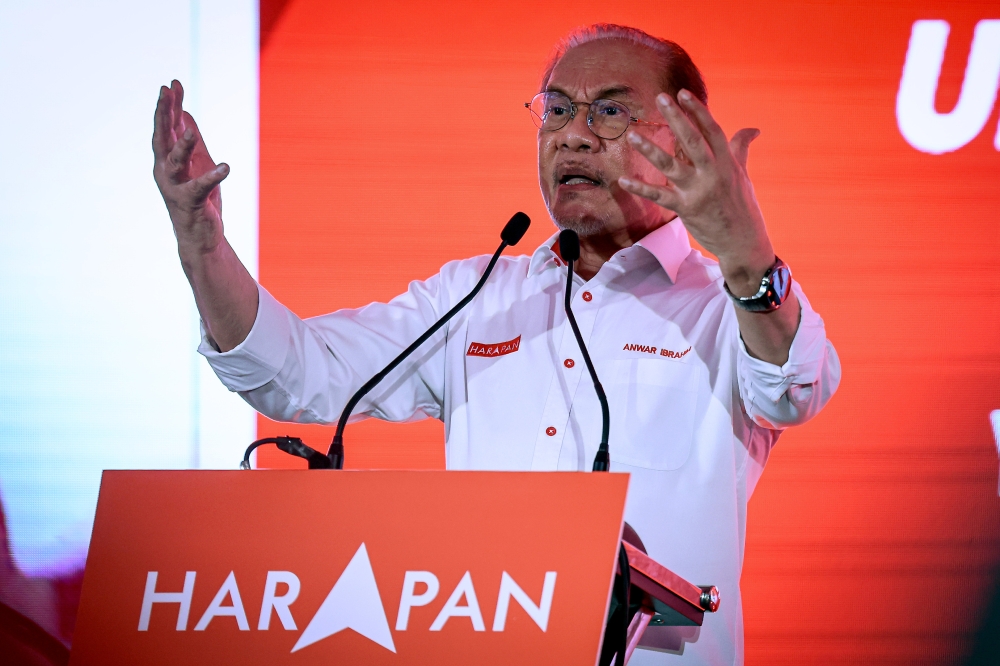
Prime Minister Datuk Seri Anwar Ibrahim has commenced his campaign efforts in Negeri Sembilan, marking a strategic pivot to mobilise Pakatan Harapan's electoral machinery in a state where the coalition faces a competitive political environment. The timing of his ground operations reflects the coalition's determination to build momentum ahead of elections that carry significance beyond the state itself, potentially influencing national political dynamics and the delicate balance within the federal government.
Negeri Sembilan represents a testing ground for Pakatan's ability to translate federal governance into state-level electoral success. The state has historically been contested territory, with its political composition shifting based on changing voter sentiments and regional dynamics. Anwar's direct involvement in the campaign underscores how seriously Kuala Lumpur views the stakes, as party leaders seek to prevent any erosion of support that could weaken Pakatan's negotiating position in Parliament or signal vulnerability heading into future national contests.
The campaign blitz carries particular resonance given Malaysia's complex electoral mathematics. Pakatan Harapan's federal majority rests on a coalition of parties with sometimes competing interests, and state-level losses could amplify internal tensions or provide ammunition to opposition figures questioning the government's electoral viability. Negeri Sembilan's outcome may therefore reverberate across multiple constituencies—affecting not just state governance but also the confidence of parliamentarians and coalition partners evaluating their long-term political fortunes.
Anwar's personal appearance on the campaign trail serves multiple tactical purposes. His presence generates media attention and signals to grassroots supporters that the coalition views their support as strategically important. In Malaysian politics, the visible commitment of top leadership often translates into energised party machinery and heightened volunteer activism, both crucial for winning marginal seats where victory margins remain razor-thin. His intervention also allows the coalition to frame elections as national issues rather than purely local contests, potentially raising voter turnout among Pakatan-leaning constituencies.
The campaign strategy appears designed to address specific vulnerabilities Pakatan may face in the state. Negeri Sembilan's electoral composition includes urban and rural areas with distinct priorities—urban voters may focus on economic issues and governance transparency, while rural constituencies prioritise agricultural support and infrastructure development. By campaigning directly, Anwar can tailor messaging to regional concerns and demonstrate that federal leadership understands local needs, a critical factor in persuading swing voters who may not automatically align with any coalition.
Pakatan's electoral positioning in Negeri Sembilan must also account for the state's history of divided governance. Periods of mixed control between federal and state governments have occasionally created friction over resource allocation and policy implementation. The coalition's campaign messaging likely emphasises unified governance benefits—arguing that aligned federal and state administrations deliver more efficient service delivery and coordinated development planning, contrasting this vision with scenarios of divided control that the opposition offers.
Opposition parties will undoubtedly mobilise their own resources in response to Anwar's campaign engagement. The competitive nature of Malaysian politics ensures that any high-profile campaign activity by the ruling coalition triggers counter-mobilisation, potentially resulting in a closely contested election. This dynamic benefits neither side overwhelmingly, but shapes the intensity of electoral competition and voter engagement levels that ultimately determine outcomes.
Regionally, Negeri Sembilan's election carries implications for Southeast Asia's broader political trajectory. As the region's most established democracy, Malaysia's electoral processes attract regional scrutiny. A Pakatan victory would reinforce narratives about coalition-based governance and consensual politics, while opposition gains might suggest shifting voter preferences or governance fatigue. These perceptions influence how regional observers assess democratic health and political stability across Southeast Asia.
The economic context surrounding Negeri Sembilan's election cycle also merits consideration. Malaysia's post-pandemic recovery has proceeded unevenly across states, with some regions experiencing faster growth and employment expansion than others. Pakatan's campaign will likely emphasise federal investments flowing to Negeri Sembilan and economic development initiatives credited to coalition governance. Opposition messaging will counter that benefits remain concentrated in certain areas or that cost-of-living pressures undermine electoral goodwill regardless of growth figures.
Anwar's campaign debut in Negeri Sembilan reflects broader strategic thinking about the 2023-2025 political calendar, during which multiple state elections will occur. Early strong performances establish momentum and demonstrate coalition vitality to both supporters and coalition partners. Poor results could trigger internal questioning about Pakatan's electoral strength and governance record, potentially emboldening rivals within federal government structures or creating openings for opposition resurgence. The state election thus becomes a barometer of coalition health and electoral competitiveness more broadly.
The deployment of the Prime Minister himself for state-level campaigning also signals confidence, though measured confidence given Malaysia's unpredictable electoral environment. Anwar's involvement raises stakes—success vindicates his leadership and coalition strategy, while disappointing results create narratives about declining support or governance failures. This calculation undoubtedly featured in Pakatan's decision-making, suggesting coalition strategists believe conditions favour strong performance in Negeri Sembilan despite competitive pressures.

