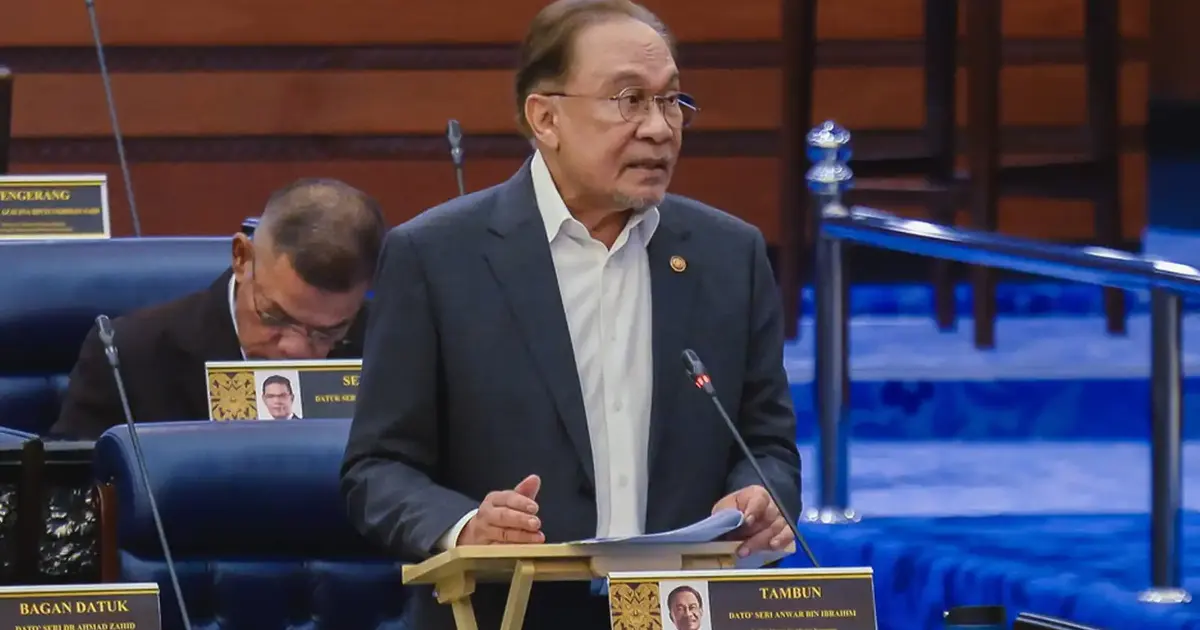
Prime Minister Anwar Ibrahim has drawn a clear boundary around federal financial responsibility, declaring that Putrajaya will not routinely absorb additional expenses stemming from decisions made at state level. The statement represents a significant tightening of fiscal discipline in centre-state relations, particularly concerning infrastructure projects where cost overruns have historically created tension between federal and regional administrations. By insisting that any request for supplementary federal allocations or fresh borrowing arrangements must be subject to renegotiation, Anwar is signalling a shift towards stricter accountability and more transparent cost management across Malaysia's intergovernmental budget framework.
The Prime Minister's declaration carries particular weight given the escalating pattern of project cost increases that have plagued Malaysian development initiatives over recent years. State governments have frequently found themselves facing budget shortfalls when construction expenses, material costs, or labour charges exceed initial projections. Historically, these additional burdens have sometimes been transferred to the federal level through requests for emergency funding or loan restructuring. Anwar's position suggests this practice will face heightened scrutiny moving forward, compelling states to either absorb costs internally, reduce project scope, or present compelling cases for federal intervention grounded in specific circumstances rather than routine expectation.
This fiscal stance reflects broader concerns about governance and budgetary discipline within Malaysia's federal structure. With multiple states managing their own development agendas while remaining dependent on federal revenue sharing arrangements, the potential for financial disputes has remained substantial. Anwar's intervention appears designed to encourage state governments to exercise tighter control over project planning and execution, including more rigorous cost estimation and contingency planning. The implicit message is that states must demonstrate competence in financial management rather than relying on federal bail-outs when their own decisions result in budget pressures.
The timing of this announcement is significant within Malaysia's current political context. Several states have undertaken ambitious infrastructure programmes aligned with their own development visions, and some have experienced unexpected cost escalations. By establishing clearer expectations about federal support boundaries, Anwar is attempting to create a more predictable fiscal environment while simultaneously pressuring state administrations to improve their own budgeting practices. This approach may also serve as a mechanism for the federal government to maintain tighter control over overall national spending trajectories, particularly important given Malaysia's ongoing fiscal consolidation efforts.
For state governments, the implications are substantial and multifaceted. Those planning new projects must now factor in stricter assumptions about federal cost-sharing arrangements and build more robust contingency buffers into their budgets. States will need to enhance their project management capabilities, including more sophisticated cost estimation, risk assessment, and contract management. The requirement for renegotiation means that state officials cannot simply assume that federal support will automatically materialize if circumstances change, necessitating more comprehensive initial planning and stakeholder consultation before project commencement.
The statement also underscores the tension inherent in Malaysia's federal system, where states retain significant autonomy over their development priorities but ultimately depend heavily on federal revenue allocation and borrowing capacity. This dynamic has occasionally created situations where state ambitions outpace their financial capacity, leading to incomplete projects or unmanageable debt burdens. Anwar's approach attempts to rebalance this relationship by making states more responsible for their own fiscal consequences while protecting the federal budget from unexpected drains.
From a Malaysian business and investment perspective, this announcement may introduce additional project planning complexity. Private developers and contractors working on state-sponsored initiatives will need to clarify funding arrangements more thoroughly before commencing work, potentially extending the pre-project phase and increasing transaction costs. However, the requirement for clearer federal-state arrangements could ultimately reduce delays caused by unexpected funding gaps or disputes over payment obligations, potentially benefiting long-term project delivery.
Regional implications deserve consideration as well. Southeast Asian governments grapple with similar centre-periphery fiscal tensions, and Malaysia's experience offers lessons for neighbouring countries managing federal structures and development spending. Anwar's firm stance may influence thinking in Indonesia, India, and other federal systems where cost escalation disputes frequently arise between different governmental levels. It also reflects a broader global trend towards stricter fiscal governance and accountability, particularly as countries navigate post-pandemic budget constraints.
Looking forward, this policy direction will likely necessitate institutional adjustments. State finance ministries may require additional technical capacity to conduct more rigorous cost analysis and risk management. Federal agencies may need to develop clearer criteria for evaluating when supplementary allocations are justified by genuine external factors rather than poor initial planning. The Malaysian Institute of Public Finance or similar bodies could play enhanced roles in establishing best-practice guidelines for cost estimation and contingency planning across state governments.
Ultimately, Anwar's declaration represents a deliberate shift towards imposing discipline on the federal-state budgetary relationship. By refusing to automatically absorb cost overruns while leaving room for genuine renegotiation when circumstances warrant, the Prime Minister is attempting to create incentives for improved state-level financial management without entirely abandoning federal flexibility. Success will depend on whether states adjust their planning processes and cost discipline accordingly, and whether the federal government applies these principles consistently across all states and political circumstances.

