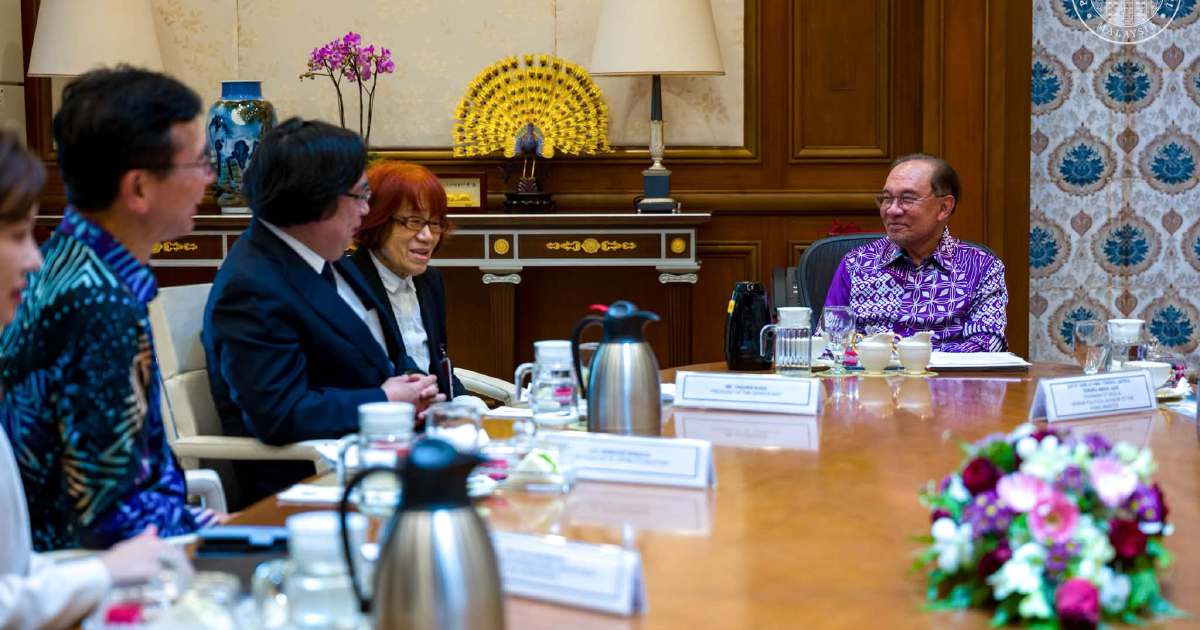
Prime Minister Datuk Seri Anwar Ibrahim received Genron NPO president Yasushi Kudo at his office in Kuala Lumpur, with the high-level meeting underscoring Malaysia's commitment to expanding its strategic relationship with Japan through structured dialogue mechanisms. The encounter represents part of ongoing diplomatic efforts to strengthen the bilateral partnership between the two nations, with emphasis placed on establishing and reinforcing channels for sustained engagement on matters of mutual interest.
Genron NPO, formally known as the People's Forum on Japan's Foreign Relations, is a Tokyo-based independent think tank that has long served as a bridge between Japan and countries across the Asia-Pacific region. The organisation conducts research and facilitates dialogue on foreign policy issues, functioning as an influential actor in Japan's strategic communications apparatus. Genron NPO's engagement with Malaysian leadership demonstrates Japan's sustained interest in maintaining high-level discourse with one of Southeast Asia's most important economies and diplomatic partners.
The discussions between Anwar and Kudo focused on mechanisms to deepen strategic dialogue between Malaysia and Japan, reflecting both nations' recognition that formal structures for policy conversation remain crucial in an increasingly complex regional environment. Such engagements typically address contemporary geopolitical challenges, trade relationships, security cooperation, and cultural exchange programmes that define modern bilateral relations in Southeast Asia.
Malaysia has positioned itself as a key partner for Japan across multiple dimensions of regional engagement. As a founding member of the Association of Southeast Asian Nations and a significant economy in its own right, Malaysia offers Japan critical access to Southeast Asian markets, talent pools, and strategic influence. The bilateral relationship encompasses areas ranging from defence and security cooperation to technological innovation and energy partnerships, making the Malaysian government a priority interlocutor for Japanese policymakers.
Genron NPO's involvement in this dialogue reflects Japan's broader strategy of leveraging non-governmental and academic institutions to complement official diplomatic channels. Think tanks and research organisations operate with greater flexibility than government bodies, allowing them to explore sensitive topics, trial policy ideas, and build personal relationships that might lay groundwork for future governmental negotiations. Kudo's visit therefore likely included discussions on regional security dynamics in the context of rising tensions in the Indo-Pacific, trade and economic cooperation, and shared interests in maintaining peace and stability.
The timing of this engagement carries particular significance given Malaysia's strategic location and its role in shaping consensus within ASEAN on major regional questions. Japan remains deeply invested in Southeast Asian affairs as part of its broader Indo-Pacific strategy, seeking to maintain economic predominance and security partnerships in a region increasingly subject to strategic competition from larger powers. Through organisations like Genron NPO, Japan cultivates long-term relationships with influential political and intellectual figures in partner nations, ensuring sustained alignment on key strategic objectives.
Bilateral Malaysia-Japan relations have evolved considerably since their post-war establishment, particularly accelerating following Japan's economic reconstruction and Malaysia's own development trajectory. Contemporary ties span investment flows that see Japanese corporations maintaining substantial manufacturing and technology operations throughout Malaysia, cultural and educational exchanges that annually send hundreds of Malaysian students to Japanese universities, and defence partnerships built on shared maritime security concerns and commitment to rules-based international order.
The focus on strengthening strategic dialogue mechanisms reflects broader recognition among policymakers that formal consultation structures provide stability and predictability in bilateral relations. Regular high-level engagements through both governmental and non-governmental channels create opportunities for early problem-solving, prevent misunderstandings from escalating, and establish personal relationships that facilitate cooperation when disagreements arise. For Malaysia, maintaining robust dialogue with Japan serves multiple objectives: it reinforces Malaysia's standing as a major regional actor capable of engaging major powers, it provides access to Japanese expertise and technology, and it helps balance Malaysia's broader great power relationships.
Looking forward, the partnership between Malaysia and Japan will likely expand in areas such as green technology cooperation, where Japan possesses considerable expertise in energy efficiency and sustainable manufacturing practices relevant to Malaysia's development ambitions. Regional security challenges, including piracy in the Strait of Malacca and maritime boundary issues, continue to require coordinated responses that benefit from enhanced dialogue. Additionally, economic cooperation will remain central, with both nations seeking to diversify their respective supply chains and reduce dependency on any single trading partner amid global economic uncertainties.
Genron NPO's engagement with Malaysian leadership also signals Japan's commitment to treating Southeast Asia as a priority region meriting sustained attention from Tokyo's policy establishment. The think tank's involvement in bilateral relations ensures that discussions benefit from expert analysis and long-term strategic perspective, moving beyond transactional interactions to build enduring partnerships grounded in mutual understanding and shared vision for regional stability and prosperity.

