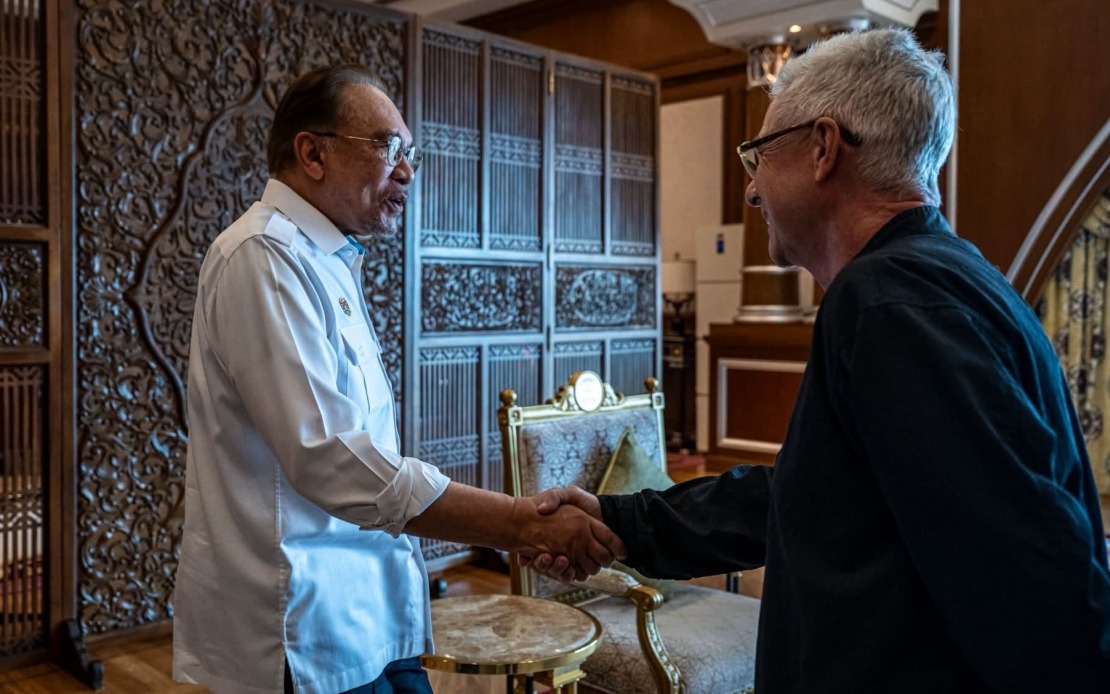
Prime Minister Datuk Seri Anwar Ibrahim convened with Michael Roche, the Executive Director of the Singapore Grand Prix, to strategise the successful delivery of Formula 1's Gulf Air Bahrain Grand Prix, which will take place at Sepang International Circuit (SIC) from October 2 to 4. The discussions form part of Malaysia's comprehensive preparation to welcome back a headline Formula 1 event after a nine-year absence, drawing on Singapore's considerable experience as a host of motorsport's premier global showcase.
The meeting underscores the Malaysian government's determination to extract maximum benefit from the prestigious championship race, which represents a collaborative venture between Malaysia and Bahrain sanctioned by the FIA. By studying Singapore's operational framework and event management protocols, Malaysian authorities aim to translate the one-off race into broader economic gains that transcend the three-day competitive window. The consultation with an established regional authority demonstrates pragmatic leadership in preparing domestic institutions and businesses to capitalise on international sporting infrastructure.
The Bahrain Grand Prix's relocation from its traditional April slot at the Bahrain International Circuit to October in Malaysia stems from escalating geopolitical instability across the wider West Asian region. This displacement, while compelled by external circumstances, has created an unforeseen opportunity for Malaysia to reassert itself within Formula 1's global circuit and rekindle the automotive sector's profile in Southeast Asia. The shift also reflects the sport's adaptability in navigating complex international geopolitical landscapes while maintaining commercial viability.
Anwar's public commitment emphasises the administration's expectation that the race will generate tangible economic multiplier effects throughout the domestic economy. The anticipated benefits encompass expanded tourism arrivals, employment creation across hospitality and logistics sectors, ancillary business development surrounding the event, and enhanced perceptions of Malaysia among global investor communities evaluating regional opportunities. These outcomes align with the government's broader Visit Malaysia 2026 promotional campaign, which positions international sporting events as catalysts for sustained travel and economic engagement.
Sepang International Circuit carries particular historical resonance within Formula 1 discourse. The venue hosted Malaysia's own Grand Prix consecutively from 1999 through 2017, establishing itself as a sophisticated racing facility and proving ground for circuit engineering excellence. However, the Malaysian Grand Prix's exit from the calendar reflected the escalating cost burden imposed by the sport's licensing arrangements and hosting requirements, a challenge that eventually proved unsustainable for the national motorsport governing bodies. The return engagement via the Bahrain partnership represents a partial rehabilitation of Malaysia's Formula 1 presence, though under a different franchise arrangement.
The October timing presents both logistical advantages and challenges that merit careful navigation. The monsoon season transitions and ambient temperature conditions during late October differ materially from the springtime conditions traditionally hosting Gulf region races. Sepang's tropical climate demands meticulous contingency planning for weather-related disruptions, a dimension where Singapore's comprehensive event management protocols become particularly instructive. Additionally, the compacted lead time for preparations—spanning only several months—necessitates operational efficiency benchmarked against established precedents.
For Malaysian industry stakeholders, the race catalyses procurement opportunities across accommodation, transportation, catering, security, and telecommunications infrastructure. Small and medium enterprises throughout the Klang Valley possess potential to service the influx of international teams, media organisations, and spectators converging on Sepang. The hospitality and creative industries particularly stand to benefit from expanded domestic demand cycles aligned with pre-event and post-event commercial activation.
Anwar's framing of the initiative explicitly situates the race within Malaysia's broader positioning as a regional motorsports nexus. Beyond this singular event, the successful execution of the Bahrain Grand Prix strengthens the country's credentials for attracting subsequent international racing championships, supporting series development, and cultivating automotive manufacturing clusters. Such long-term competitive advantage cannot be overstated in Southeast Asia's competitive landscape for major sporting events.
The collaboration with Bahrain introduces an intriguing precedent for shared hosting arrangements within global sporting governance. Rather than one nation exclusively bearing the financial and operational obligations, the distributed model potentially reduces individual country burden while creating bilateral diplomatic opportunity. This framework may influence future deliberations around regional sporting infrastructure, particularly as countries evaluate the cost-benefit calculus of hosting championship events against alternative economic development strategies.
The government's emphasis on meeting international standards reflects awareness that Formula 1 hosts global audiences and operates within exacting technical and security specifications. Any operational shortfall could damage Malaysia's international standing and diminish the anticipated economic returns. Conversely, demonstrable excellence in event execution would reinforce the nation's capabilities and create momentum for subsequent hosting assignments across motorsport and allied entertainment verticals throughout the 2026-2027 period and beyond.

