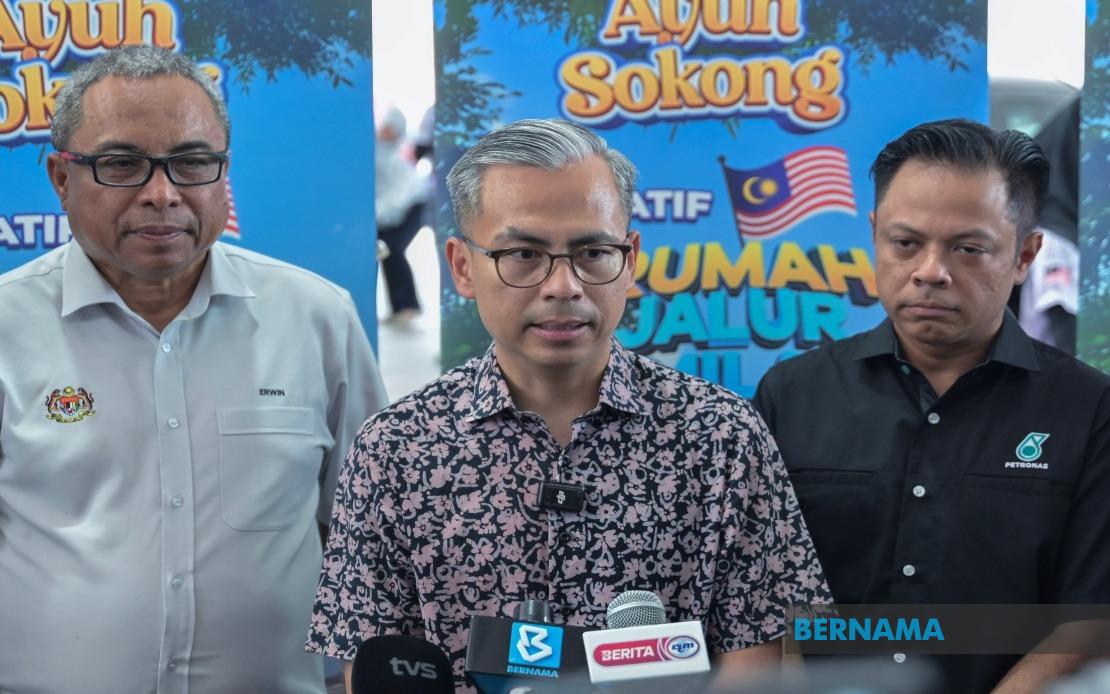
Prime Minister Datuk Seri Anwar Ibrahim has instructed the Election Commission to prepare a fresh report on the expansion of Sarawak State Legislative Assembly seats as part of a broader initiative to strengthen parliamentary representation in the state. Communications Minister Datuk Seri Fahmi Fadzil disclosed the directive following a recent Cabinet meeting, emphasizing that the government remains committed to advancing the redelineation project despite outstanding procedural matters requiring clarification.
The proposed expansion would increase the number of Sarawak State Legislative Assembly seats from the current 82 to 99, representing a substantial addition of 17 new constituencies. This expansion is intended to enhance representation and distribute electoral boundaries more equitably across the state, which covers approximately one-third of Malaysia's land area but has historically faced challenges in ensuring adequate legislative representation relative to its geographical size and dispersed population. The Sarawak State Legislative Assembly (Composition of Membership) Bill 2025 was tabled to facilitate this constitutional amendment, though the specific implementation timeline remains contingent on ongoing coordination between government agencies and the electoral authority.
Fahmi explained during a media engagement that while the Prime Minister's commitment to implementation is unequivocal, several procedural steps involving the Election Commission must first be completed before any concrete timeline can be announced. The Cabinet has not yet received formal notification of a specific implementation date because the government is awaiting critical documentation and recommendations from the electoral body. This sequential approach reflects standard practice for constitutional amendments affecting state assembly composition, which typically require coordinated preparation between multiple stakeholders including the state government, federal authorities, and electoral officials.
The issue gained momentum within Cabinet discussions when Minister of Women, Family and Community Development Datuk Seri Nancy Shukri and Minister of Works Datuk Seri Alexander Nanta Linggi formally raised the matter, signalling that the redelineation initiative enjoys broad support across the government coalition. Their intervention underscores recognition that Sarawak, as Malaysia's largest state by area with significant demographic and economic importance, deserves enhanced legislative capacity to address regional concerns and development priorities. The state's representation in its own assembly has been a subject of ongoing debate, particularly given the disparity between its land mass and the number of constituencies compared with other Malaysian states.
For Malaysian observers and particularly Sarawak stakeholders, this development carries considerable implications. The expansion would not only increase total legislative seats but also create opportunities for political representation shifts, as newly delineated constituencies could alter the electoral landscape. This is particularly significant in Sarawak's distinctive multi-party political environment, where the governing coalition structure differs markedly from peninsular Malaysia. Political analysts suggest the redelineation could influence the competitive dynamics ahead of future state elections, as new constituencies may emerge in areas previously underrepresented.
Beyond electoral geometry, the expansion reflects broader federal-state relations. Sarawak has historically negotiated considerable autonomy within the Malaysian federation, and such constitutional amendments affecting its assembly require careful calibration to maintain consensus. The involvement of multiple federal ministers in advancing this initiative suggests it carries Cabinet-level importance and represents a priority in the government's engagement with Sarawak's interests. This collaborative approach signals respect for the state's distinctive position within Malaysia's constitutional framework.
Parallel to the redelineation process, Fahmi also outlined preparations for upcoming state elections in Melaka, indicating that the government is simultaneously managing electoral machinery across multiple jurisdictions. The emphasis on ensuring adequate internet connectivity and appropriate facilities at polling centres in Melaka, informed by lessons learned from previous state elections in Johor and Negeri Sembilan, demonstrates evolving technical standards for conducting modern elections. The Malaysian Communications and Multimedia Commission has been engaged to coordinate with the Election Commission on these infrastructure requirements, reflecting recognition that contemporary elections increasingly depend on digital systems for voter verification, results transmission, and poll administration.
The Election Commission's forthcoming report on Sarawak's redelineation will likely address technical considerations including population distribution across proposed constituencies, geographical accessibility, demographic projections, and administrative feasibility. These assessments are essential for ensuring that new constituencies remain viable and that electoral boundaries reflect genuine representative principles rather than serving purely partisan interests. The electoral authority's independence in conducting these evaluations carries particular weight given Malaysia's constitutional requirement that redelineation processes maintain integrity and public confidence.
Regionally, the Sarawak expansion initiative holds relevance for other Southeast Asian nations evaluating their own electoral frameworks. As democratic institutions evolve, questions about representation in vast territories with dispersed populations remain pertinent across the region. Malaysia's approach to managing constitutional amendments affecting electoral composition offers instructive lessons in coordinating federal and state interests while maintaining established institutions' credibility.
Looking forward, the timeline for the Election Commission's report will likely determine when the government can move toward legislative action. Fahmi's clarification that implementation details remain pending demonstrates the government's cautious, procedurally sound approach rather than any lack of political will. For Sarawak, this represents tangible progress on a long-standing representation issue, contingent only on completing necessary electoral technical work. The Prime Minister's explicit commitment, coupled with Cabinet-level backing, suggests the initiative enjoys sufficient political momentum to advance toward implementation once outstanding matters are resolved.

