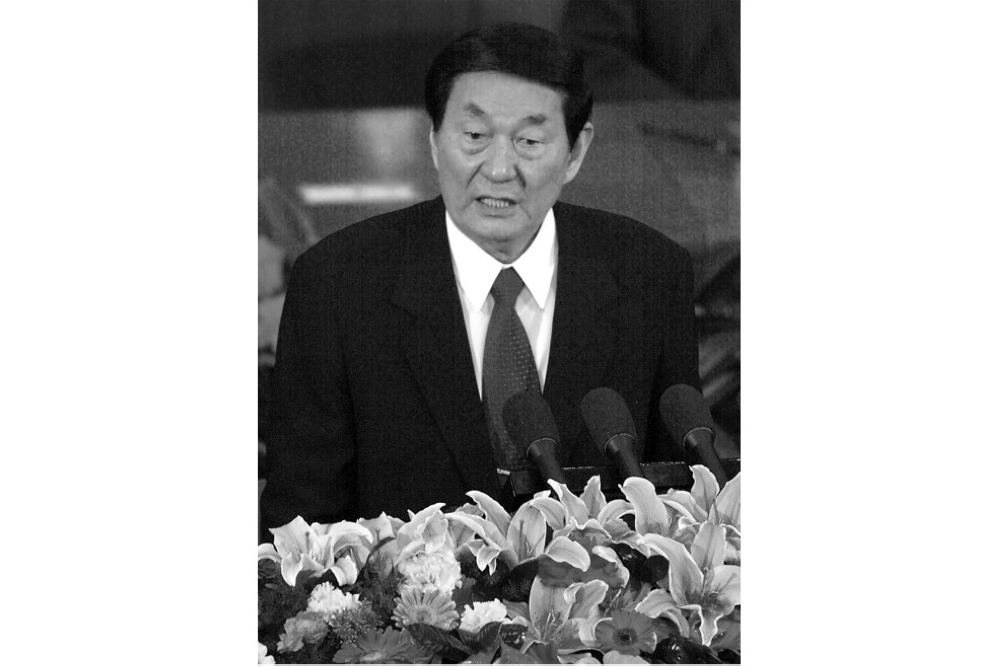
Prime Minister Datuk Seri Anwar Ibrahim has extended his condolences to the family of Zhu Rongji, the former Premier of China who passed away recently, describing him as a cherished friend whose leadership left an indelible mark on bilateral relations between Malaysia and the People's Republic of China. In a statement released through his office, Anwar reflected on Zhu's legacy as a transformative figure in China's economic modernisation, emphasising how his tenure as Premier facilitated deeper engagement between the two nations across multiple sectors.
Zhu Rongji's tenure as Premier from 1998 to 2003 coincided with a pivotal period in China's integration into the global economy and its emergence as a major regional power. During those years, he spearheaded significant economic reforms that opened Chinese markets and attracted unprecedented levels of foreign investment. For Malaysia, this period represented crucial opportunities for trade expansion, technology transfer, and participation in China's manufacturing boom. The Malaysian government under successive administrations recognised the strategic importance of maintaining robust ties with Beijing during this transformative phase, and Zhu's pragmatic approach to economic diplomacy created fertile ground for such engagement.
Anwar's tribute underscores the personal relationships that underpin state-to-state interactions at the highest levels. The Prime Minister characterised Zhu as more than merely a foreign counterpart, but as someone who genuinely invested in understanding Malaysia's development aspirations and positioning the country as a natural partner within China's expanding economic sphere. Such relationships often transcend formal diplomatic protocols, creating informal channels through which nations can resolve differences and identify new areas for cooperation. In the context of Malaysia-China relations, these personal bonds have historically proven valuable during periods when broader regional dynamics might otherwise constrain bilateral engagement.
The significance of Zhu's passing extends beyond nostalgic reflection on past achievements. It marks the departure of a generation of Chinese leaders who witnessed and shepherded their nation's spectacular economic ascent. Zhu was instrumental in preparations for China's accession to the World Trade Organization in 2001, a watershed moment that reshaped global trade architecture and created immense opportunities for countries like Malaysia positioned along regional supply chains. His advocacy for fiscal discipline and structural economic reform influenced China's development trajectory for decades, establishing patterns of investment and trade that Malaysian businesses have since capitalised upon extensively.
For contemporary Malaysia-China relations, Anwar's remarks signal continuity and respect for historical relationships even as both nations navigate evolving regional circumstances. The current generation of Chinese leadership under Xi Jinping pursues different strategic priorities, particularly through initiatives such as the Belt and Road Initiative and the Regional Comprehensive Economic Partnership. Understanding how figures like Zhu contributed to establishing the foundational trust and economic interdependence between Malaysia and China becomes important for Malaysian policymakers seeking to calibrate engagement with Beijing in ways that serve national interests.
The economic dimensions of Malaysia-China ties have only deepened since Zhu's premiership. Two-way trade volumes have expanded dramatically, with Chinese investment flowing into Malaysian manufacturing, infrastructure, and real estate sectors. Simultaneously, Malaysian businesses have secured supply contracts and manufacturing partnerships throughout China's coastal provinces. This economic interdependence, rooted partly in the strategic vision cultivated by leaders like Zhu, has created mutual interests in maintaining stable, predictable bilateral relations regardless of political fluctuations in either country.
Anwar's public mourning of Zhu Rongji also reflects Malaysia's broader approach to great power relations in the contemporary era. While maintaining strategic autonomy and balancing ties with other major powers, successive Malaysian governments have recognised that China's regional weight demands careful, considered engagement. Acknowledging contributions from Chinese leaders who facilitated earlier periods of beneficial cooperation signals Malaysia's appreciation for pragmatism in international relations. This stance becomes particularly relevant as Malaysia navigates complex regional tensions, trade pressures, and the imperative to maintain partnerships that generate genuine economic benefits.
Zhu's legacy in China extends beyond Malaysia, encompassing his reputation as a technocrat committed to efficient governance and economic rationalism. He was known for his directness and willingness to implement difficult reforms, characteristics that earned respect from international business communities and foreign governments. For Malaysian observers of Chinese politics, Zhu represented a particular style of economic leadership that prioritised growth and integration into global systems, an approach that aligned well with Malaysia's own developmental aspirations during the late 1990s and early 2000s.
Looking forward, the passing of such historical figures prompts reflection on the durability of relationships built during their tenures. While individual leaders inevitably depart, the institutional frameworks and commercial networks they helped establish often persist. The Malaysia-China relationship has evolved substantially since Zhu's era, but the foundation of trust and mutual benefit that he helped construct remains relevant. New generations of policymakers in both countries inherit not merely formal diplomatic traditions but also living networks of business partnerships and people-to-people connections that trace their origins to decisions made during Zhu's premiership.
Anwar's tribute, delivered with genuine warmth, emphasises that international relations ultimately depend upon the quality of human connections forged between leaders who understand each other's aspirations and constraints. Zhu Rongji earned a place of respect in Malaysian political memory not through military might or coercive diplomacy, but through his demonstrated commitment to economic cooperation and his recognition that mutual prosperity serves both nations' interests far more effectively than zero-sum competition. As Malaysia contemplates its future engagement with China under new leadership in Beijing, the example set by previous generations of statesmen like Zhu provides both inspiration and practical instruction for navigating the complexities of great power diplomacy in Southeast Asia.

