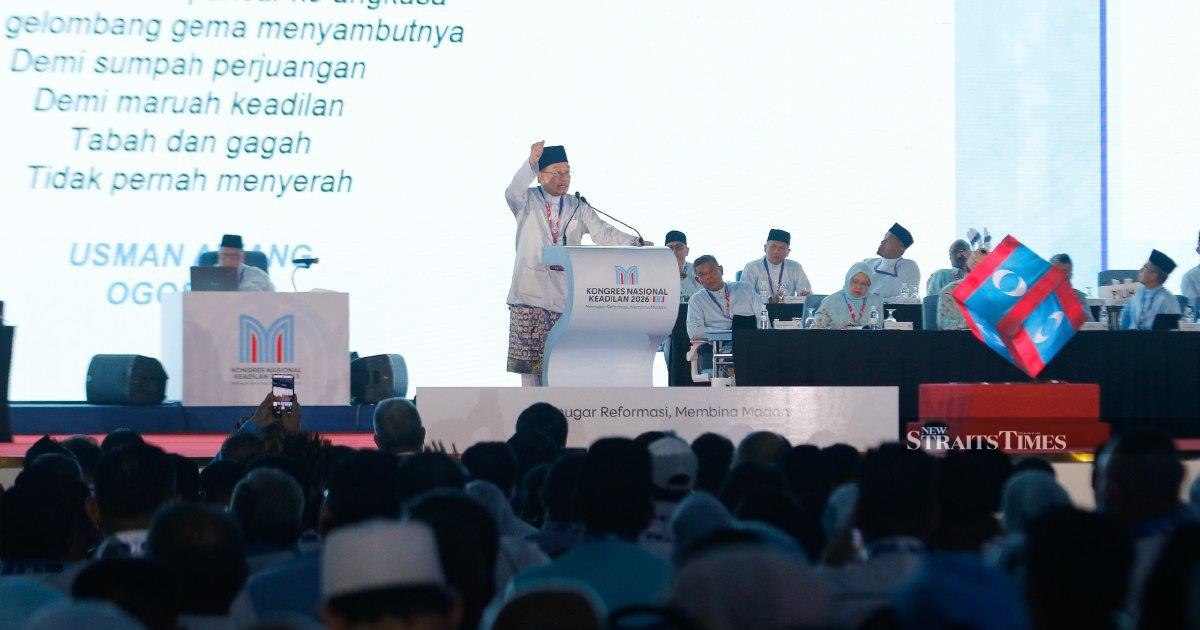
At an address in Ayer Keroh, PKR president Datuk Seri Anwar Ibrahim indicated that the federal government is preparing to step up the tempo of its reform programme, moving beyond the foundational work of recent months to inject fresh momentum into substantive policy changes across multiple portfolios.
The statement represents a significant signal about the administration's strategic direction following its consolidation of political support in parliament. Having secured the numbers needed to govern, the coalition led by the Prime Minister appears ready to transition from the careful, consensus-building phase that has characterised the early months of the current administration towards a more assertive implementation phase. This tactical shift carries implications for how quickly major legislative and institutional changes may unfold across Malaysia's bureaucracy, judiciary, and regulatory framework.
For Malaysian observers tracking the government's progress since assuming office, Anwar's remarks suggest that delays and procedural hurdles that have previously slowed policy delivery may now face renewed pressure. The reform agenda encompasses several areas that remain contentious within Malaysia's political landscape, including institutional transparency, civil service efficiency, and governance standards. The acceleration would represent movement on initiatives that stakeholders have monitored closely, from anti-corruption measures to streamlining of regulatory processes.
The timing of this announcement carries weight given the broader Southeast Asian context. Regional governments are increasingly facing pressure to demonstrate tangible progress on economic competitiveness, institutional modernisation, and investor confidence. Malaysia's perceived ability to execute reforms influences both international perceptions of the country's stability and the confidence of foreign and domestic capital in the economy. A more aggressive reform trajectory could signal to markets that the administration has moved beyond political consolidation into concrete delivery mode.
Within PKR circles, the statement also carries significance as a confirmation of the party's policy direction following recent political manoeuvring. As the largest component of the ruling coalition, PKR's positions on reform priorities have typically aligned with the party's reform-oriented base, though these often require negotiation with coalition partners whose constituencies may hold differing views on the pace and scope of change. Anwar's public commitment therefore represents both a reaffirmation of party principles and a potential constraint on coalition negotiations moving forward.
Domestic stakeholders ranging from civil society organisations to business chambers have long called for clearer timelines and more decisive implementation of reform promises. Professional bodies, anti-corruption advocates, and those seeking institutional changes have waited to see whether campaign commitments would translate into sustained policy action or remain largely aspirational. The signalled acceleration suggests a shift toward demonstrable outcomes, though questions remain about resource allocation, enforcement mechanisms, and political will when reforms generate resistance from entrenched interests.
The reform agenda's specific contours matter significantly for Malaysian sectors dependent on regulatory clarity. Technology companies, financial services, real estate developers, and manufacturers all operate within frameworks that could be substantially affected by institutional and procedural changes. An accelerated timeline for reforms could create both opportunities for businesses positioned to adapt quickly and disruption for those reliant on existing regulatory arrangements. Foreign investors watching Malaysia's trajectory would likely view meaningful reform progress as a positive signal about medium-term institutional development.
Anwar's announcement also reflects recognition within the government that voter expectations have extended beyond mere political stability toward tangible improvements in service delivery, corruption control, and fairness. Electoral cycles create pressure to demonstrate results before the next general election, and an intensified reform pace could be partly motivated by the need to build a record of achievement that appeals to the middle ground of Malaysian voters who value both stability and progress.
The opposition's response to an accelerated reform agenda will itself be instructive about Malaysia's political dynamics. Depending on which reforms gain priority, opposition parties may either support specific measures that align with their platforms or attempt to block initiatives they view as partisan or poorly conceived. This dynamic could shape whether the announced acceleration translates into real-world impact or encounters legislative and procedural obstacles.
Implementation capacity presents another critical variable. Malaysia's civil service, while generally competent, faces resource constraints and legacy bureaucratic structures that can slow policy execution regardless of political will at the top. Whether the government has invested in the institutional capacity needed to actually implement an accelerated agenda more quickly remains to be seen. Ambitious timelines without corresponding resource deployment often produce disappointing results.
For Malaysian citizens and businesses, the coming months will test whether Anwar's statements represent genuine acceleration or political positioning. Concrete indicators would include legislative action on flagship reforms, visible changes in regulatory processes, and public commitments with specific timelines and accountability mechanisms. The reform agenda's success ultimately depends not on rhetorical commitment but on the difficult work of changing entrenched institutional practices and behaviour patterns across Malaysia's government apparatus.

