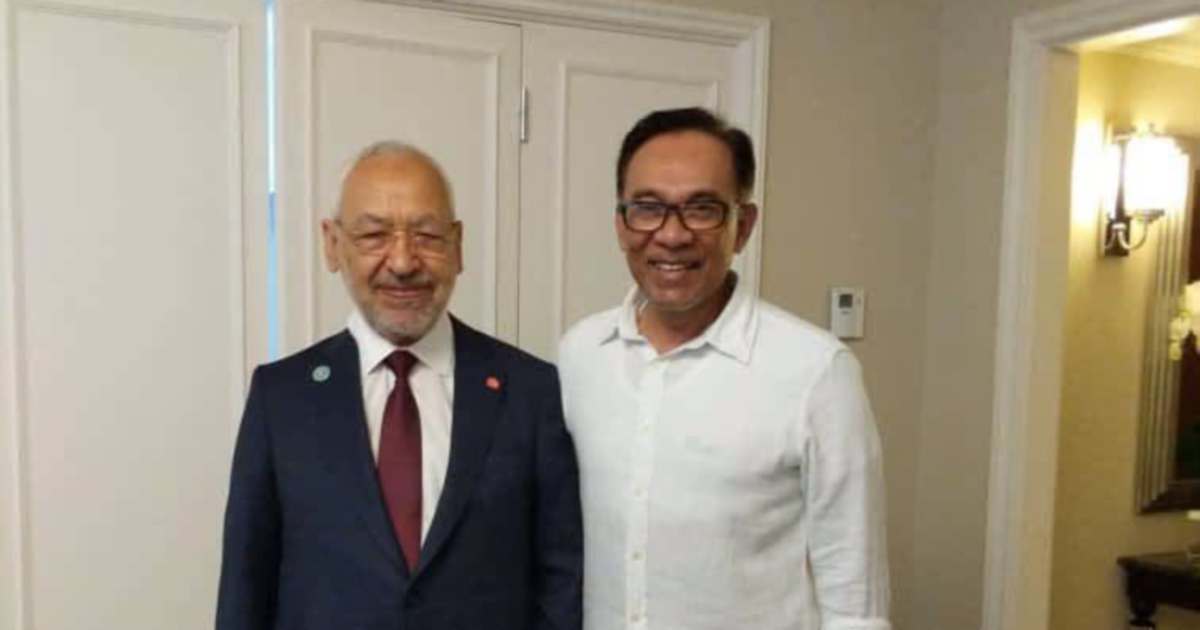
Malaysia's Prime Minister Datuk Seri Anwar Ibrahim has engaged directly with Tunisia's political leadership through diplomatic correspondence, urging the country's President Kais Saied to reconsider the detention of prominent political figure Sheikh Rached Ghannouchi. The letter, delivered from Kuala Lumpur, frames the appeal around humanitarian considerations rather than political positions, signalling a measured approach to a sensitive matter within the Arab world.
The intervention demonstrates Malaysia's continued interest in supporting cases where political detainees face extended imprisonment without resolution. Anwar's administration has previously positioned itself as an advocate for imprisoned politicians in neighbouring countries, viewing such appeals as consistent with Malaysia's broader foreign policy emphasising human rights and democratic values. The choice to communicate directly with the Tunisian president reflects the gravity with which the Malaysian leadership regards Ghannouchi's circumstances.
Ghannouchi's detention represents a significant chapter in Tunisia's political turbulence following the North African country's 2011 revolution. The veteran political figure, long associated with Tunisia's Islamist movements, has experienced multiple periods of imprisonment and exile throughout his life. His current detention must be understood within the context of Tunisia's increasingly fractious political landscape, where institutional tensions between executive and legislative branches have intensified dramatically in recent years.
President Saied has consolidated considerable executive authority since suspending parliament in July 2021, a move justified as necessary to address institutional dysfunction but which critics argue undermined democratic processes. The detention of high-profile political figures from opposition camps, including Ghannouchi and others, has formed part of this consolidation strategy. Tunisia's trajectory from post-revolution optimism to current political polarisation presents a sobering case study for democratic transitions in the region.
Anwar's humanitarian framing carries particular significance given Malaysia's own experience with political detention and the International Islamic Federation's broader concerns regarding imprisoned members. The humanitarian argument sidesteps direct criticism of Tunisia's governance while still pressing for reconsideration of Ghannouchi's case. This diplomatic language allows Malaysia to maintain relations with Saied's government whilst fulfilling obligations to fellow Muslim-majority nations and demonstrating solidarity with detained political figures.
For Malaysian readers familiar with domestic debates about political detention and judicial process, Ghannouchi's case resonates with ongoing discussions about institutional balance and the treatment of opposition figures. Malaysia's own experience with preventive detention laws and their application provides a lens through which regional observers evaluate Tunisia's actions. The fact that Anwar—himself a former detainee under Malaysia's Internal Security Act—raises such concerns carries particular symbolic weight.
The broader implications extend to Southeast Asian diplomatic engagement with North Africa and the Arab world. Malaysia increasingly plays a role as an Islamic-majority nation with democratic aspirations, positioning itself as capable of dialogue with various Middle Eastern and North African governments. Such appeals demonstrate this diplomatic positioning whilst also reflecting genuine concern for co-religionists facing political persecution.
Ghannouchi's age and reported health concerns strengthen the humanitarian dimension of Anwar's appeal. Extended detention of elderly political prisoners raises international humanitarian questions regardless of the underlying political disputes. Medical access, family contact, and conditions of imprisonment become matters of legitimate international concern when individuals are held for extended periods.
Tunisia's response to Malaysia's intervention remains significant for understanding how the Saied administration manages international pressure on internal political matters. Previous international appeals regarding Ghannouchi and other detainees have yielded limited results, suggesting that the Tunisian government views these cases as essential to its political consolidation strategy rather than negotiable matters subject to diplomatic pressure.
The letter represents Malaysia's broader commitment to multilateral engagement on human rights matters, particularly those affecting Muslim-majority nations. This intervention, alongside Malaysia's positions on other regional cases, contributes to an emerging pattern of Malaysian diplomacy that attempts to balance state sovereignty concerns with advocacy for universal humanitarian standards.
For Tunisia itself, the continued international attention to political detentions complicates the government's domestic narrative whilst potentially straining international relationships. Tunisia's economic challenges and dependence on international support systems make diplomatic pressure from significant nations like Malaysia a factor in calculus regarding political prisoners.
The appeal ultimately reflects tensions inherent in modern diplomacy between respecting national sovereignty and advocating for universal humanitarian standards. Anwar's approach—emphasising humanitarian grounds rather than demanding immediate release—represents an attempt to navigate this tension whilst maintaining diplomatic channels with Tunisia. Whether such measured appeals succeed in securing Ghannouchi's release or improving his detention conditions will provide important insight into the effectiveness of this diplomatic strategy.

