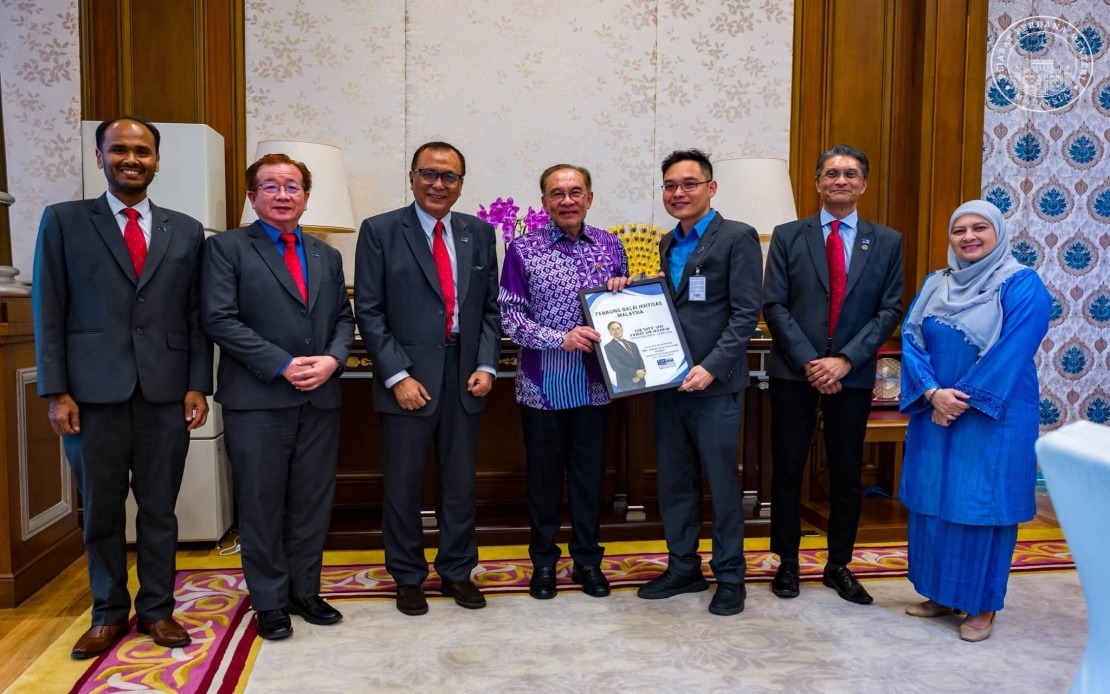
Prime Minister Datuk Seri Anwar Ibrahim has placed artificial intelligence preparedness and professional talent cultivation at the centre of Malaysia's strategic economic priorities, signalling during recent talks with Balai Ikhtisas Malaysia (BIM) that these twin imperatives will define the nation's competitive edge in an increasingly technology-driven region. The discussion, held following a courtesy visit from a BIM delegation led by president Prof ChM Dr Juan Joon Ching, underscores the government's recognition that Malaysia's future growth depends fundamentally on developing human capital equipped to navigate rapid technological transformation.
The focus on AI readiness reflects broader Southeast Asian anxiety about technological disruption. As generative AI and machine learning reshape labour markets across the region, Malaysia faces mounting pressure to ensure its professional workforce can harness rather than be displaced by these tools. By engaging directly with BIM—the Malaysian Professional Centre—Anwar has signalled that the government views this challenge not as a peripheral concern but as central to maintaining Malaysia's standing within Asia. The conversation carries particular weight given Singapore's aggressive AI development strategy and Thailand's ambitions to become a regional tech hub, creating competitive pressures that demand coordinated national responses.
Anwar articulated a vision in which professionals function as strategic collaborators in elevating national competitiveness, a framing that elevates their status beyond technical experts to architects of Malaysia's economic trajectory. This positioning is significant because it reflects a shift in government thinking about the private and professional sectors—moving away from a strictly extractive relationship towards genuine partnership. Professionals in finance, technology, law, engineering, and other knowledge-intensive fields are being invited to co-author Malaysia's development narrative, particularly through the MADANI agenda, the government's overarching reform programme aimed at delivering shared prosperity and wellbeing.
The emphasis on innovation through professional engagement also addresses a recognised weakness in Malaysia's economy. While the nation has established manufacturing and financial services capabilities, it has struggled to generate the kind of high-value innovation ecosystems that characterise developed economies. By explicitly connecting professional development to innovation pipelines, the government is attempting to cultivate the conditions necessary for Malaysia to climb the value chain and compete on intellectual capital rather than cost. This has direct implications for younger professionals and graduates in Malaysia, suggesting career opportunities increasingly lie in technology-adjacent and innovation-driven sectors.
Talent development, the second pillar of the discussion, encompasses not merely technical skills but what Anwar termed an emphasis on integrity and competitiveness. This phrasing hints at concerns about professional standards and ethical conduct within Malaysia's knowledge economy. The reference to integrity suggests the government is aware that sustainable competitiveness requires not just technically proficient professionals but those who operate within robust ethical frameworks—a particularly relevant concern in sectors like finance where regulatory trust remains paramount across Southeast Asia.
Anwar's acceptance of an invitation to Hari Ikhtisas Malaysia, the annual event celebrating Malaysia's professional community, carries symbolic weight beyond the ceremonial. Presidential attendance at such events signals resource allocation priorities and demonstrates commitment. For BIM and its constituent professional associations, this acceptance provides validation and platform access, potentially amplifying their influence on policy formulation. For the professional community itself, it acknowledges their contributions to national development and creates formal channels for dialogue with the highest political authority.
The government's expressed desire for strengthened ties between state and professional sectors reflects recognition that top-down policy-making has limits. Complex challenges surrounding AI governance, workforce adaptation, and professional standards require collaborative problem-solving that includes perspectives from practitioners operating at industry frontlines. By institutionalising these conversations, the government may be laying groundwork for more responsive, practical policy development in areas where professionals possess expertise that bureaucrats lack.
For Malaysian professionals specifically, this agenda alignment offers opportunities but also carries implicit expectations. The emphasis on positioning Malaysia as a regional hub for professional excellence places demands on individual practitioners to continuously upgrade capabilities, particularly regarding emerging technologies. The competitive dimension—explicit in Anwar's remarks—suggests that stagnation is not an option in the government's vision. Professionals must actively engage with AI tools, understand their implications, and position themselves as leaders in AI adoption rather than subjects of disruption.
The regional context deserves emphasis. Malaysia's positioning as a professional excellence hub directly challenges Singapore's long-established dominance in finance and professional services while also competing with Vietnam and Thailand, which are aggressively courting regional talent and investment. By making this commitment public and anchoring it to BIM engagement, Anwar is signalling to potential international professionals that Malaysia offers not merely employment opportunities but a national commitment to professional development infrastructure and advancement.
Looking forward, the practical implementation of these priorities will require concrete initiatives—perhaps expanded funding for professional education, regulatory reforms facilitating AI integration, and formal public-private mechanisms for ongoing dialogue. Without tangible follow-through, the rhetoric of professional partnership risks becoming ceremonial. The genuine test of government commitment will be whether professionals see substantive shifts in policy, regulatory environment, and resource allocation that genuinely facilitate the AI readiness and talent development agenda that emerged from this meeting.

