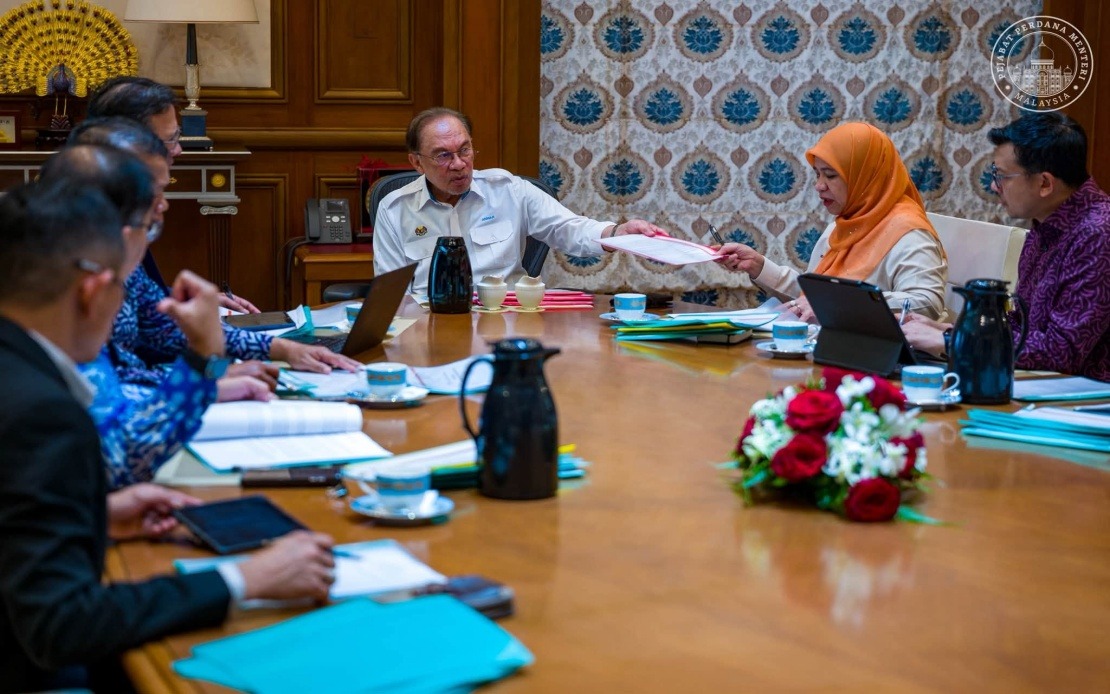
Prime Minister Datuk Seri Anwar Ibrahim has directed the Federal Land Development Authority to accelerate efforts in resolving chronic grievances that continue to affect FELDA settlers, particularly concerning housing provision and land ownership rights for younger generations. Speaking through a Facebook post on July 6, Anwar stressed that these longstanding complications cannot be permitted to persist indefinitely and demanded that the authority move forward with concentrated action prioritising the welfare of FELDA residents and their dependents.
The housing and land ownership predicament has emerged as a significant challenge within FELDA schemes across the country. Many second-generation settlers—the children of original land scheme participants—have encountered obstacles in securing their own plots or accessing adequate housing facilities within these communities. This generational transition represents a critical juncture for FELDA's sustainability, as the original settler population continues to age and younger family members seek to establish their own livelihoods within or near these established agricultural zones.
Anwar's intervention signals heightened governmental attention to FELDA's structural challenges at a time when the authority faces mounting pressure to modernise its operations and adapt to evolving socioeconomic realities. The Prime Minister's emphasis on methodical examination coupled with actionable resolution frameworks suggests recognition that piecemeal approaches have proven insufficient. Each grievance, he indicated, warrants thorough investigation followed by implementation of targeted remedies rather than generic policy responses.
The MADANI Government has positioned FELDA reform as central to its broader rural development agenda, viewing the authority as an essential instrument for maintaining agricultural productivity and ensuring equitable rural prosperity. By publicly committing to strengthened FELDA operations, Anwar projects an image of responsive governance attentive to constituency concerns whilst simultaneously reinforcing the administration's development philosophy emphasising inclusive growth benefiting established communities.
Second-generation land ownership complications frequently stem from outdated regulatory frameworks, inheritance ambiguities, and insufficient planning regarding scheme expansion. When original settlers reach retirement age or pass away, their children often face bureaucratic hurdles in transferring or inheriting allocated plots. Simultaneously, those seeking fresh allocations encounter scarcity and procedural delays. These issues disproportionately affect rural youth, potentially driving outmigration to urban centres and undermining agricultural sector vitality in these regions.
Housing inadequacy compounds the land ownership challenge. Many FELDA settlements were established decades ago with infrastructure designed for smaller populations. As families expanded and second-generation members remained within or returned to these communities, overcrowding and deteriorating housing stock became increasingly apparent. The absence of coordinated housing development programmes has left many younger settlers unable to construct new residences on their allocated land due to financial constraints or limited credit access through conventional banking channels.
FELDA's historical significance within Malaysia's post-independence development narrative adds political weight to Anwar's intervention. The authority resettled hundreds of thousands of landless peasants, primarily Malays, creating productive agricultural communities whilst simultaneously advancing nation-building objectives. However, this legacy has obscured institutional challenges that have accumulated over time, transforming FELDA from a pioneering developmental agency into an organisation struggling with modernisation pressures and demographic transitions.
The timing of Anwar's directive reflects broader governance considerations. Rural constituencies remain politically crucial, and FELDA settlements represent concentrated populations with shared grievances capable of influencing electoral outcomes. By demonstrating tangible commitment to resolving persistent complaints, the government reinforces its developmental credentials whilst addressing legitimate concerns that have simmered for years without satisfactory governmental response. This proactive stance may preempt further deterioration of rural satisfaction levels.
Implementation will prove crucial. FELDA administrators must now translate presidential directives into concrete policy amendments and operational restructuring. This likely involves streamlining land transfer procedures, establishing dedicated second-generation housing initiatives, improving credit access for settlement improvements, and clarifying inheritance protocols. Coordination between FELDA's central administration and individual settlement managers will be essential for ensuring consistent application across diverse schemes operating under varying conditions.
For Malaysian policymakers and regional observers, this episode underscores persistent challenges in agricultural transformation and rural development across Southeast Asia. Land ownership ambiguity and intergenerational tension remain endemic to many established rural settlement schemes throughout the region. Malaysia's approach—balancing historical institutional preservation with modernisation imperatives—offers instructive lessons for neighbouring countries navigating similar complexities within their own rural development frameworks.
The broader implication extends beyond FELDA itself. Success in resolving settler grievances would demonstrate governmental capacity to address entrenched institutional problems whilst maintaining political relationships with rural constituencies. Conversely, failed implementation would reinforce perceptions of bureaucratic inertia. Anwar's public commitment essentially establishes measurable accountability benchmarks, transforming this into a tangible test case for MADANI Government effectiveness in delivering on rural development promises.

