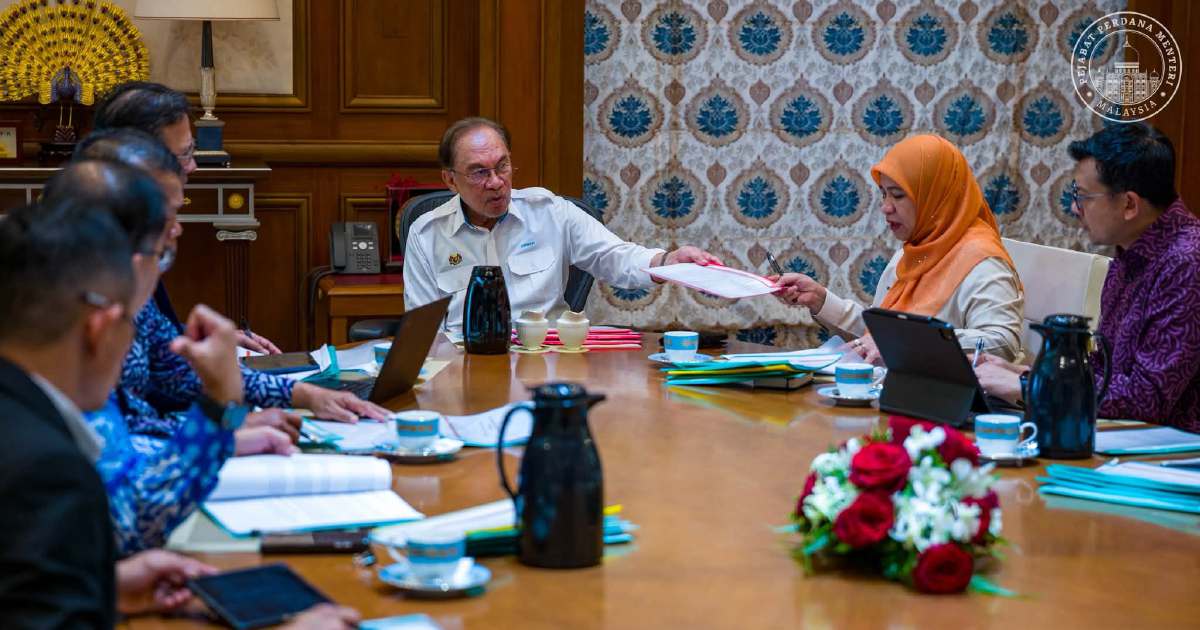
Prime Minister Datuk Seri Anwar Ibrahim has signalled the federal government's intention to tackle the entrenched difficulties facing Felda settlers with urgency and fairness, emphasising the need for both speed and equity in addressing their grievances. The intervention comes as land ownership disputes and the lack of adequate housing for the second generation of settler families continue to plague the Federal Land Development Authority scheme, a foundational pillar of Malaysia's rural development framework for nearly seven decades.
The Felda scheme, established in the mid-1950s, has historically provided agricultural land to rural families seeking to establish themselves as smallholder farmers. However, the programme has increasingly confronted critical structural problems that have undermined the livelihoods and inheritance prospects of settler families. These problems have festered as administrative backlogs, legal ambiguities, and insufficient infrastructure investment have compounded over the years, creating a legacy of uncertainty for thousands of rural households across Peninsular Malaysia and Sabah.
Among the most pressing grievances is the question of formal land ownership. Many settlers and their descendants operate on land under usufruct arrangements or provisional titles that lack the certainty and collateral value of full ownership. This arrangement restricts their ability to leverage their land as security for commercial loans, limiting their capacity to invest in farm improvements or diversify their agricultural operations. The ambiguity surrounding land tenure has also created intergenerational anxiety, as settlers cannot guarantee their children's inheritance rights or their future security on family plots.
The housing dimension adds another layer of complexity to Felda's contemporary challenges. When the scheme was originally conceived, it targeted primary settlers—the initial generation of land recipients. However, as these pioneers aged and their children came of age, the infrastructure designed for single-family occupation proved inadequate. The second generation increasingly faces a choice between remaining on cramped family holdings or leaving agricultural life altogether to seek urban employment. Without official provision for on-farm housing development, many young settlers have had no choice but to abandon their inheritance.
The Prime Minister's call for resolution reflects growing political attention to rural welfare and agricultural sustainability. Felda communities, historically a significant component of the government's support base, have become increasingly vocal about their unmet needs. The recognition that these issues require comprehensive intervention—not piecemeal administrative fixes—suggests the government is approaching the problem with some seriousness. A holistic approach would need to address not only the technical matters of title registration and land surveying but also the social and economic realities facing farming families.
Implementing such reforms presents substantial challenges. Clarifying land ownership across thousands of plots scattered across multiple states requires coordinating multiple government agencies, harmonising differing state land laws, and potentially resolving boundary disputes that have accumulated over decades. The costs of surveying, registration, and administrative processing are non-trivial, and the question of who bears these expenses remains unclear. Additionally, solutions must accommodate the fact that many original settlers have passed away, requiring clear rules for succession and inheritance.
On the housing front, the government faces difficult choices about land use and resource allocation. Providing space for second-generation housing on existing Felda land requires either subdividing existing plots—which reduces farm sizes and income potential—or identifying new land within or adjacent to existing schemes. The latter option may be prohibitively expensive or environmentally contentious, particularly where schemes occupy valuable agricultural land near urban areas or ecologically sensitive zones.
For Malaysia's broader development agenda, resolving Felda's chronic problems carries significance beyond the immediate settler communities. Agricultural productivity depends partly on farmer confidence and tenure security. Young people will only commit to farming careers if they see genuine opportunities and security in that path. The current situation, where inheritance is uncertain and farm sizes inadequate for viable commercial operations, pushes capable young people toward urban migration regardless of their agricultural inclination. This contributes to the steady depopulation and declining productivity of rural areas.
Regional parallels exist throughout Southeast Asia, where land tenure insecurity and generational transitions in agricultural communities plague development outcomes. Malaysian policymakers' engagement with Felda's challenges therefore has implications for understanding how developing countries can balance preserving smallholder agriculture with modernising land administration and responding to demographic change. The solutions adopted by Malaysia could inform approaches elsewhere in the region.
The timeline for such reforms remains unclear, and Datuk Seri Anwar Ibrahim's call for both fairness and swiftness contains an inherent tension—comprehensive institutional reform and individual justice for thousands of households cannot be hurried without sacrificing thoroughness. The coming months will reveal whether the government's commitment translates into concrete policy action and adequate budget allocation, or whether the Felda settlers' longstanding grievances remain unresolved despite renewed rhetorical attention.

