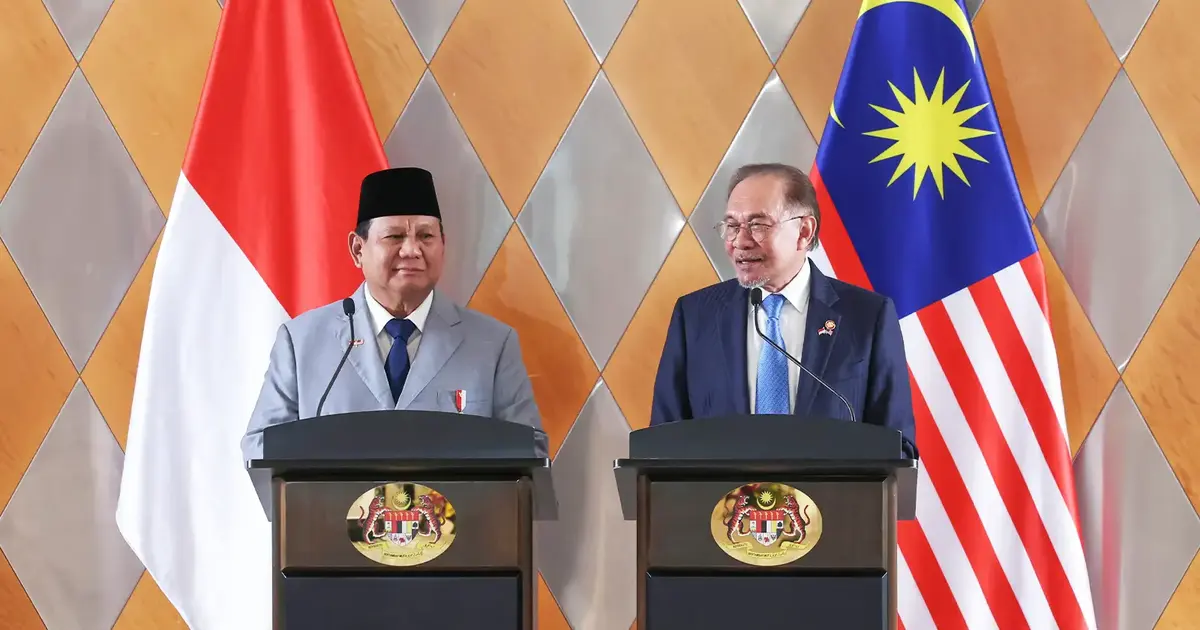
Prime Minister Anwar Ibrahim has intervened directly in a major investment dispute by writing to Indonesian President Prabowo Subianto regarding Felda's troubled Eagle High palm oil venture in East Kalimantan. The correspondence underscores growing anxiety within Malaysia's leadership about the financial exposure facing the Federal Land Development Authority (Felda), a cornerstone institution supporting hundreds of thousands of rural settlers nationwide.
Anwar's letter carries an urgent message: without swift and effective intervention, Felda stands to forfeit more than RM2 billion—a sum representing a significant portion of the cooperative's asset base—while recovering merely RM200 million. This stark financial scenario reflects the severity of deterioration in what was intended as a flagship cross-border agricultural investment. For a development organisation tasked with improving rural livelihoods, such losses would undermine its capacity to support settlers and fund essential infrastructure projects across Malaysian peninsular and Sabah-Sarawak plantations.
The Eagle High venture represents a critical test of Malaysia-Indonesia economic cooperation in the agricultural sector, where both nations have historically collaborated on palm oil production. However, the investment's unraveling illustrates how cross-border partnerships can encounter formidable obstacles ranging from operational challenges to contractual disputes. The timing of Anwar's intervention—mobilising diplomatic channels at the highest level—suggests Malaysian officials view the situation as rapidly deteriorating and requiring urgent presidential-level engagement to unlock solutions.
Felda's exposure in East Kalimantan emerged as international scrutiny of palm oil investments intensified over environmental and labour standards concerns. The region's palm estates, whilst economically significant, have faced recurring criticism from sustainability advocates. For Felda, managing these operations across borders introduces compliance complexities absent in purely Malaysian operations. The RM2 billion commitment represented one of Felda's largest overseas ventures, reflecting confidence in Indonesia's agricultural potential but also concentrating institutional risk in a single geography.
The scale of potential losses highlights how inadequate due diligence, shifting regulatory environments, or operational mismanagement can rapidly erode investor returns in emerging market agricultural ventures. A RM1.8 billion net loss would represent a severe blow to Felda's financial resilience, particularly given the cooperative's obligations to maintain service standards for its settler membership base. Many Felda settlers depend on dividend distributions and development projects funded by the organisation's investment returns. Significant capital impairment would cascade through rural communities reliant on these income streams.
Anwar's decision to correspond directly with Prabowo reflects Malaysia's diplomatic approach to protecting national economic interests. Rather than allowing the matter to stall in technical or bureaucratic channels, elevating it to presidential attention signals both nations' commitment to resolving the issue. For Prabowo, managing the dispute represents an opportunity to demonstrate responsive governance to foreign investors and strengthen regional economic ties, particularly with Malaysia, Southeast Asia's largest economy by per capita income.
The investor's perspective adds complexity to the situation. Whether Eagle High itself faces operational pressures, whether contractual obligations have been breached, or whether market conditions have rendered the venture unviable remains subject to ongoing investigations and negotiations. Depending on the venture's contractual structure, responsibilities for losses may be allocated between Felda, the Indonesian counterparty, lenders, or other stakeholders. Clarifying these liability questions becomes essential before meaningful recovery can commence.
For Malaysian policymakers, the Eagle High situation underscores broader questions about state enterprise governance and international venture risk management. The cooperative sector plays a defining role in Malaysian rural development policy, yet overseas investments introduce foreign regulatory, political, and operational variables difficult to control from Kuala Lumpur. This episode will likely influence future decision-making regarding Felda's international expansion appetite and the protocols required before committing substantial capital across borders.
Indonesia, with its vast agricultural resource base and lower labour costs, remains strategically attractive for Malaysian agricultural businesses. However, the Eagle High experience demonstrates that geographic proximity and sectoral specialisation alone cannot guarantee investment success. Regulatory clarity, strong contractual protections, transparent dispute resolution mechanisms, and robust operational oversight become non-negotiable prerequisites for cross-border ventures involving public institutions managing settler interests.
The correspondence between Anwar and Prabowo initiates a critical phase where high-level political pressure may catalyse negotiations stalled at operational levels. Both nations benefit from restoring investor confidence in bilateral agricultural cooperation. Whether the RM200 million recovery estimate reflects realistic salvage scenarios or represents the floor in negotiations remains uncertain. Felda's settler base, numbering in the hundreds of thousands, watches closely for outcomes affecting their financial wellbeing and community development prospects.

