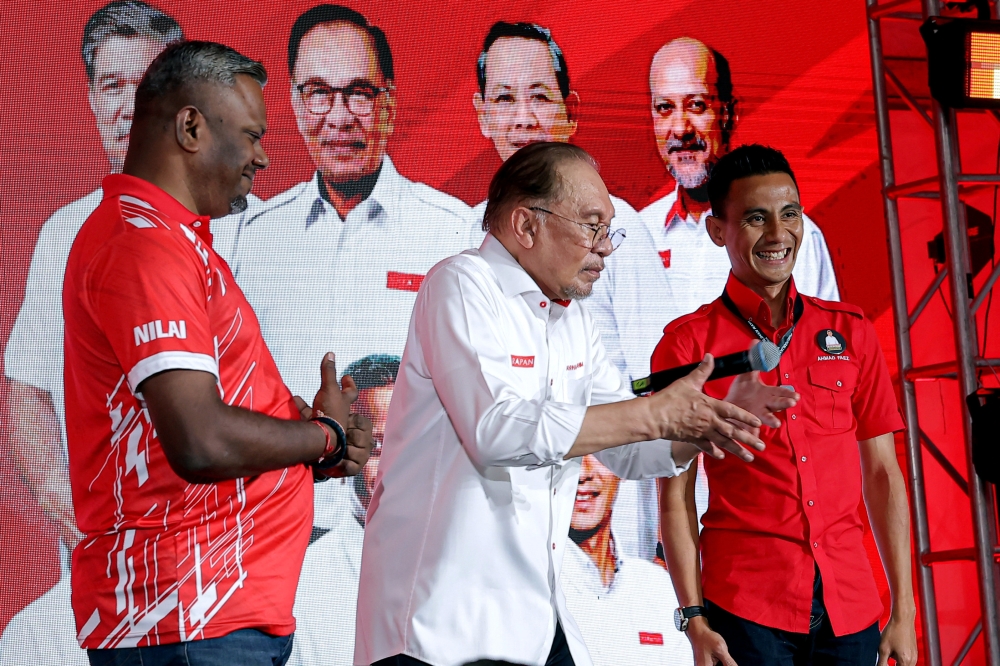
Prime Minister Datuk Seri Anwar Ibrahim doubled down on his commitment to national unity on Wednesday, offering a formal apology to the Indian community after comments attributed to him generated significant public concern. Speaking in Seremban, the premier underscored a foundational principle of his political philosophy: that Malaysia is a shared homeland where no single group holds exclusive claim to belonging or national identity.
The incident highlights a persistent challenge facing Malaysia's multicultural society—the delicate navigation between upholding communal sensitivities and maintaining overarching principles of equal citizenship. Anwar's swift public acknowledgement of the upset caused by his earlier statements demonstrates awareness that even inadvertent rhetoric touching on ethnic identity requires immediate clarification in a nation where historical grievances and communal tensions remain relatively close to the surface.
The Indian community in Malaysia, numbering roughly 1.8 million people or about six per cent of the population, has long advocated for greater recognition of their historical contributions to the nation's development and economy. From plantation workers who built colonial-era infrastructure to professionals now integral to finance, medicine, and technology sectors, Indian Malaysians consider themselves fundamental stakeholders in the country's progress. Their concerns about political rhetoric—whether intentional or not—reflect deeper anxieties about representation and voice within national discourse.
Anwar's clarification arrives at a particularly significant moment. His administration has explicitly positioned itself as an alternative to previous governance models, emphasizing meritocracy, inclusivity, and the dismantling of patronage networks that critics argue had benefited certain groups disproportionately. For this reform agenda to gain traction, particularly among younger, more diverse voters seeking genuine pluralism, the government must demonstrate that inclusive principles extend beyond campaign rhetoric into everyday political communication.
The Prime Minister's reiteration serves a dual purpose within Malaysia's complex political ecosystem. Domestically, it reassures minority communities that their concerns merit serious attention from the highest levels of government. Regionally, it reinforces Malaysia's brand as a moderate, multicultural nation—an image that has become increasingly valuable as Southeast Asia navigates geopolitical tensions and seeks to position itself as a stable, progressive counterweight to polarising forces elsewhere.
The specific nature of Anwar's earlier remarks, while not detailed in his apology statement, likely touched upon questions of national identity, religious or cultural primacy, or economic positioning—perennial flashpoints in Malaysian politics. These topics carry particular weight given the country's constitutional framework, which guarantees special positions for Malays and Islam while simultaneously enshrining citizenship rights for all communities. Managing this balance requires exceptional political sensitivity; even statements clearly not intended to diminish any group can be interpreted through the lens of historical grievances or contemporary anxieties about marginalisation.
For Indian Malaysian organisations and leaders, Anwar's willingness to apologise represents validation of their right to collective response and negotiation on matters affecting community interests. This precedent may embolden other groups to voice concerns when they perceive slights in political communication, potentially raising overall standards of discourse but also risking increased sensitivity to language across the board. The government must develop robust mechanisms for engaging with community concerns before they escalate into public disputes requiring top-level intervention.
The incident also underscores the broader Malaysian challenge of translating constitutional pluralism into lived political reality. While the Federal Constitution explicitly protects religious freedom and equal rights for all citizens, implementation often lags behind principle. Indian Malaysians, despite constitutional protections, have historically experienced underrepresentation in senior civil service positions, selective implementation of education rights in Tamil vernacular schooling, and limited influence in policy areas directly affecting community welfare.
Anwar's coalition government, which came to power partly on promises of reform and renewed social contract, faces considerable expectations from all communities to deliver tangible improvements. For Indian Malaysians, this might include enhanced educational facilities, greater representation in higher government echelons, and substantive engagement on economic concerns including labour rights and business access. Apologising for rhetoric, while important for maintaining social cohesion, must eventually translate into concrete policy initiatives if the administration wishes to convert political capital into genuine community support.
Moving forward, the government would benefit from establishing clearer protocols for community engagement, particularly before sensitive statements enter public discourse. Regular structured dialogue with Indian Malaysian representatives—including business leaders, religious figures, and civil society organisations—could help prevent future misunderstandings while simultaneously providing the administration with valuable perspectives on community-specific policy concerns.
Ultimately, Anwar's reaffirmation that Malaysia belongs to all citizens represents both a statement of constitutional fact and an ongoing political aspiration. The gap between these two realities remains the defining challenge for Malaysian governance. How effectively the administration bridges this gap over coming months and years will significantly shape not only community relations but also the success of the broader reform agenda upon which Anwar's political legitimacy fundamentally depends.

