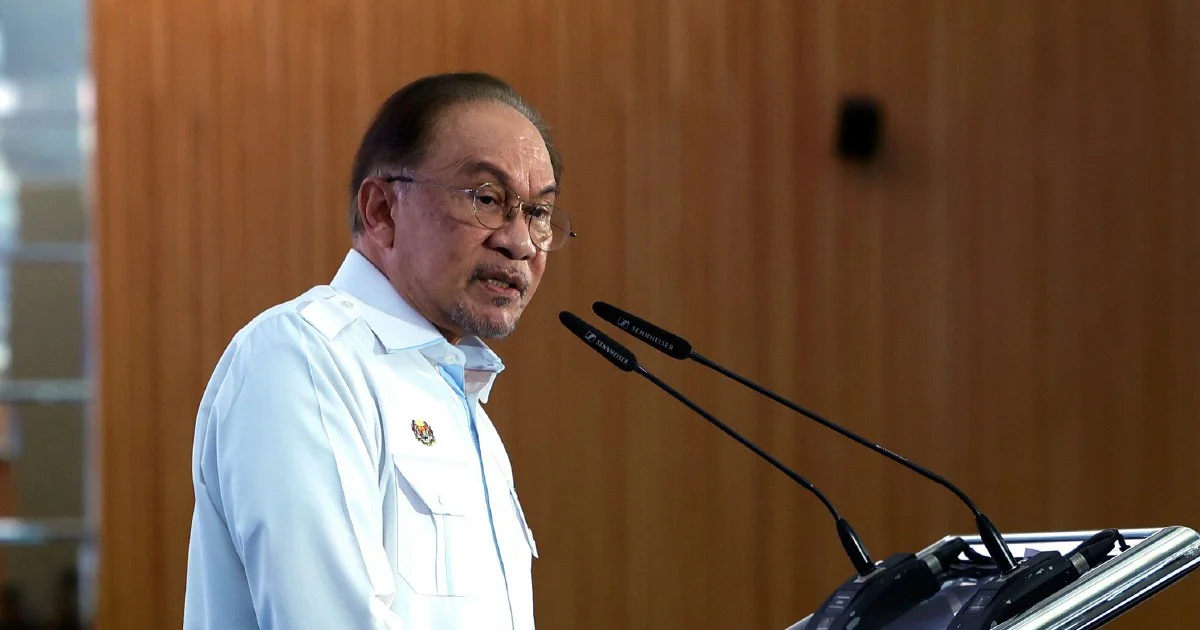
Prime Minister Datuk Seri Anwar Ibrahim moved to quell mounting criticism on Thursday regarding the distribution of federal development funds, firmly denying that any state receives disproportionate allocations or faces systematic disadvantage in accessing central government resources.
The strong rebuttal comes amid periodic tensions between Kuala Lumpur and various state administrations over perceived imbalances in how federal development budgets are apportioned. Several state governments, particularly those led by opposition parties, have periodically raised concerns that political considerations may influence the formula used to determine funding levels and project approvals.
Development allocations represent a critical mechanism through which the federal government shapes infrastructure, economic opportunities and public services across Malaysia's 13 states and three federal territories. These funds typically support major projects including road networks, health facilities, educational institutions, and water infrastructure, making the fairness of their distribution a politically sensitive matter with real consequences for regional economic development.
Anwar's intervention suggests the government recognises the potential political damage from perceptions of unfair treatment. Opposition politicians and state leaders have intermittently questioned whether the allocation formula adequately accounts for population sizes, existing infrastructure gaps, and genuine development needs, or whether political loyalty to the federal administration influences funding decisions.
The prime minister's position reflects a longstanding tension in Malaysia's federalism. While the Federal Constitution grants the federal government significant control over development spending and fiscal policy, states retain certain revenue-raising powers and development responsibilities. This structure occasionally creates friction when states feel shortchanged, particularly when different political coalitions govern at federal and state levels.
Malaysia's development allocation system theoretically incorporates various criteria including population, infrastructure needs, economic indicators and demographic factors. However, the opacity of the exact weighting given to each criterion has fuelled periodic speculation about political factors playing a role in final distributions. Transparency regarding how the government calculates allocations could potentially address some concerns, though doing so might also expose politically sensitive decisions to scrutiny.
Regional disparities in development outcomes remain visible across Malaysia. Some states have significantly more advanced infrastructure and higher per-capita government investment than others, though determining whether this reflects historical funding patterns, population size, economic capacity or political factors remains contested. Peninsular Malaysia generally receives higher absolute amounts due to its larger population, though per-capita comparisons sometimes show a different picture.
The issue carries particular importance for Sabah and Sarawak, whose residents and leaders have periodically argued that East Malaysian states do not receive proportional development investment relative to their land area, population and natural resource contributions to the federal government. These concerns predate Anwar's current administration but periodically resurface as East Malaysian political actors leverage development funding distribution as a negotiating point in federal-state relations.
Anwar's dismissal of the claims represents an attempt to reset the narrative on this politically sensitive topic ahead of continued budget allocation discussions and potential state-federal negotiations. However, the underlying issue—how to demonstrate that development funds are distributed equitably while potentially acknowledging that politics inevitably influences government spending priorities—remains philosophically challenging.
The prime minister's statement likely aims to reassure coalition government partners and fence-sitters among state leaders that they need not fear prejudicial treatment despite Malaysia's fluid political landscape. It simultaneously signals to opposition-led states that the federal government views their criticism as baseless rather than substantively addressing the methodology underlying allocation decisions.
Moving forward, the government faces pressure to either increase transparency regarding allocation formulas or substantively demonstrate through independent analysis that current distributions reflect genuine development needs and constitutional principles rather than political calculations. Malaysian taxpayers, regardless of which state they inhabit, increasingly expect development resources to flow based on transparent criteria rather than political considerations.
The broader challenge for federal-state relations in Malaysia involves balancing the federal government's legitimate fiscal and policy authority with states' reasonable expectations of fair treatment and adequate resources for public services. Until this structural question is resolved through either institutional reform, greater transparency or both, periodic disputes over development allocations will likely persist across political administrations.

