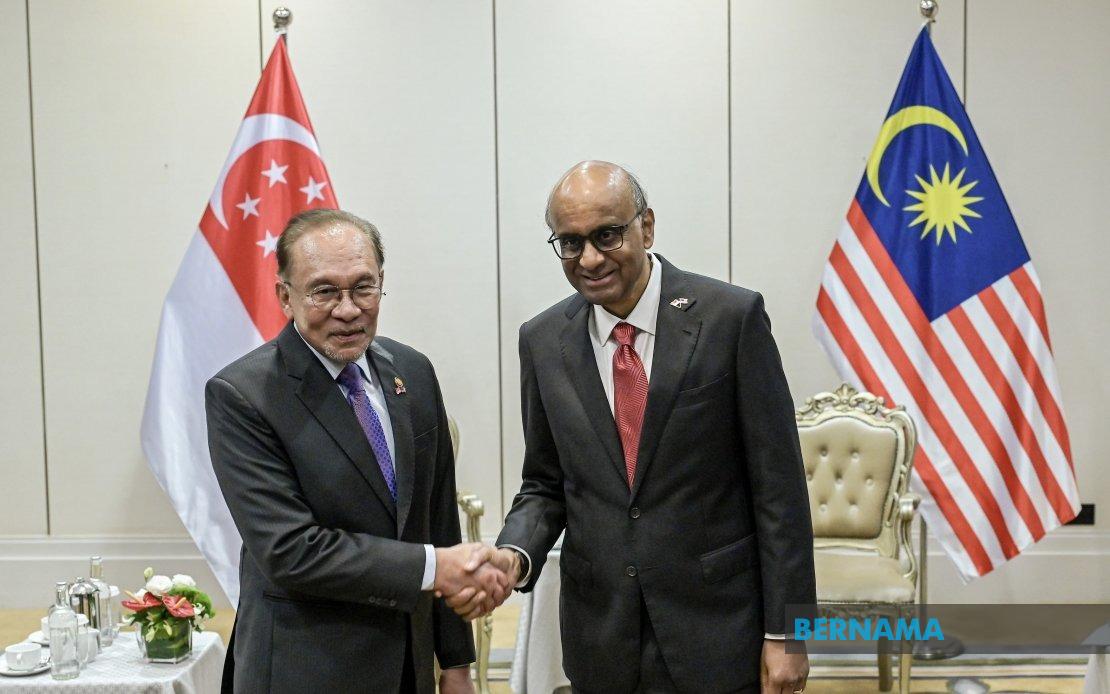
Prime Minister Datuk Seri Anwar Ibrahim received Singapore President Tharman Shanmugaratnam on Monday during the latter's three-day state visit to Malaysia, underscoring the depth of diplomatic relations between two of Southeast Asia's most economically integrated nations. The meeting, which lasted 40 minutes, took place in Kuala Lumpur and reflected the high-level engagement that characterises bilateral relations at a critical juncture for regional economic cooperation.
The gathering brought together key figures from Malaysia's economic and foreign policy apparatus, with Foreign Minister Datuk Seri Mohamad Hasan, Investment, Trade and Industry Minister Datuk Seri Johari Abdul Ghani, and Entrepreneur and Cooperatives Development Minister Steven Sim Chee Keong all participating. The presence of these senior Cabinet members signalled the importance accorded to the bilateral agenda, particularly regarding trade, investment, and industrial collaboration. Senior officials from both nations were also present, enabling substantive discussions on implementation of existing agreements and exploration of new opportunities.
President Tharman's arrival was marked by a formal state welcoming ceremony at Istana Negara, where the Yang di-Pertuan Agong Sultan Ibrahim extended Malaysia's traditional hospitality to the visiting head of state. This ceremonial dimension underscores the symbolic importance of such visits in cementing the personal relationships between national leaders that often translate into concrete policy outcomes and stronger institutional ties.
The visit represents a reciprocal gesture, following Yang di-Pertuan Agong Sultan Ibrahim's state visit to Singapore in May 2024. This pattern of mutual high-level visits demonstrates the commitment both nations maintain towards regular dialogue and engagement at the highest echelons of government. Such exchanges typically provide opportunities to address bilateral issues, coordinate on regional matters, and reaffirm shared commitments to peace, stability, and prosperity in Southeast Asia.
The economic dimension of Malaysia-Singapore relations remains extraordinarily significant for both countries. Singapore currently holds the position of Malaysia's second-largest trading partner globally, a remarkable achievement given the small island nation's limited natural resources and geographic footprint. Within the ASEAN framework specifically, Singapore ranks as Malaysia's single largest trading partner, indicating the intensity and breadth of commercial connections between the two neighbours.
Bilateral merchandise trade reached RM402.35 billion in 2025, equivalent to US$93.97 billion, reflecting a modest but steady growth rate of 1.5 per cent compared to the previous year. While this growth rate may appear modest in percentage terms, the absolute value of trade between the two countries represents one of the highest bilateral trade volumes within ASEAN, underscoring the mature and comprehensive nature of their economic relationship. This figure encompasses diverse sectors including petrochemicals, electronics, tourism services, and financial services.
The year-to-date performance through May 2024 suggests accelerating momentum in bilateral commerce. Trade during the first five months of this period totalled RM189.90 billion (US$47.87 billion), marking a robust 14.5 per cent increase compared to the corresponding timeframe in the previous year when bilateral trade stood at RM165.93 billion (US$37.65 billion). This double-digit growth rate in the initial months of the year indicates stronger underlying demand and potentially expanded trade flows across multiple sectors.
The magnitude and trajectory of Malaysia-Singapore trade carries important implications for broader Southeast Asian economic integration. As the region navigates challenges including supply chain diversification, post-pandemic economic adjustment, and evolving geopolitical dynamics, the resilience and growth of this bilateral trade relationship provide a constructive template for ASEAN economic cooperation. The depth of integration between Malaysia and Singapore demonstrates how two nations with different economic structures and development models can forge complementary trading arrangements that benefit both populations.
For Malaysian policymakers and businesses, the steady expansion of trade with Singapore reflects successful implementation of various trade agreements and the effectiveness of the two countries' customs cooperation frameworks. The cross-border flow of goods, services, and investment has created interdependencies that motivate both governments to maintain stable, predictable trading environments and transparent regulatory frameworks. This economic interdependence, while creating mutual vulnerabilities, also provides strong incentives for conflict avoidance and cooperative problem-solving.
The state visit also occurs within the context of Malaysia's broader regional diplomacy and its efforts to strengthen ties with neighbouring ASEAN nations. As Malaysia navigates its responsibilities as an ASEAN member and participant in regional mechanisms such as the ASEAN Regional Forum and East Asia Summit, maintaining robust relations with Singapore remains a strategic priority. The island nation's unique position as a major financial hub, advanced digital economy, and strategic location in the Strait of Malacca makes it an important anchor for regional stability and prosperity.
Looking forward, the discussions during this visit likely addressed emerging areas of cooperation including digital economy integration, green technology development, and smart city initiatives where both nations possess complementary capabilities. Malaysia's large domestic market and natural resources, combined with Singapore's advanced financial infrastructure and technological expertise, create natural opportunities for deeper collaboration in sectors that will drive Southeast Asian economic growth in the coming decade.
The success of such high-level visits ultimately depends on translating diplomatic courtesies into concrete outcomes. The presence of multiple Malaysian Cabinet ministers suggests that substantive discussions occurred on implementing existing commitments and identifying fresh avenues for cooperation that can generate employment, attract investment, and enhance competitiveness for both nations in an increasingly complex global economic environment.

