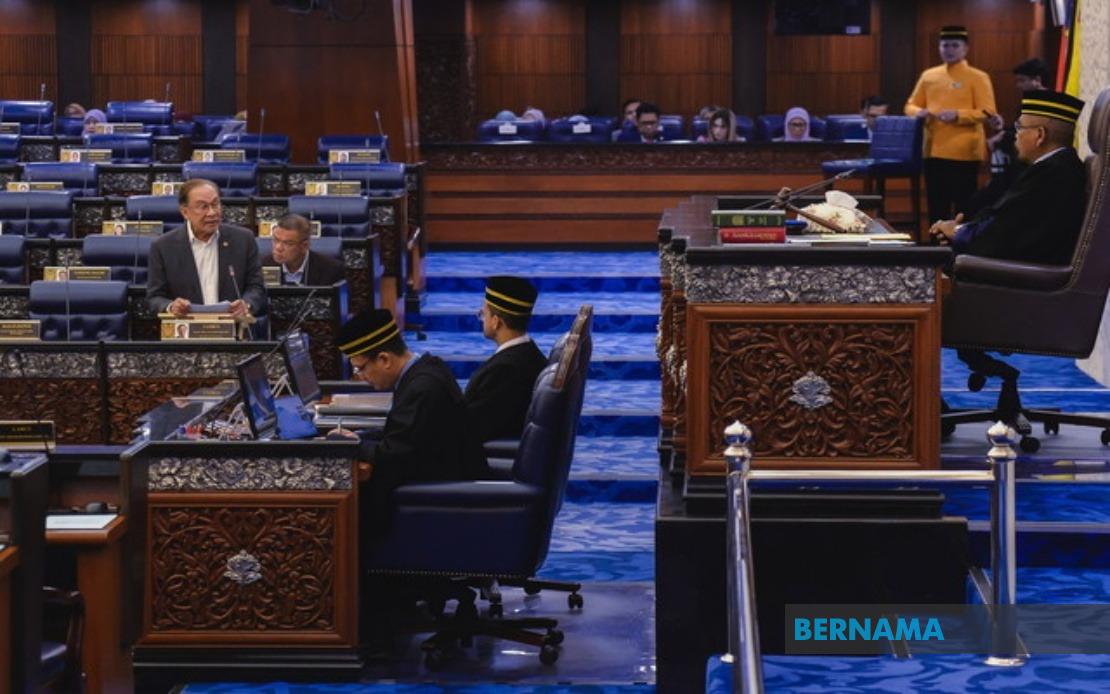
Prime Minister Datuk Seri Anwar Ibrahim has underscored the government's commitment to enforcing restrictions on project and policy announcements during state election campaigns, stressing that such activities violate established electoral regulations. Speaking during Minister's Question Time in the Dewan Rakyat, Anwar reaffirmed that the prohibition falls squarely under Section 24B of the Election Offences Act 1954, a provision designed to maintain electoral fairness and prevent the ruling administration from exploiting state resources for campaign advantage.
The clarification came in response to a query from Datuk Seri Dr Shahidan Kassim, the Perikatan Nasional member for Arau, who sought confirmation that the restrictions remain operational ahead of the Johor, Melaka and Negeri Sembilan state elections. This exchange reflects ongoing concerns within Parliament about ensuring that electoral boundaries between campaigning and governance are properly maintained, a critical issue in Malaysia's competitive political landscape where state elections often set the tone for national political sentiment.
Anwar's statement establishes a clear hierarchy of enforcement responsibility, specifying that government machinery at all levels must refrain from launching fresh initiatives during the campaign period. The restriction encompasses announcements originating from federal agencies, state governments, and municipal authorities, creating a comprehensive ban that prevents any tier of the government structure from deploying resources or announcing new programmes once the nomination period begins. This comprehensive approach aims to eliminate grey areas that might otherwise allow creative reinterpretations of what constitutes a prohibited announcement.
However, the Prime Minister introduced an important distinction that carries significant practical implications for ongoing governance. Projects that have been previously approved and funded through earlier federal budget allocations fall outside the purview of this restriction, meaning that the government may continue to announce or progress work on previously committed initiatives. This nuance is particularly important for Malaysia's infrastructure development agenda, as it prevents election regulations from freezing all government communication and activity during campaign periods, which could otherwise impede the delivery of essential services and long-term development programmes.
The enforcement mechanism for these restrictions remains central to their effectiveness in practice. While Anwar did not detail specific compliance procedures during his parliamentary response, the emphasis on preventing government machinery misuse suggests reliance on existing oversight mechanisms and potential monitoring by the Election Commission. The challenge for Malaysian authorities lies in distinguishing between announcements of genuinely new initiatives and those involving previously authorised projects, a determination that requires careful documentation and transparency in budgeting processes.
For election observers and political analysts across Southeast Asia, Malaysia's approach to regulating government conduct during campaigns reflects a broader tension between electoral fairness and administrative continuity. Unlike some democracies that implement blanket freezes on government announcements, Malaysia's framework attempts to balance these concerns by prohibiting only new commitments whilst allowing continuation of existing programmes. This middle-ground approach acknowledges that rigid restrictions could undermine service delivery and create political disadvantages for governing parties in ways that favour opposition administrations not bound by the same constraints.
The upcoming state elections in Johor, Melaka and Negeri Sembilan provide a testing ground for these enforcement principles. Johor, Malaysia's second-largest state by population, has historically served as a political barometer, whilst the two smaller states have experienced significant political volatility in recent years. Election observers will likely scrutinise whether state and federal authorities adhere strictly to the announced restrictions, particularly in states where political competition is intense and where governing coalitions face serious challenges from opposition blocs.
Anwar's reiteration also reflects the Pakatan Harapan-led federal government's stated commitment to institutional reform and democratic governance. Since returning to power, the administration has emphasised strengthening electoral institutions and preventing the kind of political abuses that characterised the pre-2018 period. By reaffirming election law provisions, the Prime Minister signals that the government views electoral integrity as essential to maintaining public confidence in democratic processes, a concern that extends beyond any single election cycle.
The distinction between new and previously approved projects requires robust record-keeping and transparent communication between federal and state governments. Government agencies must be prepared to provide evidence that announcements relate to projects included in budgets prepared before nomination day, creating documentary requirements that could challenge some less organised bureaucratic structures. This administrative burden underscores the need for improved coordination between federal treasury operations and election management systems to ensure compliance and prevent inadvertent violations.
For Malaysian voters and civil society organisations, these restrictions represent an attempt to level the playing field between governing and opposition parties during election campaigns. By preventing the government from using state resources to announce fresh commitments that might sway voters, the electoral regulations aim to ensure that campaign competition focuses on policy platforms and party performance rather than on last-minute allocations designed to boost electoral fortunes. Whether enforcement proves adequate will depend partly on the Election Commission's vigilance and willingness to investigate complaints.
The regional context matters as well, given that several Southeast Asian democracies struggle with similar issues of government resource misuse during elections. Malaysia's explicit legal framework provides neighbouring countries with a potential model, though enforcement effectiveness ultimately determines whether such provisions achieve their intended purpose. The coming state elections will offer valuable evidence about whether Malaysia's approach produces genuine restraint or merely reshuffles how government announcements are framed and timed.

