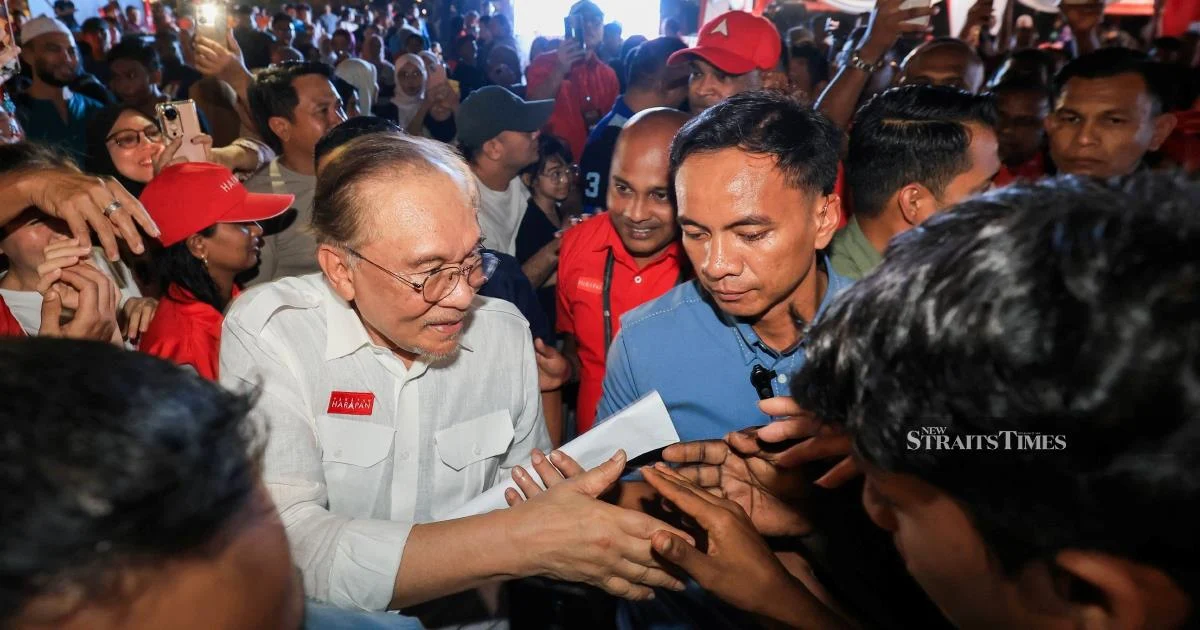
Prime Minister Datuk Seri Anwar Ibrahim has firmly rebuffed mounting pressure from critics urging Parliament's dissolution and early ballots, asserting that his coalition administration possesses the legitimate popular mandate necessary to execute its full agenda without seeking renewed voter approval at the polls.
The rejection of snap election calls underscores a key tension within Malaysia's fractured political landscape, where the ruling bloc—assembled from diverse parties with sometimes competing interests—must continuously negotiate internal unity whilst simultaneously defending its democratic legitimacy. For Anwar, the statement serves as both an assertion of constitutional authority and a calculated message to restless coalition partners that an early dissolution poses greater risks than stability.
Early election speculation has periodically surfaced in Malaysian political discourse since the 2022 general election produced a hung parliament and necessitated the formation of the unprecedented unity government. The current configuration draws support from Barisan Nasional, Pakatan Harapan, and other aligned factions, though individual party leaders and backbench MPs have occasionally floated dissolution scenarios. Such rhetoric typically emerges when internal coalition tensions escalate or when opposition figures sense electoral opportunity.
Anwar's position carries particular weight given his role bridging multiple political camps that historically opposed one another. The unity framework itself represents a pragmatic departure from Malaysia's adversarial two-coalition tradition, requiring sustained dialogue and compromise-building among leaders with deeply rooted differences. Dissolving Parliament would disrupt this delicate equilibrium and risk fragmenting coalitions that took considerable effort to assemble.
From a governance perspective, maintaining the current parliamentary term allows the administration to pursue medium-term policy objectives without the perpetual campaign mode that early elections would trigger. Economic stabilisation efforts, infrastructure projects, and institutional reforms all require sustained focus and budgetary planning that frequent electoral cycles would compromise. This continuity argument carries particular resonance in Malaysia's context, where prolonged political uncertainty has historically unsettled investor confidence and disrupted development timelines.
The mandate claim itself merits examination within Malaysia's electoral system. While the 2022 general election delivered no single majority, the subsequent coalition-building exercise represented a form of parliamentary democracy functioning as designed—elected representatives negotiating government formation according to constitutional procedures. Anwar's assertion that voters granted sufficient mandate reflects this legitimacy-through-procedure perspective, though opposition voices dispute whether cobbled coalitions truly reflect voter intent.
For Southeast Asian observers, Malaysia's unity government experiment carries broader implications. Regional democracies increasingly face hung parliament outcomes and forced coalition-building as single-party dominance fragments. Malaysia's experience provides instructive lessons about sustaining multi-party arrangements, managing coalition maintenance, and defending coalition governments' democratic legitimacy despite lacking single-party majorities. Early dissolution pressures represent recurring governance challenges that other regional democracies may confront.
Anwar's statement also reflects strategic calculation regarding opposition dynamics. The main opposition bloc has periodically advocated for fresh elections, anticipating potential gains from capitalised electoral volatility. By firmly rejecting such calls, Anwar removes dissolution as an immediate negotiating leverage point and signals the government intends completing its constitutionally-determined term. This approach eliminates opposition leverage whilst consolidating coalition discipline by establishing clear expectations for parliamentary conduct.
Domestic audiences also receive important signals from the prime minister's stance. Coalition supporters gain reassurance that the government possesses sufficient internal stability and conviction to resist pressure tactics. Simultaneously, wavering backbenchers receive signals that dissolution remains unlikely regardless of individual defections, reducing incentives for opportunistic party-switching predicated on election speculation.
The timing of Anwar's dismissal warrants consideration. Whether triggered by specific dissolution calls or pre-emptive positioning, the statement represents proactive management of narrative around governmental continuity. Such messaging becomes increasingly important as coalition governments require consistent confidence-building communication to maintain investor sentiment, partner discipline, and public support.
Looking forward, Malaysia's unity government faces the fundamental challenge of sustaining coalition coherence through an extended term without frequent electoral renewal opportunities. This requires sophisticated management of internal coalition tensions, equitable resource distribution among coalition partners, and delivery of visible policy achievements that reward electoral constituencies for backing the arrangement. The rejection of early elections essentially commits Anwar's government to navigating these challenges through governance performance rather than electoral recalibration.
The broader implication extends beyond immediate Malaysian politics. Regional economies increasingly depend on policy stability and sustained institutional confidence. Snap elections, whilst constitutionally permissible, carry measurable costs in postponed investments, delayed decisions, and economic uncertainty. Anwar's position implicitly acknowledges these realities whilst defending democratic legitimacy—a balancing act that other regional leaders managing fractured parliaments will watch closely.

