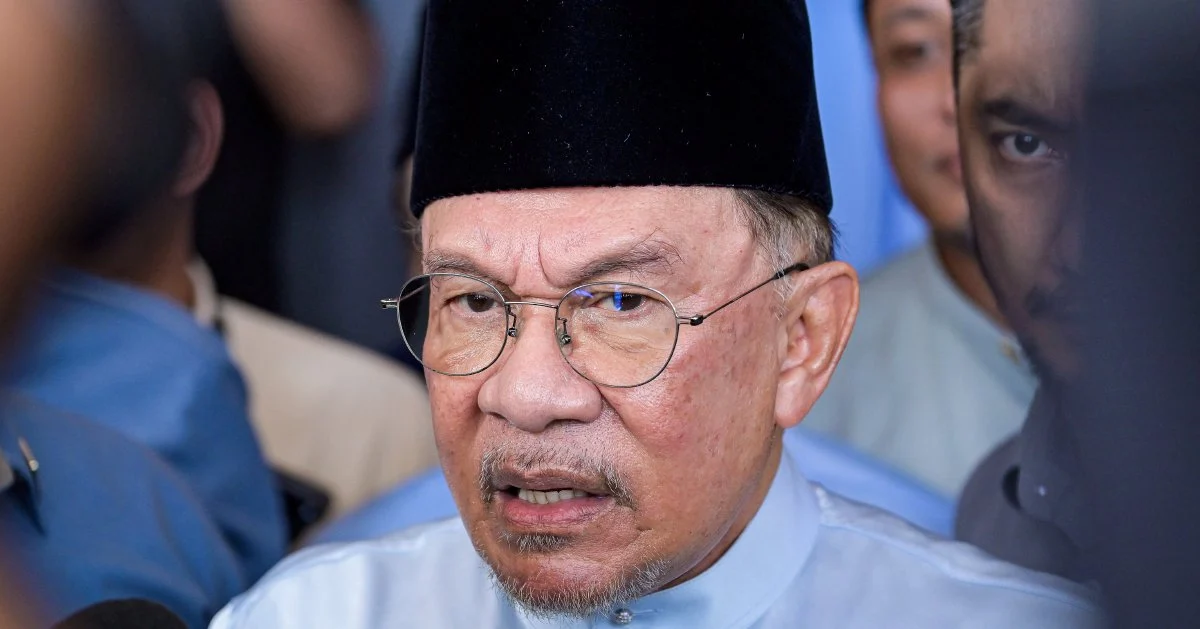
Prime Minister Datuk Seri Anwar Ibrahim moved swiftly to rebut allegations that caretaker Johor Menteri Besar Datuk Onn Hafiz Ghazi was prevented from attending an event at Felda settlements, characterising the claims as baseless during remarks made in Dengkil. The categorical denial underscores the sensitivity surrounding high-profile political figures and their participation in community engagements, particularly in federal agricultural schemes where state-federal coordination carries symbolic weight.
The episode reflects ongoing tensions within Malaysia's political landscape, where perceptions of exclusion or marginalisation can rapidly escalate into broader narratives about governance and fair treatment. Onn Hafiz, as caretaker chief minister pending election outcomes in Johor, occupies an unusual position straddling both administrative responsibility and electoral uncertainty, making his visibility at significant events a matter of political consequence. Any suggestion that he faced restrictions from participating in public activities would ordinarily carry implications for the legitimacy of state administration and the equitable treatment of leadership across factional lines.
Anwar's emphatic dismissal serves multiple purposes within the fractured landscape of Malaysian politics. By addressing the matter directly, the Prime Minister seeks to control the narrative and prevent rumour from crystallising into perceived institutional unfairness. The timing and location of his remarks—in Dengkil, itself a Selangor constituency with its own political complexities—indicates the administration's awareness that such disputes can gain traction among voters and civil society observers. The choice to deny rather than elaborate suggests confidence that no credible evidence supports the exclusion narrative, though it equally reflects understanding that silence might invite further speculation.
Felda settlements occupy a distinctive place within Malaysian governance structures and electoral politics. These federal land development authority schemes represent decades of state-led agricultural modernisation and rural development, drawing on the federal budget while physically anchored in various states. The settlements themselves constitute organised communities with distinct interests in agricultural productivity, commodity pricing, and social amenities. Access to Felda communities by political leaders has long served as a barometer of legitimacy and connection to rural constituencies, making restrictions on such access—whether actual or perceived—a sensitive matter transcending ordinary protocol.
The incident highlights the complex jurisdictional interplay between federal and state authorities in managing public space and political engagement. While Felda falls under federal purview through the Ministry of Plantation and Commodities, settlement residents often relate to state government for local administration and representation. When questions arise about access or participation in events, they inevitably touch on the boundary between federal and state prerogatives. Anwar's intervention signals that the federal government regards itself as the ultimate authority over such matters and brooks no suggestion that political rivals face systematic obstruction.
Onn Hafiz's position as caretaker menteri besar adds particular layers of complexity to this dispute. Caretaker governments operate in a liminal space where their authority is technically undiminished even as their political legitimacy awaits electoral validation. For a prime minister to suggest that a caretaker chief minister was unreasonably excluded could indirectly undermine that caretaker administration's credibility and stature. Conversely, permitting such exclusion might appear to signal that the federal government tolerates discrimination against rival political camps. Anwar's denial thus aims to preserve the dignity of established state administration while simultaneously neutralising any suggestion of federal interference in state autonomy.
The broader context of Johor politics remains crucial to interpreting this exchange. The state has long held strategic importance within Malaysian politics owing to its size, economic weight, and historical role as a power base for successive national administrations. Recent years have witnessed intensified competition for influence and resources in Johor, with various national parties and coalitions investing considerable effort in securing political ground. Any narrative suggesting that political opponents face institutional disadvantage readily finds purchase among supporters and regional observers, making swift rebuttal necessary to forestall erosion of confidence.
From a regional perspective, such incidents reflect broader challenges across Southeast Asia regarding the separation between state resources and political partisanship. Many governments in the region face periodic accusations that they restrict opposition access to public facilities or community platforms. Malaysia's relatively mature democratic institutions and vocal civil society mean such claims attract scrutiny and response, yet the underlying concern—that incumbents enjoy structural advantages—persists as a staple of political discourse. Anwar's direct engagement with this controversy demonstrates recognition that failing to address such allegations invites questions about institutional impartiality.
The Prime Minister's intervention also signals consistent messaging from the federal government regarding its expectation that all eligible political leaders maintain access to community platforms regardless of factional affiliation. Such clarity, whether believed or not, establishes a baseline standard against which future allegations can be measured. It places federal authority behind the principle that caretaker governments and other state-level office-holders should not face deliberate obstruction from engaging with constituents and relevant communities. This framing appeals to broader constituencies invested in orderly governance and fair political competition.
Moving forward, the incident serves as a reminder that in Malaysia's complex federal system, perceptions of exclusion or preferential treatment rapidly acquire political significance. While Anwar's denial may settle the immediate matter, the ease with which such claims emerge and circulate suggests underlying anxieties about power distribution and access. Both the federal and state administrations face incentives to demonstrate their commitment to inclusive engagement with all legitimate political actors, an expectation that will likely intensify as electoral cycles approach and competition for voter support sharpens across the region.

