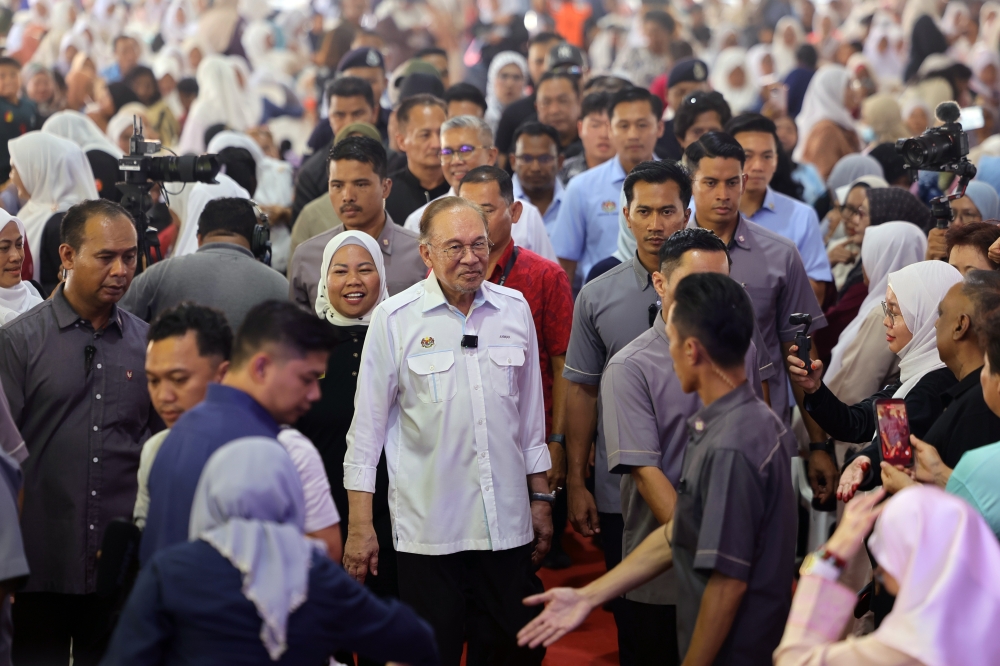
Prime Minister Datuk Seri Anwar Ibrahim has cast serious doubt on Tabung Haji's decision to distribute 13 months of bonuses to employees, characterising the practice as a fundamental breach of trust that demands closer examination. Speaking on the matter, Anwar expressed concern that such a payout arrangement contradicted established principles of fiduciary responsibility and raised troubling questions about how the Islamic pilgrimage fund has managed its finances and resources over recent years.
The inquiry into Tabung Haji's operations, culminating in a Royal Commission of Inquiry report, appears to have exposed governance vulnerabilities that extend beyond isolated incidents. Anwar's intervention signals that the federal government intends to take seriously the findings and recommendations emerging from this investigation, particularly regarding institutional accountability and the proper stewardship of public and religious funds entrusted to the organisation.
Tabung Haji's role as the primary vehicle for Malaysian Muslims to accumulate savings specifically for the Hajj pilgrimage makes questions about financial propriety especially significant. The fund manages contributions from millions of Malaysians who view their deposits as simultaneously a religious obligation and a long-term savings mechanism. Any irregularities in how leadership distributes funds or authorises unusual payments therefore affects not merely institutional credibility but also the confidence of depositors whose religious aspirations are intertwined with their financial commitments.
The 13-month bonus arrangement appears particularly anomalous given standard employment practices across Malaysian public and private sectors. Most organisations operate on a 12-month annual cycle, making an additional month's payment an extraordinary decision that would typically require exceptional justification. That Tabung Haji proceeded with such an arrangement without apparently robust scrutiny or documented rationale suggests potential gaps in internal governance mechanisms and board-level oversight.
Anwar's questioning reflects a broader pattern of the current administration examining governance practices at major institutions following the change in federal government. Tabung Haji has faced previous scrutiny regarding financial management, investment decisions, and transparency, making the RCI findings part of a longer trajectory of institutional review. The Prime Minister's willingness to publicly interrogate specific payments suggests the government views this matter as symptomatic of deeper systemic issues requiring structural reform.
For the ordinary Malaysian Hajj aspirant, these governance questions carry practical implications. Concerns about financial management at Tabung Haji could theoretically affect dividend payments to account holders, the timing of fund releases for pilgrimage purposes, or the security of accumulated savings. While Tabung Haji remains solvent, trust erosion among depositors could have economic consequences for the institution's future operations and its ability to attract new members.
The invocation of fiduciary duty—a concept rooted in legal obligations to act in the best interests of beneficiaries—represents a significant framing device. Anwar is essentially arguing that Tabung Haji's leadership failed to exercise the heightened care expected of those managing funds held in trust for a specific religious and financial purpose. This language suggests potential legal pathways for accountability, whether through administrative action, disciplinary measures for officials involved, or even criminal investigation depending on the severity of breaches identified.
The RCI process itself reflects broader governance debates within Malaysia about institutional reform and accountability mechanisms. Royal Commissions of Inquiry represent one of the more formal investigative tools available to governments seeking to understand systemic failures. That Tabung Haji warranted such a comprehensive examination underscores the institution's significance within Malaysian financial and religious life, and the seriousness with which authorities now treat allegations of mismanagement.
Moving forward, Anwar's statements suggest the government will likely push for substantive reforms at Tabung Haji, potentially including changes to board composition, enhanced oversight mechanisms, or revised policies governing unusual financial decisions. The Prime Minister's public questioning may also serve as a signal to other major institutions that governance lapses will face scrutiny regardless of an organisation's religious character or historical standing.
The Tabung Haji situation also intersects with broader conversations about managing religious institutions within democratic governance frameworks. Malaysian Islamic organisations receive particular public attention, and lapses in their administration carry heightened reputational consequences. Anwar's intervention demonstrates that even faith-based institutions are not exempt from the accountability standards expected of public and quasi-public entities managing significant financial resources.
Ultimately, the significance of Anwar's comments extends beyond the specific bonus question to encompass fundamental expectations about trustworthiness and professional conduct in institutional leadership. For millions of Malaysian Muslims who depend on Tabung Haji to facilitate one of Islam's five pillars, governance integrity is not merely an administrative concern but a matter touching on religious obligation and personal financial security.

