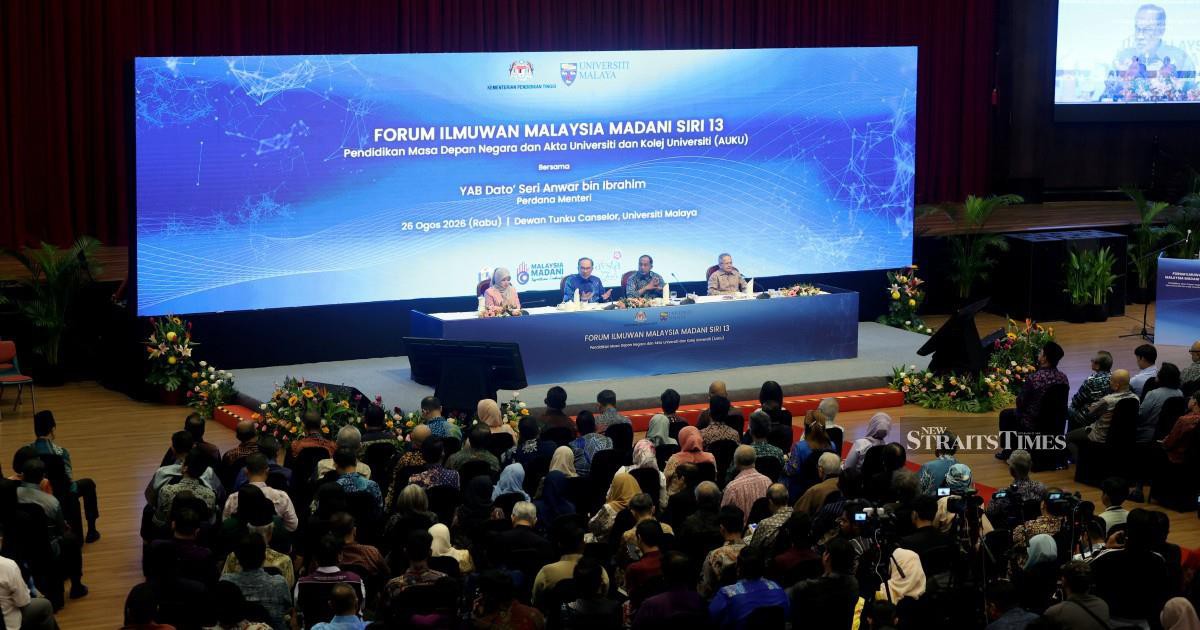
Prime Minister Datuk Seri Anwar Ibrahim is calling for patience from Malaysia's university community as his administration develops a comprehensive strategy to repeal the AUKU Act, seeking their trust during what he frames as a critical period of institutional reform. Speaking to concerns from students and academic circles who have long advocated for dismantling the controversial legislation, Anwar emphasised that meaningful change requires careful planning rather than hasty implementation, reflecting the delicate balance his government must strike between university autonomy and institutional stability.
The AUKU, or Universities and University Colleges Act 1971, has become one of the most contentious pieces of Malaysian legislation among the student body and civil society organisations. The law restricts political activism on university campuses and limits student unions' freedom, provisions that critics argue undermine democratic participation and free expression during formative years. For decades, students, academics, and human rights advocates have mounted campaigns to overturn these restrictions, viewing AUKU as an anachronistic relic of an earlier era that constrains the intellectual development of Malaysia's young people.
Anwar's approach signals a shift in momentum for repealing the legislation, particularly given his coalition's stated commitment to democratic reform. However, the Prime Minister's emphasis on taking time suggests the government recognises the complexity of rolling back AUKU without creating governance vacuums in university administration. The act has been embedded in Malaysian higher education for over fifty years, and untangling its provisions involves coordinating multiple stakeholders including the Ministry of Higher Education, individual universities, law enforcement, and student representatives to develop workable alternatives.
The appeal for trust reflects a broader pattern in Anwar's leadership style, where he frequently positions himself as navigating between competing interests. He has similarly sought patience on other reform initiatives, framing them as requiring technical expertise and consensus-building rather than sudden implementation. For university students, many of whom have been waiting through multiple political cycles for this change, the request for additional time may test their confidence in the government's commitment to delivering on this manifesto promise.
Stakeholders in Malaysia's higher education sector, including university administrators, view AUKU's provisions as providing necessary discipline and order on campuses. Their concerns about potential instability should the act be entirely repealed without replacement mechanisms partly explain why the government cannot simply strike the legislation from the books. Any comprehensive reform must address how universities will maintain internal order, manage student conduct, and prevent disruptions to academic activities—concerns that require thoughtful policy design rather than symbolic gestures.
The timing of Anwar's statement comes amid broader global conversations about university autonomy and student rights. Across Southeast Asia and beyond, younger generations increasingly expect greater voice in institutional governance and political participation. Malaysia's restrictions stand in sharper contrast when compared to neighbouring countries where student unions operate with more latitude, though few have entirely unrestricted campus activism. The government's development of comprehensive measures suggests it aims to position Malaysia as progressive on this issue while maintaining practical order on campuses.
For Malaysian readers and particularly university-age citizens, the implications are significant. The capacity of students to organise, advocate for causes, and develop as engaged citizens has direct bearing on Malaysia's democratic culture. Universities serve as incubators where young people learn how to participate in civic life, and restrictions on their freedom to organise and speak limit these learning opportunities. Conversely, the government's concern for institutional stability reflects real challenges universities face in balancing open discourse with effective administration.
The comprehensive improvement measures Anwar referenced remain largely undetailed in public discourse, creating uncertainty about whether any replacement framework might maintain elements of AUKU or represent a genuine dismantling of student restrictions. Universities worldwide employ various models to manage campus life—from elected student councils with genuine decision-making power to collaborative governance structures involving students, faculty, and administration. The government's approach may draw from these international examples or devise distinctly Malaysian solutions reflecting the nation's context.
For observers across Southeast Asia, Malaysia's approach to university freedoms carries broader significance. The region has wrestled with balancing development objectives against openness, and Malaysia's handling of AUKU repeal sends signals about whether mature democracy in the region means expanding space for dissent and participation, or maintaining tighter controls in the name of stability and order. Anwar's positioning himself as an advocate for reform while also emphasising orderly implementation attempts to claim credit for change while managing conservative anxieties about consequences.
The student movement's response will prove crucial in the coming months. Having organised repeatedly and persistently for AUKU's removal, students must now evaluate whether the government's timeline for reform demonstrates genuine commitment or represents indefinite postponement. The framing of comprehensive measures suggests more is coming than simple legislative deletion, but whether these measures translate to the freedoms students demand remains the critical question shaping their faith in this administration's reform agenda.

