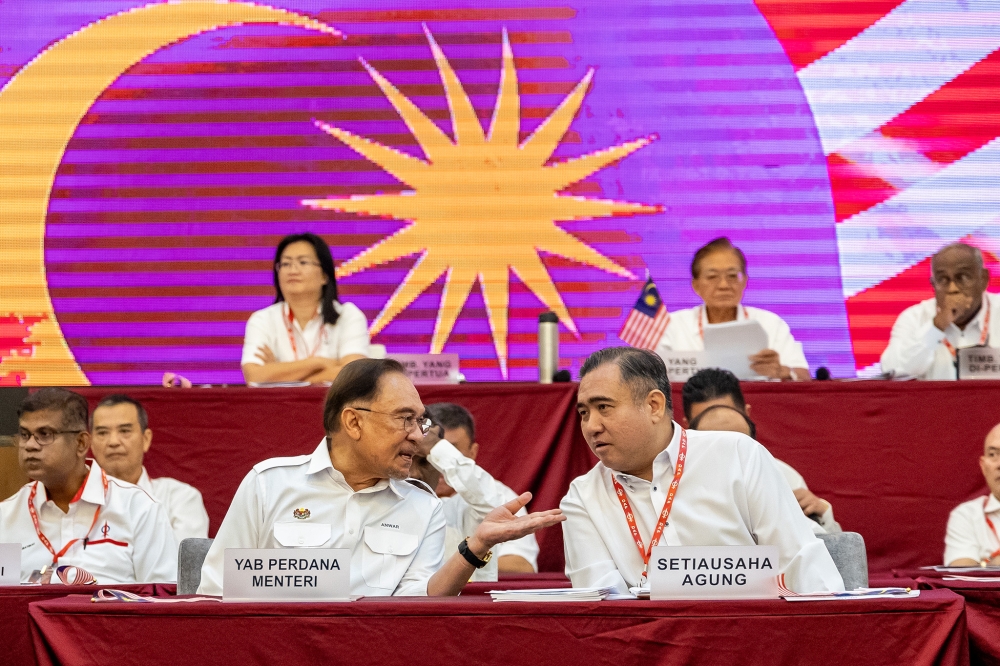
Prime Minister Datuk Seri Anwar Ibrahim has made a direct appeal to the Democratic Action Party (DAP) to reconsider abandoning its role in the Melaka state administration, emphasising that the party should maintain its commitment until the next state election. Speaking during a visit to Port Dickson, the premier expressed concern that an abrupt departure would disrupt governance structures and jeopardise ongoing initiatives that benefit the electorate.
The Pakatan Harapan coalition, which governs Melaka, has been navigating internal tensions as the DAP signals its intention to withdraw from the state government. Anwar's intervention reflects broader anxieties within the ruling bloc about maintaining cohesion during what many analysts view as a critical consolidation period for the federal administration. The timing of the DAP's announcement has proven particularly awkward, coinciding with intensified scrutiny of coalition stability across various state governments.
Anwar's position underscores the delicate balancing act required to sustain Pakatan Harapan's governance model, which relies on coordinated action across multiple parties with sometimes divergent constituencies and interests. For Melaka specifically, the DAP's presence in the executive council has been instrumental in implementing policies related to urban development, business regulation, and administrative reform. The party holds several portfolios that directly influence service delivery, making its continued participation materially significant beyond mere symbolic representation.
The Prime Minister's plea carries implicit warnings about the political consequences of coalition instability. Elections in Melaka could be called at any point before the constitutionally mandated date, and premature withdrawal would position the DAP as a party willing to abandon shared governance responsibilities. This narrative could prove damaging in electoral calculations, particularly among centrist voters who prioritise governmental continuity and pragmatic administration over factional politics.
From a Southeast Asian perspective, Malaysia's federal structure requires sustained inter-party cooperation at state level to prevent governance collapse, a lesson reinforced by recent political turbulence in Perak and Kedah. The Melaka situation therefore carries implications beyond one state, serving as a test case for coalition resilience. If the DAP exits and the government subsequently falters, it would underscore vulnerabilities in Malaysian democracy's institutional architecture and raise questions about party discipline and commitment to agreed frameworks.
The underlying tensions within Pakatan Harapan reflect broader fractures in Malaysian politics. The DAP, as a predominantly urban, Chinese-majority party, sometimes experiences friction with PKR and Amanah over policy priorities, resource allocation, and political positioning. In Melaka, where the Chinese population constitutes a significant voting bloc, DAP's withdrawal could be interpreted as either principled disagreement with coalition direction or calculated positioning ahead of state elections. The party's decision-making process will likely be scrutinised for evidence of either motivation.
Anwar's intervention also signals the federal administration's preference for institutional stability over short-term factional victories. This approach aligns with his broader governance philosophy, which emphasises rebuilding institutional credibility after years of political instability. However, it places him in a position of appealing to rather than commanding party loyalty, a limitation inherent in coalition governments that rely on consensus rather than hierarchical control.
The state government's ongoing projects, ranging from infrastructure development to business licensing reforms, require continuity of leadership and policy coherence. DAP councillors and exco members have invested political capital in specific initiatives, and their withdrawal would necessitate reassignment and potentially dilute momentum. For Melaka residents, this translates into possible delays in service delivery and policy implementation during the transitional period.
Political analysts have noted that the DAP's contemplated exit reflects frustration with decision-making processes within the coalition rather than fundamental disagreement over governance direction. If Anwar's persuasion succeeds, it would likely come with guarantees regarding policy influence and portfolio protection—an arrangement that would effectively recommit the DAP while addressing its underlying grievances.
The broader implication for Malaysian governance concerns the viability of multi-party coalitions in a parliamentary system where parties must constantly negotiate power-sharing arrangements. Melaka's situation demonstrates both the strength and fragility of consensus-based administration: it allows diverse representation but requires continuous relationship management to prevent rupture.
Electoral considerations loom large in this dispute. Should state elections be called soon, the DAP faces strategic calculations about whether remaining in government until polling day enhances or damages its electoral prospects. Conversely, early withdrawal could energise its voter base by signalling ideological distinctiveness, though it risks appearing opportunistic.
Anwar's public appeal represents an attempt to shift the narrative from internal coalition dysfunction to collective responsibility for the Melaka electorate. By framing the DAP's potential withdrawal as a breach of democratic duty rather than legitimate factional politics, he seeks to mobilise public and party opinion against the exit. Whether this approach succeeds will test both his political capital and the resilience of Pakatan Harapan's foundational commitment to sustained multi-party governance.

