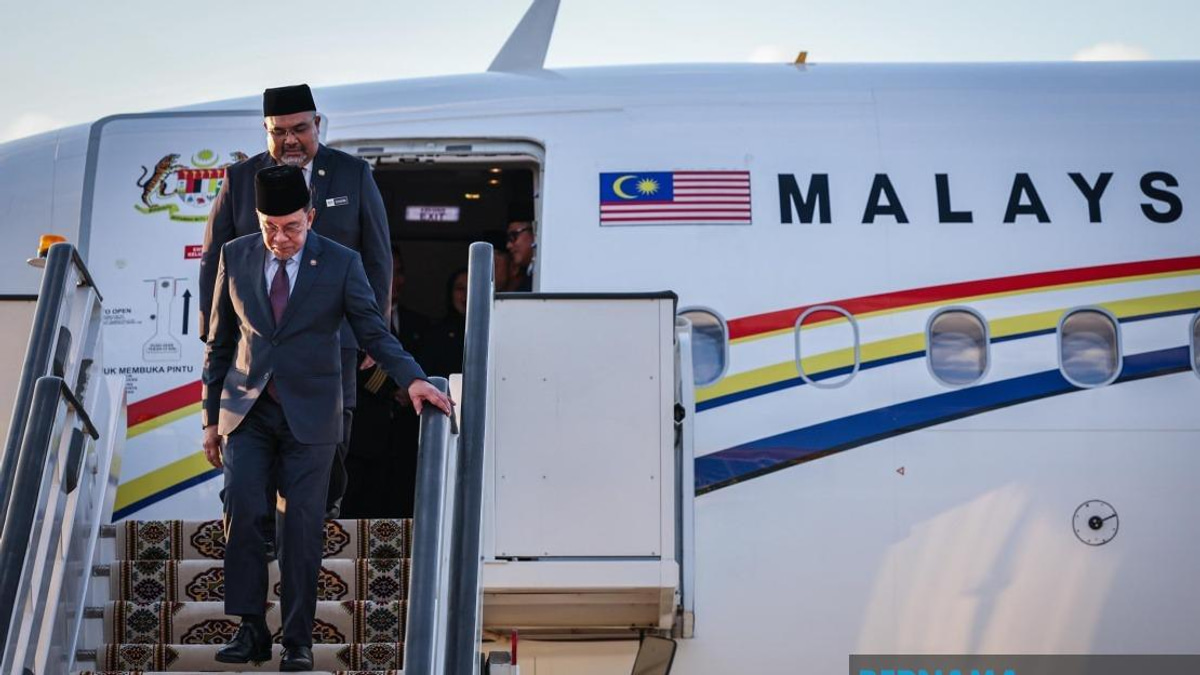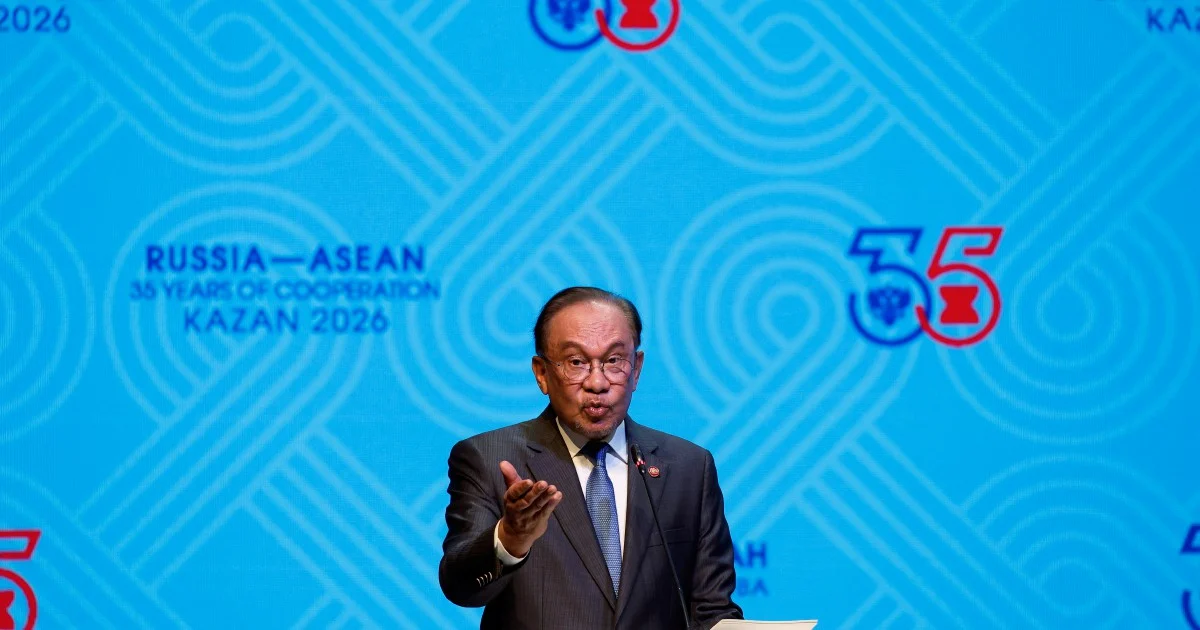
Prime Minister Datuk Seri Anwar Ibrahim has characterised the completion of the Asean-Russia Strategic Programme on Trade and Investment Cooperation 2026-2035 as a pivotal development capable of revitalising economic engagement between the 10-member bloc and Moscow. Speaking in Kazan, the prime minister portrayed the formalised agreement as more than symbolic—framing it as a substantive platform through which regional economies can pursue tangible commercial opportunities over the coming decade.
The strategic programme represents a formal commitment from both parties to deepen their economic relationship at a time when regional trade patterns are shifting amid geopolitical tensions and supply chain reconfiguration across Asia-Pacific. By establishing a structured framework spanning 2026 to 2035, the agreement provides investors and policymakers with a degree of certainty regarding bilateral trade intentions, reducing some of the unpredictability that has characterised Russia-Southeast Asia commerce in recent years.
Yet Anwar's measured optimism contained an important caveat: the success of any such roadmap depends fundamentally on the creation of what he termed an enabling environment. This reflects a hard-won understanding that trade agreements, however comprehensive, cannot guarantee economic outcomes without complementary policies in place. For Malaysia and other Asean members, this means ensuring competitive regulatory frameworks, stable macroeconomic conditions, and transparent governance structures that encourage both foreign and domestic investment.
The timing of this agreement carries regional significance, coming as Southeast Asia navigates complex relationships with major powers. Russia's isolation from Western markets following its 2022 invasion of Ukraine has redirected Moscow's economic attention toward Asia, making Asean an increasingly attractive trading partner. For Asean states, engagement with Russia offers diversification benefits and the possibility of access to markets and resources otherwise constrained by Western sanctions regimes.
Investment cooperation forms a critical component of the strategic programme. Russian companies possess expertise in energy, mining, and technology sectors that could complement Asean's manufacturing and logistics capabilities. Conversely, Southeast Asian firms can access Russian commodity supplies and market opportunities, potentially strengthening regional supply chains that have become increasingly fragmented since the pandemic.
However, translating ambition into tangible commercial activity requires more than diplomatic goodwill. The enabling environment Anwar referenced encompasses multiple dimensions: legal certainty through enforceable contracts and intellectual property protections, infrastructure adequate to support increased bilateral trade flows, human capital development aligned with investment priorities, and financial mechanisms facilitating cross-border transactions despite international sanctions complexities affecting Russian banking relationships.
Malaysia's position as a regional economic hub and Anwar's own diplomatic profile have placed the country at the forefront of Asean's engagement with Russia. Malaysian firms, already active in energy and downstream industries, stand to benefit from enhanced bilateral frameworks, particularly as new investment corridors open. At the same time, Malaysia's relative stability and regulatory sophistication position it as a gateway through which Russian investment might flow into the broader Southeast Asian region.
The 2026-2035 timeframe suggests both parties are serious about sustained rather than episodic engagement. Unlike shorter-term agreements that risk abandonment during political transitions, a decade-long commitment signals intention to build institutional relationships between governments and business communities. This extended horizon also acknowledges the lead time required for substantial new investments to mature and generate meaningful returns.
The strategic programme addresses trade facilitation, investment protection, and cooperation across sectors including energy, agriculture, manufacturing, and technology. By establishing working groups and regular consultation mechanisms, the agreement creates channels through which practical obstacles can be identified and resolved before they derail broader commercial relationships. This institutional machinery often proves as important as the agreement itself.
For Malaysia specifically, deeper Asean-Russia engagement carries implications for regional supply chains and positioning within broader Indo-Pacific trade architecture. As the region continues calibrating relationships with major powers, deepening legitimate economic partnerships with Russia—distinct from political alignment—allows Asean to maintain strategic autonomy while pursuing commercial interests. This approach aligns with Malaysia's traditional non-aligned posture in regional geopolitics.
Yet realising the potential embedded in the strategic programme demands attention to practical challenges. Sanctions targeting Russian financial institutions complicate investment transactions, shipping constraints affect trade logistics, and differing regulatory standards between Asean members and Russia require harmonisation work. These friction points will test the commitment articulated in Kazan and the capacity of both sides to move beyond rhetoric into sustained operational engagement.
Anwar's acknowledgment that intention alone proves insufficient represents sophisticated understanding of why trade agreements frequently underperform initial expectations. His emphasis on enabling conditions signals that Malaysia and fellow Asean members recognise success requires deliberate policy choices alongside diplomatic agreement. As the roadmap moves from negotiation into implementation, this combination of aspiration tempered by realism may ultimately prove as important as the document itself.