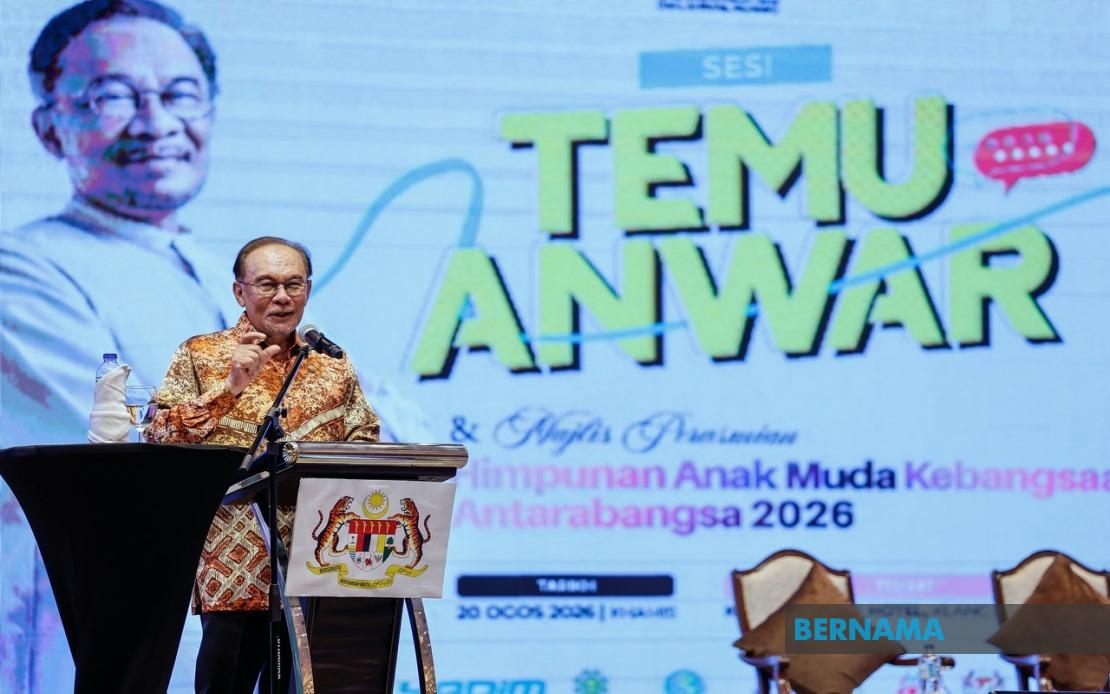
Prime Minister Datuk Seri Anwar Ibrahim has flagged forthcoming announcements that will coincide with two significant national occasions, though he has remained cryptic about their precise content. Speaking during a gathering in Klang on August 20, the Premier indicated that a notable policy statement will be delivered on the eve of National Day on August 30, followed by another declaration during Malaysia Day celebrations in Kuching on September 16. A third announcement is expected when the government tables its annual Budget in early October. The timing suggests deliberate coordination between policy rollouts and key national moments, potentially amplifying their visibility and symbolic resonance.
The Prime Minister declined to elaborate on what these announcements might encompass, maintaining strategic ambiguity that is characteristic of significant policy reveals. Instead, he emphasised his administration's methodology of consultation and consensus-building before committing to major decisions. "I will listen and seek other views," Anwar stated, indicating that the intervening weeks would involve continued engagement with stakeholders and advisers. This consultative approach underscores how the government intends to shape policy direction through dialogue rather than unilateral decree, a stance particularly relevant when addressing youth concerns and economic vulnerabilities.
The Prime Minister's remarks emerged during a question-and-answer session at a youth-focused gathering, specifically the Himpunan Anak Muda Antarabangsa (HAMKA) 2026 opening, where a student raised concerns about government protection for young workers in the gig economy. This context reveals the likely substance of upcoming announcements: comprehensive policy frameworks addressing the needs of Malaysia's burgeoning informal workforce. The gig economy—encompassing delivery drivers, ride-share operators, freelancers, and platform-based workers—has become increasingly significant in Malaysia's employment landscape, though these workers typically lack traditional employment protections and benefits enjoyed by salaried staff.
To address these gaps, the government has already established the Malaysian Gig Economy Commission (SEGiM), positioning it as the institutional backbone for worker protection and regulatory oversight. Anwar indicated that this body represents part of a broader initiative to enhance safeguards for non-traditional workers. Complementing this institutional development, the administration is preparing new legislation targeting small business operators, a category that frequently overlaps with gig economy participants who operate as sole proprietors or micro-enterprises. These legislative efforts signal recognition that existing regulatory frameworks were designed for conventional employment relationships and prove inadequate for the fluid, technology-mediated work arrangements now prevalent in Malaysian cities.
However, the Prime Minister acknowledged that considerable scepticism persists regarding whether current government assistance sufficiently addresses the economic vulnerabilities of gig workers. Some stakeholders argue that existing support mechanisms remain insufficient to provide meaningful financial security or occupational stability. Rather than dismissing these concerns, Anwar committed the government to sustained focus on welfare protection for this demographic, framing it as an ongoing priority rather than a resolved matter. This acknowledgment suggests potential policy enhancements may be among the announcements scheduled for August and September.
A second dimension of youth economic empowerment concerns entrepreneurship and access to startup capital. The Prime Minister indicated that the government intends to expand financing avenues for university graduates and young job-seekers interested in establishing their own enterprises. The National Entrepreneurial Group Economic Fund (TEKUN) currently operates as a primary vehicle for such financing, yet its existing criteria present barriers to younger applicants. Specifically, TEKUN traditionally requires applicants to demonstrate an established business track record before extending credit, a prerequisite that effectively excludes first-time entrepreneurs lacking operational history.
Recognising that such requirements undermine the government's objective of facilitating youth business creation, Anwar signalled openness to revising these preconditions. He acknowledged that labour market realities have shifted substantially, with traditional pathways to stable employment becoming less reliable for younger cohorts. Consequently, entrepreneurship increasingly serves not merely as an aspirational career path but as a necessary economic strategy for youth seeking sustainable livelihoods. By relaxing financing prerequisites and adapting TEKUN's eligibility criteria to accommodate graduates without prior business experience, the government could significantly expand youth access to startup capital.
These policy directions reflect deeper structural changes in Malaysian employment. The transition from manufacturing-dominated to service-based and knowledge-intensive economies has created demand for increasingly flexible and specialised labour. Simultaneously, the proliferation of digital platforms has enabled individuals to monetise skills and assets directly, bypassing traditional employer-employee relationships. Yet this flexibility comes at the cost of security: gig workers lack steady income, employer-contributed benefits, and occupational safety protections. Government policy must therefore balance the genuine advantages of flexible work with the necessity of providing dignified economic security.
From a regional perspective, Malaysia's gig economy challenges and policy responses resonate across Southeast Asia. Thailand, Vietnam, Indonesia, and the Philippines all grapple with rapidly expanding informal sectors and inadequate worker protections. How Malaysia designs its gig economy commission and supporting legislation could serve as a template—or cautionary example—for neighbouring countries. The test will be whether SEGiM and new legislative frameworks can provide meaningful protection without choking off the flexibility and accessibility that makes gig work attractive to many participants.
For Malaysian youth specifically, these anticipated announcements hold particular significance. Youth unemployment and underemployment remain persistent concerns, especially for degree-holders finding traditional graduate positions increasingly competitive. Enhanced entrepreneurial financing and improved gig economy protections offer complementary pathways: some youths may pursue business ownership with greater capital accessibility, while others will continue platform-based work with improved security and entitlements. The government's challenge lies in ensuring both pathways provide genuine economic advancement rather than merely formalising precarity.
The deliberate timing of announcements around National Day and Malaysia Day deserves scrutiny beyond symbolic convenience. August 30 marks the eve of Malaysia's national independence commemoration, traditionally a moment for reflecting on shared national identity and collective progress. An announcement framed around youth economic security and opportunity arguably positions young Malaysians as central to the nation's continuing development narrative. Similarly, Malaysia Day on September 16 celebrates the formation of the Malaysian federation, encompassing the diverse states comprising the nation. Making a significant announcement during Kuching's celebrations underscores federal commitment to East Malaysian development and the economic security of youths across all regions.
Practically, the three-announcement sequence—August 30, September 16, and early October Budget presentation—creates a sustained policy narrative spanning two months. Rather than announcing comprehensive youth economic initiatives in isolation, the government structures multiple touchpoints that maintain public attention and allow for sequential policy elaboration. The Budget announcement in early October provides opportunity to detail fiscal mechanisms and allocations supporting earlier policy declarations, creating interconnected announcements that reinforce each other.
Ultimately, while the precise content remains unconfirmed, the Prime Minister's commitment to major announcements in coming weeks signals genuine policy development regarding youth employment and entrepreneurship. How substantially these announcements alter the landscape for Malaysia's gig workers and young entrepreneurs will become apparent once Anwar delivers them. What is clear already is that the government recognises the urgency of addressing economic insecurity among younger Malaysians and intends to deploy significant policy instruments toward that objective.

